For patients with complex fractures, bone lost to cancer or trauma and those undergoing spine surgeries, the fear of incomplete or distorted bone growth remains an acute and well-founded concern.
Australia’s Therapeutics Goods Administration (TGA) cleared Orthocell Ltd.’s regenerative nerve repair device, Remplir, a biological scaffold that mimics the outer layer of the peripheral nerve to facilitate nerve repair.
Cellusion Inc. recently closed a ¥1.1 billion ($9.5 million) financing, bringing its total 2021 fundraising to ¥1.7 billion. The company is preparing to enter the clinic with CL-S001, its corneal endothelial substitute cell candidate for treating corneal edema due to endothelial dysfunction, or bullous keratopathy.
Cellusion Inc. recently closed a ¥1.1 billion ($9.5 million) financing, bringing its total 2021 fundraising to ¥1.7 billion. The company is preparing to enter the clinic with CL-S001, its corneal endothelial substitute cell candidate for treating corneal edema due to endothelial dysfunction, or bullous keratopathy.
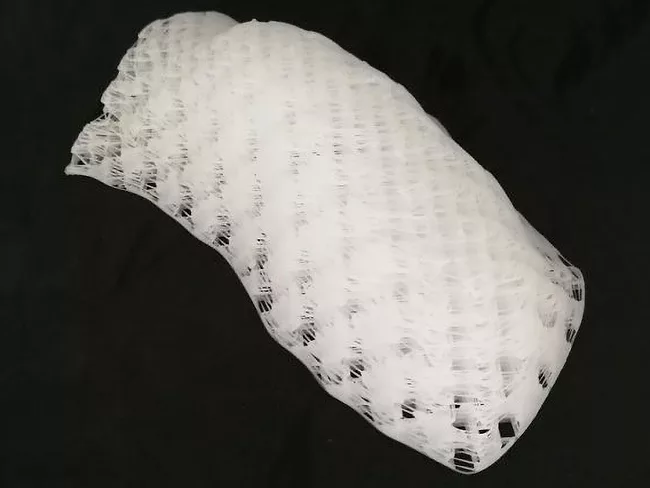
PARIS – Bellaseno GmbH reported publication of first-in-human data for its 3D-printed biodegradable and highly porous Senella scaffold filled with autologous fat graft to correct a chest deformation in a 22-year-old patient with severe pectus excavatum. The article was published in the European Journal of Plastic Surgery.
Endogena Therapeutics Inc., of San Francisco, has raised another $20 million in a series A funding round to progress a regenerative medicine that could use stem cells to “heal” the damage caused by eye disease retinitis pigmentosa (RP).
PERTH, Australia – Investment in regenerative medicine in Australia in 2020 was AU$394.1 million (US295.8 million), accounting for nearly 23% of the overall capital invested in the Australian biotech sector, according to a new report published by Australia’s Regenerative Medicine Consortium.
PERTH, Australia – Investment in regenerative medicine in Australia in 2020 was AU$394.1 million (US295.8 million), accounting for nearly 23% of the overall capital invested in the Australian biotech sector, according to a new report published by Australia’s Regenerative Medicine Consortium.
As if it were needed, Amicus Therapeutics Inc.’s spin-off of its gene therapy work and PDUFA VII’s provisions to increase the capacity of the FDA’s Center for Biologics Evaluation and Research offered further proof this week of the global explosion that’s happening in the regenerative medicine field.
The axolotl, which can regenerate many of its body parts, was the inspiration for Walking Fish Therapeutics Inc., which just closed on a $50 million series A financing to advance its B-cell therapies for oncology, rare disease, regenerative medicine, autoimmune disease and recombinant antibody production.