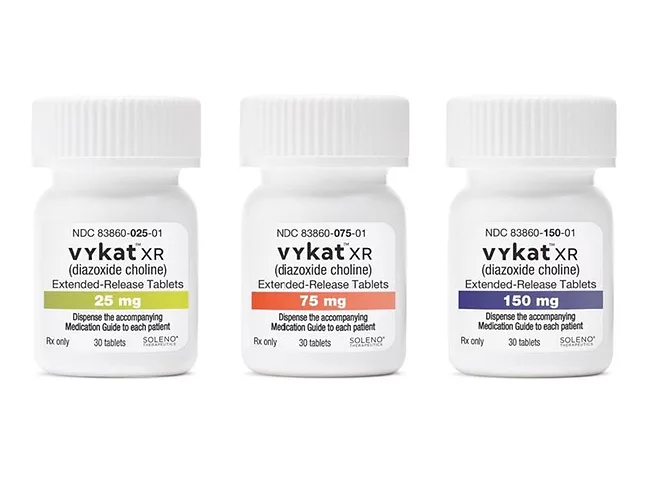
Becoming the first treatment for rare genetic disorder Prader-Willi syndrome, breakthrough therapy drug DCCR (diazoxide choline) gained U.S. FDA approval as Vykat XR the evening before its March 27 PDUFA date, sending shares of developer Soleno Therapeutics Inc. up 38%.
Becoming the second drug approved by the U.S. FDA for tenosynovial giant cell tumors, Deciphera Pharmaceuticals Inc.’s oral CSF1R inhibitor vimseltinib, newly branded Romvimza, could take significant market share from a competitor in the same class. A phase III trial showed a higher objective response rate with Romvimza than a separate phase III trial showed with Daiichi Sankyo Co. Ltd.’s Turalio (pexidartinib), and the latter’s label contains a boxed warning on rare but serious and sometimes life-threatening liver side effects.
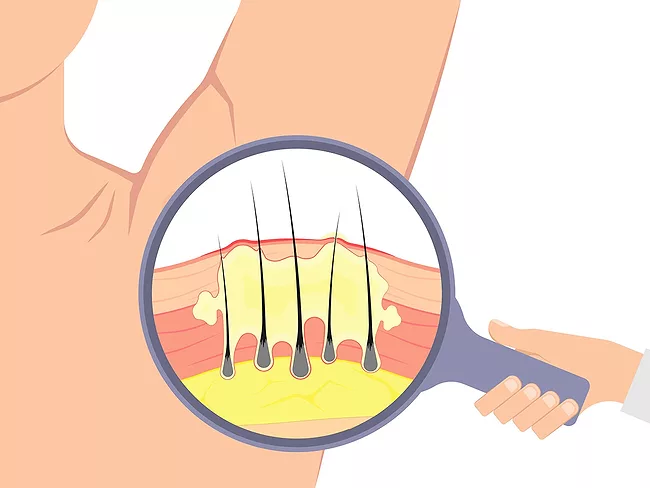
The U.S. FDA added hidradenitis suppurativa to the label for UCB SA’s Bimzelx (bimekizumab-bkzx), throwing renewed light on the indication, a chronic disease that causes painful, boil-like lumps that appear under the skin. Regulators cleared the humanized IL-17A and IL-17F antagonist for adults with moderate to severe HS, marking the drug’s fifth approval.
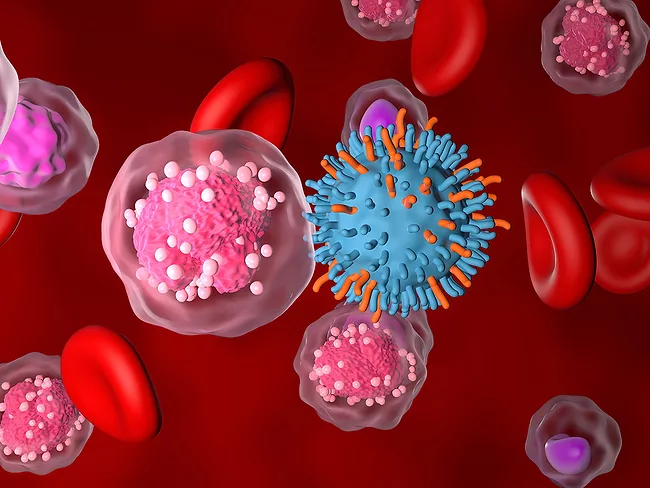
Autolus Therapuetics plc has been granted FDA approval for Aucatzyl (obecabtagene autoleucel) for the treatment of acute lymphoblastic leukemia in adults, becoming the first marketed CAR T therapy that does not have a risk evaluation and mitigation strategy attached to its label. The approval of Aucatzyl was based on results of the Felix clinical trial in relapsing/remitting ALL, which showed a strong safety profile compared to existing CAR T-cell therapies. The conduct of the trial was dogged by the COVID-19 pandemic, but of the 65 patients from an initial dosed cohort of 95 for whom efficacy was evaluated by the FDA, 63% achieved overall complete remission.
Astellas Pharma Inc. gained U.S. FDA approval of first-in-class claudin 18.2-targeted treatment Vyloy (zolbetuximab-clzb), now indicated as a first-line therapy for adults with locally advanced unresectable or metastatic HER2-negative gastric or gastroesophageal junction adenocarcinoma.
Astellas Pharma Inc. gained U.S. FDA approval of first-in-class claudin 18.2-targeted treatment Vyloy (zolbetuximab-clzb), now indicated as a first-line therapy for adults with locally advanced unresectable or metastatic HER2-negative gastric or gastroesophageal junction adenocarcinoma.
With two complete response letters in the rearview mirror, Abbvie Inc.’s Vyalev (foscarbidopa/foslevodopa) has been approved by the U.S. FDA for treating Parkinson’s disease. The drug is the first subcutaneous 24-hour infusion of levodopa-based therapy for treating motor fluctuations in adults with advanced disease.
Genentech’s newly approved multiple sclerosis (MS) injection takes about 10 minutes to administer, dramatically reducing the four to six hours required by its intravenous predecessor. The U.S. FDA approved the humanized monoclonal antibody Ocrevus Zunovo (ocrelizumab and hyaluronidase-ocsq) for relapsing MS and primary progressive MS on Sept. 13.
Eli Lilly and Co.’s Ebglyss (lebrikizumab) becomes the latest U.S. entrant in the increasingly competitive atopic dermatitis space, following FDA approval of the IL-13-targeting antibody, which will now go up against other biologics such as established blockbuster Dupixent (dupilumab, Regeneron Pharmaceuticals Inc.), as well as more recently approved Adbry (tralokinumab, Leo Pharma Inc.).
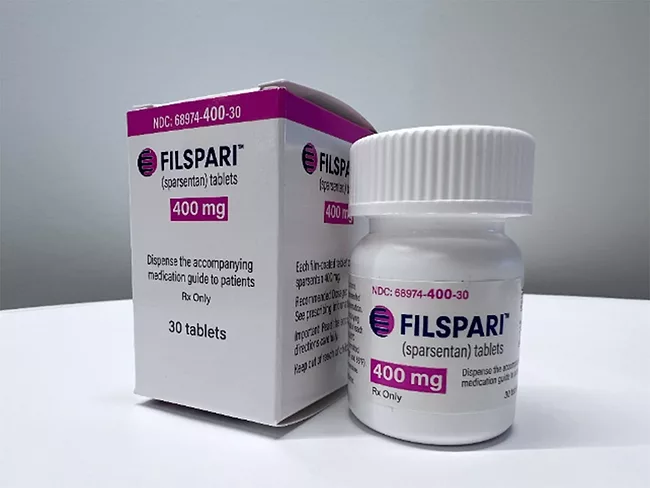
With full approval from the U.S. FDA in hand for Travere Therapeutics Inc.’s Filspari (sparsentan) to slow kidney function decline in adults with primary IgA nephropathy (IgAN) who are at risk of disease progression, eyes turned to future prospects as well as how a revised risk evaluation and mitigation strategies (REMS) program might shake out. During a conference call hosted by Travere, Leerink analyst Joseph Schwartz wanted to know what changes might be made, and if the regulator’s decision might “actually be an entire removal” of the REMS.