As part of its real-world evidence (RWE) program, the U.S. FDA released a draft guidance Nov. 29 on using registries to support regulatory decision-making for drugs and biological products.
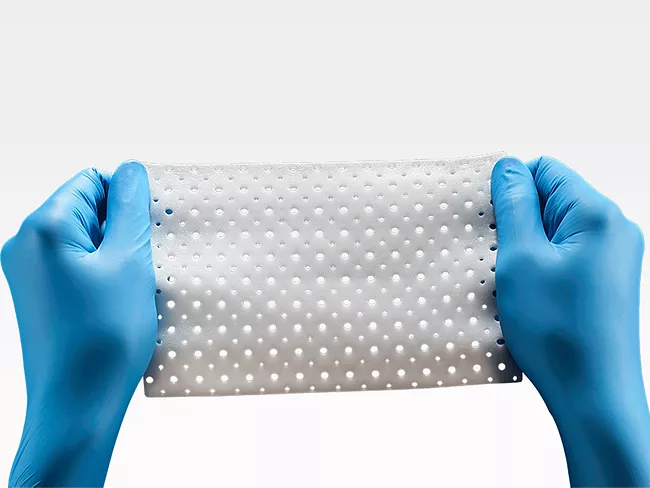
Despite that the device has been available for more than a decade under the 510(k) program, an FDA advisory committee voted narrowly that the benefits of the Surgimend device for breast reconstruction do not outweigh the risks. Another interesting feature of the application is that the pivotal study was based on real-world evidence (RWE), but while the FDA had direct access to the data, Integra Lifesciences Holdings Corp. did not, thus raising questions about whether RWE is necessarily useful for class III device premarket applications.
As part of its real-world evidence (RWE) program, the U.S. FDA is issuing a draft guidance on using electronic health records and medical claims data in clinical trials to support a drug’s safety and effectiveness.
The potential for using real-world data (RWD) to support the development of cancer drugs for children has yet to be realized as researchers, sponsors and regulators continue to struggle with the collection of meaningful data.
Despite the demonstrated benefits of using patient-reported outcomes (PROs) in clinical trials assessing new cancer drugs in adults, PROs are rarely used in pediatric cancer trials. Hoping to change that, the FDA is convening the pediatric subcommittee of its Oncologic Drugs Advisory Committee (ODAC) May 11 to discuss how to effectively use a pediatric form of the PRO version of the common terminology criteria for adverse events.
The FDA’s May 4 webinar on patient data generated over the course of the product life cycle covered a number of topics, including the use of social media as a source of real-world evidence (RWE). The FDA’s Anne Hammer said, however, that while social media engagement has exploded over the past couple of decades, issues such as data duplication and verifiability will have to be resolved before patient engagement via social media can be relied upon as a source of RWE for regulatory purposes.
The FDA’s May 4 webinar on patient data generated over the course of the product life cycle covered a number of topics, including the use of social media as a source of real-world evidence (RWE). The FDA’s Anne Hammer said, however, that while social media engagement has exploded over the past couple of decades, issues such as data duplication and verifiability will have to be resolved before patient engagement via social media can be relied upon as a source of RWE for regulatory purposes.
A data-blocking rule set to go into effect in the U.S. April 5 could make it easier for sponsors to get the real-world data they need to demonstrate postmarket evidence of the safety and efficacy of their drugs and devices and to develop future products.
The U.S. FDA has been easing gently down the road of real-world evidence (RWE) in regulatory decision-making, and the case of the Watchman left atrial appendage device is instructive in this regard. Robert Shipley, of Boston Scientific Corp. (BSX), said on webinar hosted by the Advanced Medical Technology Association that the FDA changed gears and agreed to a registry for a post-approval study for the first generation Watchman, but added that the use of registry data and other RWE for approval of a next-generation device is as yet more aspirational than practicable.
China’s provincial government for Hainan Province has two sets of medical devices going through the urgent medical device needs program, but leveraging this program for regulatory approval in China is still no small undertaking. One complication is that any real-world evidence gathered in Hainan might not suffice for nationwide regulatory approval, but patient recruitment is also difficult.