Syncardia Systems LLC, of Tucson, Ariz., has petitioned the Centers for Medicare and Medicaid Services (CMS) to drop the coverage with evidence development (CED) mandate for artificial hearts, stating that multiple studies have demonstrated that artificial hearts meet the reasonable and necessary standard. Syncardia said its temporary Total Artificial Heart (TAH-t) should thus be available “unencumbered by the existing requirement for evidence development,” a change that could modestly bolster utilization and sales of these devices.
The U.S. FDA has given its nod for a new trial of Abbott Laboratories’ Amplatzer Amulet left atrial appendage (LAA) occluder for those with atrial fibrillation (AF) who are at risk of stroke. Known as the CATALYST trial, it is the first study comparing the effectiveness of a LAA closure device to non-vitamin K antagonist oral anticoagulant (NOAC) drugs, a newer class of blood thinners, the Abbott Park, Ill.-based company said.
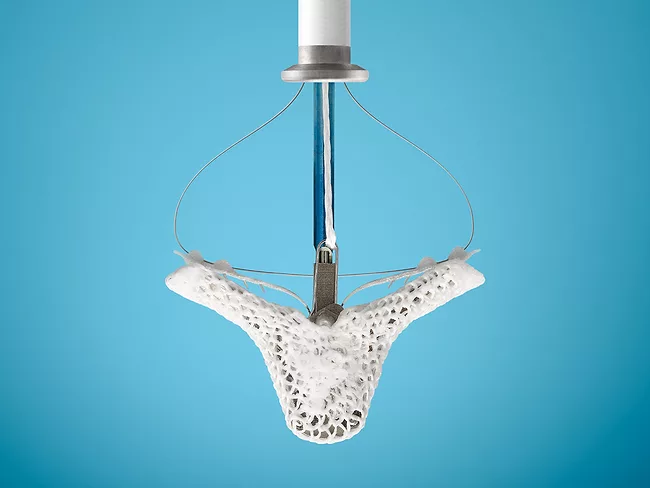
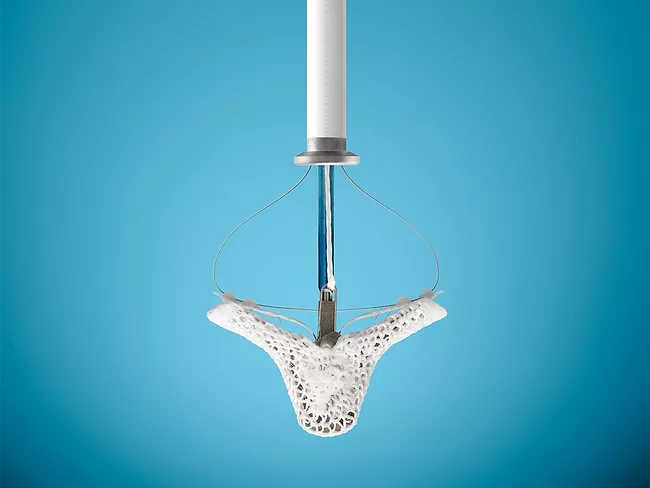
Abbott Laboratories has received CE mark approval for its Tendyne transcatheter mitral valve implantation (TMVI) system, the first such device approved for use in Europe and the world. The system is intended for patients with leaky mitral valves that are beyond repair and those at high risk for open heart surgery.
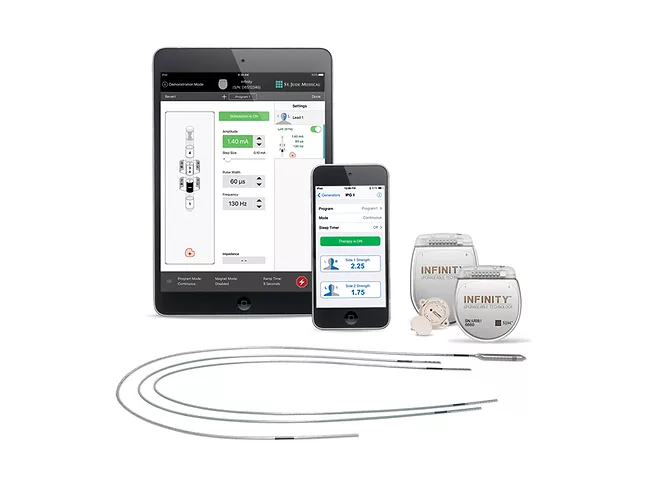
Abbott Laboratories had a winning week, scoring U.S. FDA approval of its Infinity directional deep brain stimulation (DBS) system in treating symptoms of Parkinson’s disease not adequately managed by medication. The company also reported new data underscoring the benefits of its Proclaim XR neuromodulation system in people living with chronic pain.
Abbott Park, Ill.-based Abbott Laboratories has gained the U.S. FDA’s nod for a clinical trial that will compare the effectiveness of Mitraclip to open-heart mitral valve surgical repair in people with primary mitral regurgitation (MR) who are eligible for open-heart surgery. The prospective, randomized REPAIR MR clinical trial is expected to enroll 500 patients.
In the latest step toward making left ventricular assist devices (LVADs) easier and more accessible, the FDA recently approved a less invasive surgical approach for use with Abbott Laboratories’ latest LVAD, Heartmate 3. Now, rather than requiring risky open-heart surgery, the device can be implanted through an incision in the chest wall. Abbott gained Heartmate 3 in its 2017 acquisition of St. Jude Medical for $25 billion.
While the U.S. Centers for Medicare and Medicaid Services (CMS) revisits its coverage policy for transcatheter mitral valve repair devices, several physician societies have drafted recommendations for operator and institutional volume requirements that could restrict the number of centers authorized to practice devices such as Abbott Park, Ill.-based Abbott Laboratories’ Mitraclip.
Hand-held diagnostics don't come cheaply, and their applications remain somewhat limited. Abbott Laboratories' Istat portable clinical analyzer, for example, retails at about $15,000, with each individual cartridge costing hundreds of dollars apiece to measure each of roughly a few dozen blood gas, electrolyte, chemistry and hematology levels in few minutes from two to three drops of whole blood.
A recent medical journal article says the terminology used by physicians to denote a fatality in the FDA adverse event reporting system has led to underreporting of fatalities associated with two prominent cardiology devices, a predicament the authors say skews the public understanding of these devices' safety profiles.
Abbott Laboratories and Tandem Diabetes Care Inc. said Tuesday that they plan to develop and commercialize a line of integrated diabetes products based on Abbott's glucose sending technology and Tandem's insulin delivery systems. The collaboration comes as the U.S. FDA is encouraging medical device manufacturers to consider the ability to share and use information safely and effectively in the development and design of connected devices.