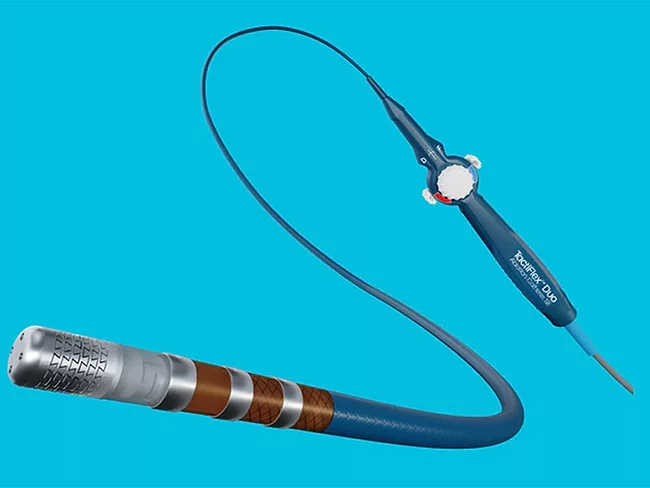
Abbott Laboratories received CE mark in Europe for the Tactiflex Duo ablation catheter to treat patients with atrial fibrillation. The first commercial cases using Tactiflex Duo, a dual energy device, were completed in the EU this week.
Over the last year, diabetes technology saw significant changes, including the acceleration of patch pumps, ever-smaller continuous glucose monitors (CGM), implanted CGMs and increased interest in devices that measure additional chemicals in blood without needles.
Four optimization trends dominated the med-tech industry in 2025. Growth-driven acquisitions propelled major players into hot markets, while strategic realignments at several large companies prompted notable exits as well as a few tuck-in deals. Spin-offs continued their mixed performance, with several companies on track for significant splits and others changing plans. Private equity entered — and exited — with leveraged buy outs, and a record-setting cash out.
Two years after the U.S. FDA approved the first pulsed field ablation system, Abbott Laboratories finally got the regulatory nod for its Volt PFA system. Abbott follows Medtronic plc, Boston Scientific Corp., Johnson & Johnson and Kardium Inc. in receiving approval for its approval for use of its PFA device to treat atrial fibrillation.
The first international consensus framework for the use of continuous ketone monitoring in people with diabetes, published in The Lancet Diabetes & Endocrinology, calls development and use of ketone sensors for the prevention of diabetic ketoacidosis “transformational.” Several companies in the diabetes technology market have recently reported that they are developing dual glucose-ketone sensors, though none have gained U.S. FDA approval yet.
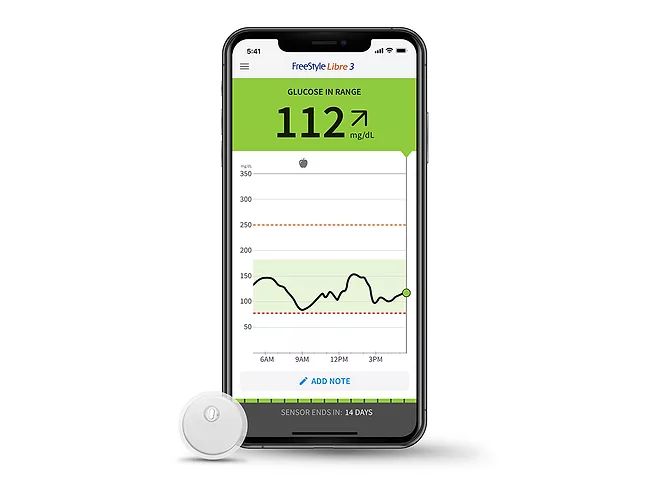
Abbott Laboratories announced a recall of Freestyle Libre 3 and Libre 3 Plus sensors used in continuous glucose monitors after receiving reports of more than 700 injuries and seven fatalities that may be associated with the sensor malfunction. The company did not describe the nature of the malfunction let alone a root cause, but said the affected product comes from only one of three production lines, and thus it expects no shortages associated with the recall.
Abbott Laboratories made plans to enter the cancer screening market with its reported acquisition of Exact Sciences Corp. The deal will pay Exact Sciences shareholders $105 per share in cash, a nearly 50% premium to Exact’s unaffected share price on Nov. 19. That represents a total equity value of approximately $21 billion and an estimated enterprise value of $23 billion.
At first glance, the results of the CLOSURE-AF study would seem to spell doom for left atrial appendage closure devices for patients at risk of stroke, but there is some noise in the signal, including that the devices used in the study no longer represent the state of the med-tech art.
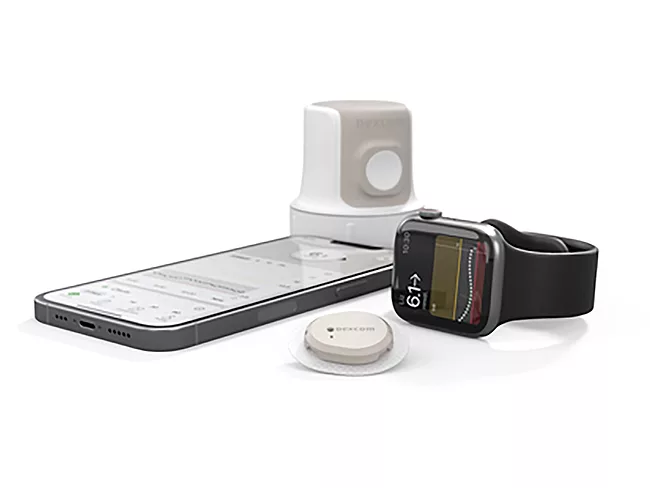
Dexcom Inc. executives may have thought a $30 million beat of the consensus estimates for third quarter revenue and 20% year-over-year organic growth provided a treat to shareholders, but investors seemed to feel tricked instead. The continuous glucose monitoring powerhouse saw its share price drop a frightening 17% in the first two hours of trading on Oct. 31, pushing it down by one-third from its peak of $89.53 in late July. Investors appear to have been spooked by the company’s conservative projections for 2026, following issues with its G7 sensor, which management said have been largely resolved.
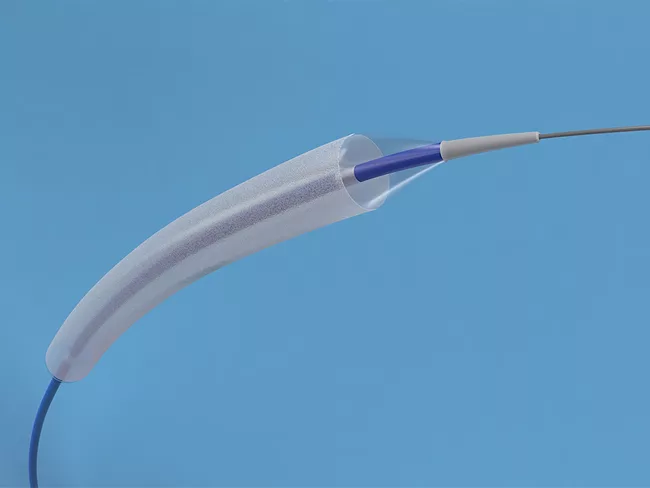
Cordis Corp. has quite a bit to crow about in this latter part of October 2025 with the unveiling of results of two studies that back the Miami Lakes, Fla.-based company’s Selution SLR drug-eluting balloon (DEB) for both de novo coronary artery stenosis and in-stent restenosis.