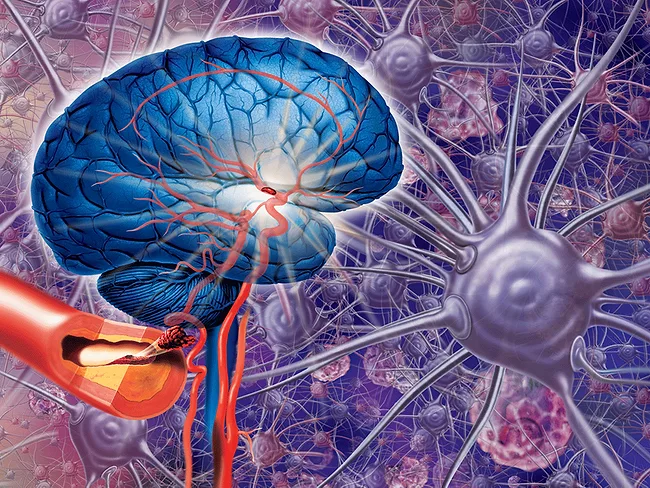
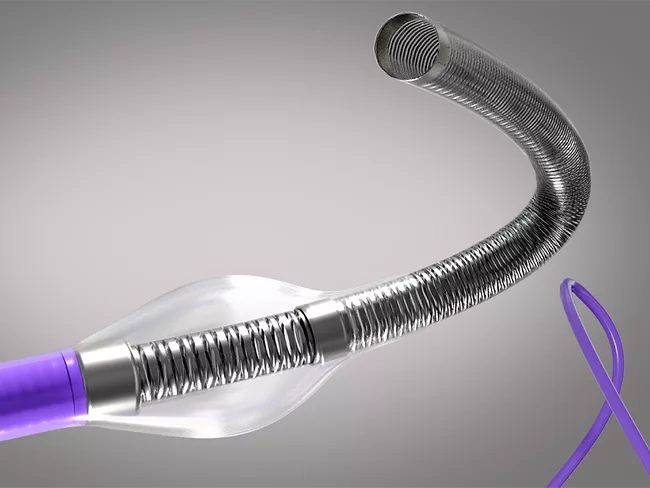
Shanghai Heartcare Medical Technology Corp. Ltd. received marketing approvals for three medical devices designed for stroke, namely its left atrial appendage (LAA) occluder, the aspiration catheter, and the support catheter.
By altering the balance between neuronal excitation and inhibition, researchers have reduced cell death and improved outcomes in animal models of stroke.
Valuations in the med-tech space lately call into question the old medical adage: “If you hear hoofbeats, think horses.” These days, you would be wise to consider unicorns in the differential diagnosis. Two new companies achieved the formerly rare status just this week. Viz.ai Inc.’s closing today of a $100 million series D financing propelled it into the stratosphere with a $1.2 billion valuation, joining Bostongene LLC which completed its own $150 million round Wednesday.
Vena Medical Inc. received Health Canada approval for a device that combines two neurovascular catheters that typically work separately to remove clots from the brains of people who have suffered stroke.
Cvaid Medical Ltd. secured $4 million in a series A financing to further develop its mobile stroke diagnostic, monitoring and treatment platform. The Israeli Rad Biomed investment fund led the round with participation from Philips Ventures and Sanara Capital. As part of the financing, a representative from Philips will join the board. The smartphone-based system, Cvaid uses artificial intelligence to process and analyze video and voice recordings to identify and assess the severity of patients experiencing stroke, also called cerebrovascular accidents.
With an ambitious goal of bringing 24/7 electroencephalogram (EEG) capabilities to hospitals across the country, Epitel Inc. closed a $12.5 million series A financing round that it plans to use to fund the initial pilot for commercialization of its wearable, wireless EEG platform. The Epilog platform received FDA clearance for use in hospital emergency departments and critical care units last year.
Johnson & Johnson business Cerenovus Inc. is launching a balloon guide catheter for the U.S. and Canada stroke market. The Irvine, Calif.-based company’s Emboguard device is designed to remove blood clots by controlling blood flow during mechanical thrombectomy procedures. It is the latest addition to the Cerenovus stroke portfolio, which includes the Embotrap III revascularization device, the Prowler EX microcatheter, the Cerenovus large bore catheter and Cerebase guide sheath.
The U.S. Preventive Services Task Force (USPSTF) has once again broached the question of whether screening for atrial fibrillation (AF) in asymptomatic patients is a worthwhile exercise in public health, and once again the answer is “we don’t know.”
LONDON – Brainomix Ltd. has raised £16 million (US$ 21.2 million) in a series B, enabling the company to extend its artificial intelligence (AI)-driven diagnostic platform beyond the initial deployment in stroke, to the assessment of disease progression in lung fibrosis, and response to therapy in lung cancer.
NHS England has struck new pricing agreements that expands access in the U.K. to blood thinning direct oral anticoagulants (DOACs) to tackle strokes in patients with atrial fibrillation. Though still available to NHS clinicians, Boehringer Ingelheim GmbH’s blockbuster DOAC Pradaxa (dabigatran) is notably not involved.