LONDON – Brainomix Ltd. has raised £16 million (US$ 21.2 million) in a series B, enabling the company to extend its artificial intelligence (AI)-driven diagnostic platform beyond the initial deployment in stroke, to the assessment of disease progression in lung fibrosis, and response to therapy in lung cancer.
NHS England has struck new pricing agreements that expands access in the U.K. to blood thinning direct oral anticoagulants (DOACs) to tackle strokes in patients with atrial fibrillation. Though still available to NHS clinicians, Boehringer Ingelheim GmbH’s blockbuster DOAC Pradaxa (dabigatran) is notably not involved.
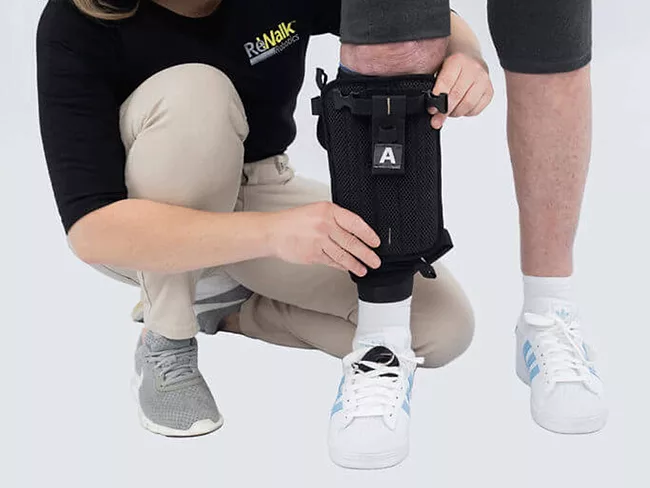
Shares in Rewalk Robotics Ltd. are on the rise after the FDA awarded its Reboot exoskeleton device breakthrough device designation status. The wearable, battery-powered device is designed to assist individuals with lower limb disability due to stroke.
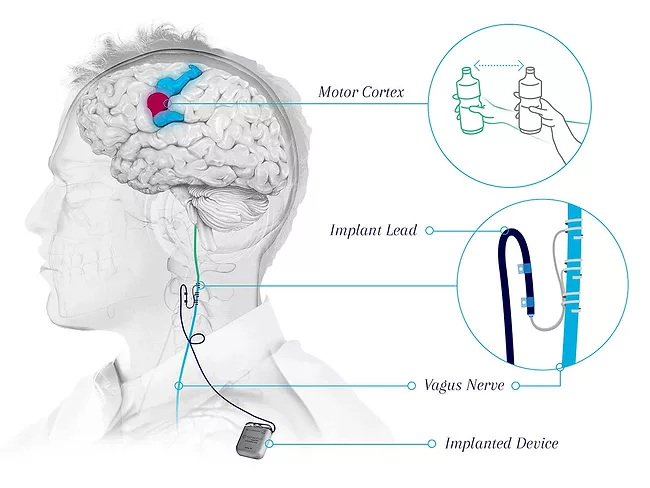
Vagus nerve stimulation (VNS) researchers notched another success with FDA approval of a drug-free rehabilitation system that uses the technology to help patients who have lost mobility in their hands and arms as a result of ischemic stroke regain function. Microtransponder Inc.’s Vivistim pairs rehabilitation exercises with VNS to enhance their impact. The clinical study evaluated by the FDA for the system's approval showed that Vivistim doubled the improvement in upper extremity motor function compared to supervised rehabilitative exercises alone at six weeks and 90 days.
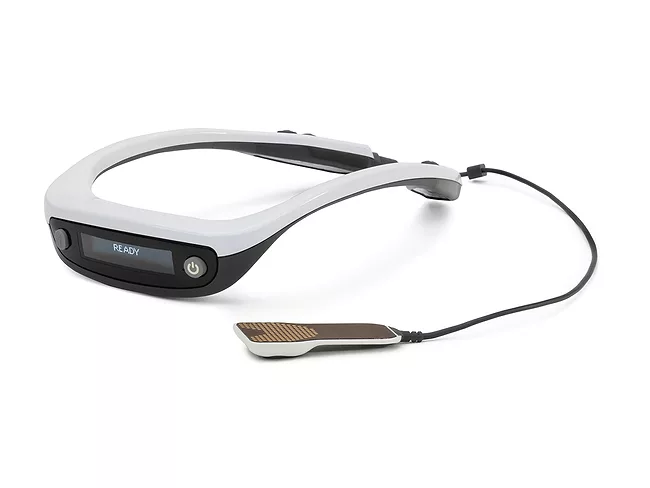
Helius Medical Technologies Inc. has received an FDA breakthrough device designation for its Portable Neuromodulation Stimulator (Pons) device for temporary treatment of dynamic gait and balance deficits due to stroke.
TORONTO – Fluid Biotech Inc. has raised $4.7 million in oversubscribed seed funding to further develop and commercialize the world's first hybrid polymer-metal flow-diverting brain stent for curing brain aneurysms that can lead to stroke. Following successful preclinical studies of the stent, attention now turns to applying this fresh capital to hiring contract manufacturers to prepare for first-in-human implantation and production of the mostly polymer-constructed stent.
Using a minimally invasive brain implant, Feinstein Institutes for Medical Research scientists produced tingling sensations in the fingers of patients who lacked the sense of touch as a result of nerve damage, according to a study published in Brain Stimulation. A second study by the team, which appeared in Frontiers in Neuroscience, used stereoelectroencephalography (SEEG) electrodes to decode neural signals to improve the hand control algorithms in brain-computer interfaces.
Keystone Heart Ltd. had the unusual experience of being the sponsor of a rare class II device appearance before an FDA advisory committee, which considered whether the company’s Triguard 3 device was substantially equivalent (SE) to a predicate device. However, the company’s bid for an SE result was unsuccessful, likely leaving Keystone with a considerable additional regulatory lift before the company can get to market.
In the largest private fundraising round for a U.S. medical device company in the past year, Imperative Care Inc. closed $260 million in a series D financing round on Thursday. The company also acquired its spinoff Truvic Medical Inc., a peripheral thrombectomy developer.
Investigators at the Tokyo Metropolitan Institute of Medical Science have identified the oxidative stress sensor DJ-1 as a previously unknown inflammatory molecule which is released from damaged neurons to activate macrophages in post-stroke neuroinflammation.