At the same time it reported U.S. FDA clearance for bedside software to diagnose electrographic status epilepticus (ESE) seizures, Ceribell Inc. declared Claritypro the first ICU monitoring device to receive an NTAP reimbursement from the Centers for Medicare and Medicaid Services. The clearance of Claritypro to diagnose ESE follows receipt of an FDA breakthrough device designation in two different categories in the past year, setting the stage, Ceribell CEO Jane Chao told BioWorld, for expanded access to critical seizure diagnosis technology.
Two papers published in Nature on Aug. 23, 2023, describe brain computer interfaces (BCI) with unprecedented capabilities for decoding brain activity into sentences, translating at speeds around half that of normal speech, and with vocabularies exceeding 1,000 words.
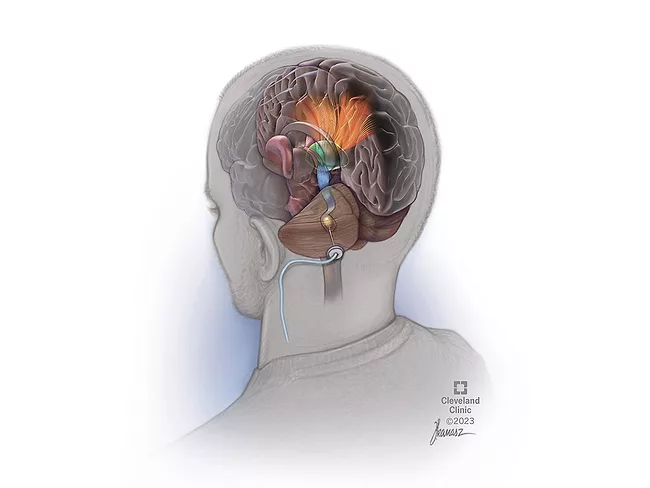
A first-in-human clinical trial conducted by researchers at the Cleveland Clinic demonstrated that deep brain stimulation (DBS) applied to the dentate nucleus region of the cerebellum could help patients recover function in their upper extremities up to three years after a stroke. Results of the study were published in Nature Medicine.
A research team from Leipzig University, the Max Planck Institute and Heidelberg University, all in Germany, devised a new segmentation algorithm for stroke lesions that improves upon previous methods. They used machine-learning models to effect CT image segmentation in the early stages of acute stroke. The research team published their findings on the fully convolutional graph network in July in the Journal of Medical Imaging.
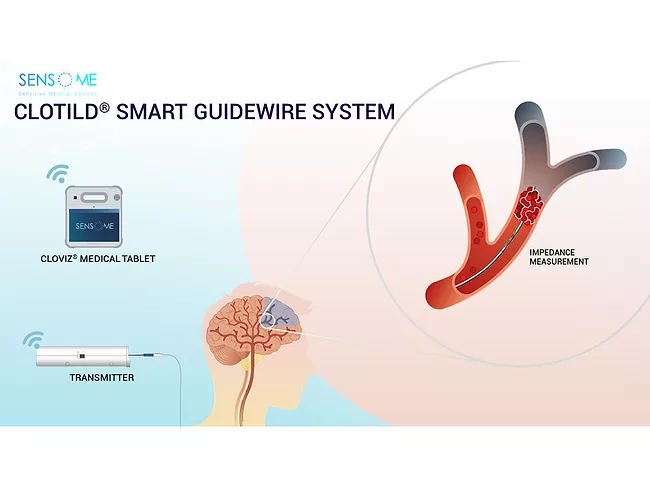
Sensome SAS reported a partnership with Asahi Intecc Co. Ltd. to develop the next generation Clotild smart guidewire. Asahi Intecc is taking on the manufacturing role for Sensome’s smart guidewire designed for the treatment of acute ischemic stroke.
Could a bioactive peptide secreted in the saliva of ticks offer a useful therapy for people who have experienced intracerebral hemorrhage (ICH)? That’s the question Bioxodes SA has set out to answer, and the company is about to move its first-in-class drug candidate, Ir-CPI, which has dual anti-thrombotic and anti-inflammatory effects, into a phase IIa trial in patients with ICH.
An artificial intelligence (AI) framework developed by researchers in Denmark has outperformed human emergency call handlers in identifying stroke. The AI tool has the potential to play a critical role in helping to address the number of strokes that go unrecognized as the number of strokes are projected to increase as the population ages.
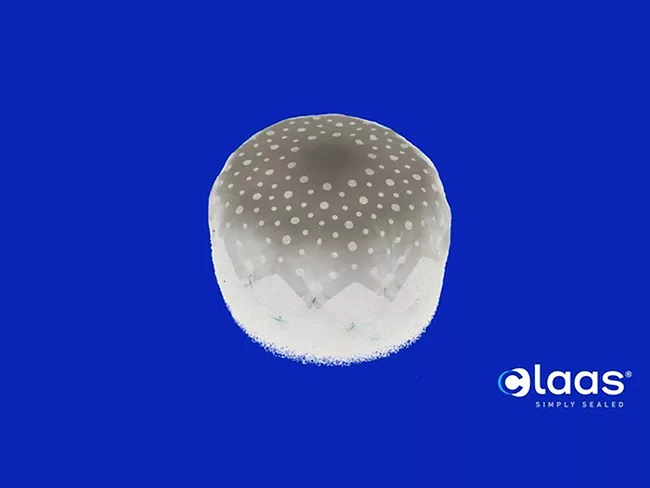
Conformal Medical Inc. plugged the gap in funding needed to complete enrollment in the pivotal CONFORM trial for its left atrial appendage occlusion (LAAO) technology with completion of an oversubscribed $35 million series D fundraising round. The Conformal left atrial appendage seal (CLAAS) system is designed to close off the left atrial appendage in individuals with non-valvular atrial fibrillation to cut the risk of stroke and avoid the use of anticoagulants.
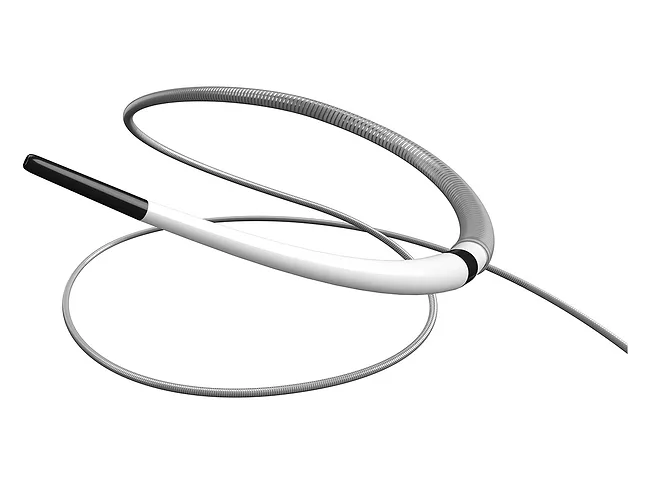
The FDA gave the greenlight to Route 92 Medical Inc. for its Freeclimb 70 reperfusion system in the treatment of ischemic stroke. The 510(k) clearance includes a Freeclimb 70 aspiration catheter, as well as a Tenzing 7 delivery catheter.
Reach Neuro Inc. has been granted FDA breakthrough device designation for a rehab platform that delivers small electrical impulses to the spinal cord to help restore shoulder, arm and hand movement to individuals suffering from chronic stroke. The company said Avantis restores a patient's ability to control movement, not only giving the patient immediate relief, but making it possible to return to therapy and continue making even further improvements.