Affluent Medical SAS is becoming Carvolix after it entered into binding agreements to acquire Caranx Medical SAS for €16.6 million (US$19.34 million) and Artedrone SAS for €11.4 million. The aim is to create an integrated med tech company which will focus on revolutionizing cardiac valve replacement and stroke treatment through AI-driven autonomous mini-robots and innovative implants.
Inhibiting transient receptor potential melastatin 2 (TRPM2) may mitigate injury arising from ischemic stroke. Researchers at Zhejiang University and its medical school previously reported a small-molecule inhibitor of TRPM2, which also inhibited the human ether-a-go-go-related gene (hERG) channel, implying high risk of cardiotoxicity.
Simcere Pharmaceutical Co. Ltd. has described stachybotrys microspore triprenyl phenols (SMTPs) acting as plasminogen activators reported to be useful for the treatment of thromboembolism.
Two in five preclinical studies on subarachnoid hemorrhage (SAH) published in peer-reviewed scientific journals contain problematic images. A team of researchers from Radboud University Medical Center, who had previously identified several such cases, analyzed the literature in this field to assess the scope of the issue. They found that 40% of the studies included suspicious images.
Two in five preclinical studies on subarachnoid hemorrhage (SAH) published in peer-reviewed scientific journals contain problematic images. A team of researchers from Radboud University Medical Center, who had previously identified several such cases, analyzed the literature in this field to assess the scope of the issue. They found that 40% of the studies included suspicious images.
Taho Pharmaceuticals Ltd. announced an NDA submission to the U.S. FDA for TAH-3311, developed as the world’s first oral dissolving film formulation of apixaban, marking a regulatory milestone for the Taipei-based biotech.
Taho Pharmaceuticals Ltd. announced an NDA submission to the U.S. FDA for TAH-3311, developed as the world’s first oral dissolving film formulation of apixaban, marking a regulatory milestone for the Taipei-based biotech.
Receptor-interacting protein kinase 1 (RIPK1) plays a pivotal role in ischemic stroke pathology by mediating necroptosis and promoting neuroinflammation, both of which contribute to secondary brain injury and worsen clinical outcomes.
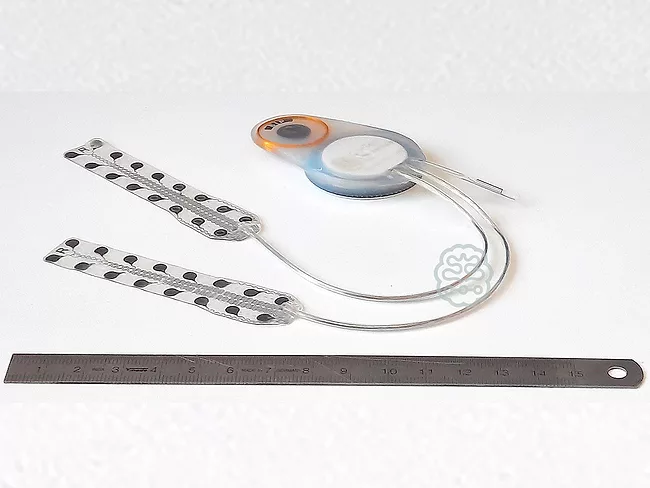
Cortec GmbH implanted its brain-computer interface (BCI) system, Brain Interchange, into a stroke patient in late July, joining a host of other companies conducting clinical trials of their BCI technologies to help people affected by neurological conditions recover lost function and improve their quality of life.
The U.S. FDA expanded the approval for use of Boston Scientific Corp.’s Watchman Flx and Watchman Flx Pro left atrial appendage closure (LAAC) devices to include post-ablation patients, bringing good news to the company as it preps for its second quarter earnings report on July 23.