Atossa Therapeutics Inc. moved a step closer in its efforts to develop a preventative approach to breast cancer, with top-line data from a phase II study showing (Z)-endoxifen significantly reduced mammographic breast density, while demonstrating a good tolerability profile.
Researchers from Liaoning Jinqiu Hospital and affiliated organizations explored potential new genetic targets in heart failure and breast cancer through combining genetic inference and single-cell expression analysis. Genome-wide association study (GWAS) identified multiple genetic variants that were causally related in heart failure and breast cancer.
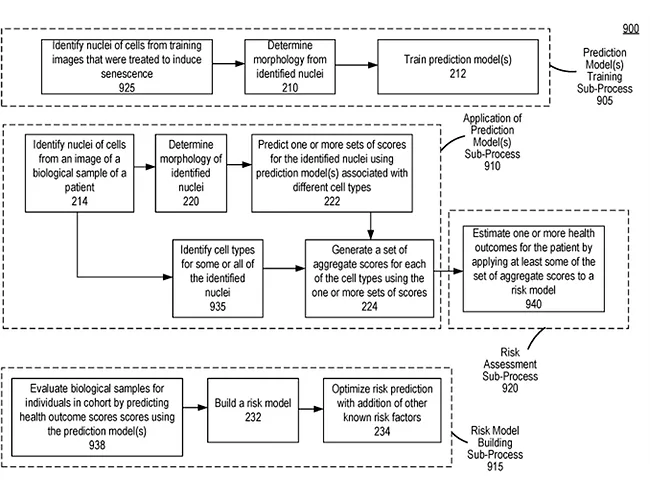
The first filing from Cancerrisk AI Inc. describes their development of a system that uses deep learning to predict future cancer risk from a biopsy image.
Baobab Aibio Co. Ltd. has disclosed transcriptional coactivator YAP1/transcriptional enhancer factor (TEAD) interaction inhibitors reported to be useful for the treatment of cancer.
A recent retrospective cohort study of Insight MMG highlighted potential of Lunit Inc.’s artificial intelligence-powered breast cancer screening tool in detecting “subtle signs of cancer” earlier for women.
Genescience Pharmaceuticals Co. Ltd. has identified phosphatidylinositol 3-kinase α (PI3Kα) inhibitors, particularly PI3Kα (H1047R mutant), reported to be useful for the treatment of cancer and PIK3CA-related overgrowth spectrum.
Scientists at Atmosr SAS and Medetia SAS have synthesized adenine derivatives acting as heat shock protein 90 (HSP90) inhibitors reported to be useful for the treatment of cancer, neurodegenerative diseases, infections, myelofibrosis, acute pancreatitis, psoriasis and ROHHAD (rapid-onset obesity, hypothalamic dysfunction, hypoventilation, autonomic dysregulation).
Breast cancer cells, when disseminated to other secondary organs such as the lungs, may stay in a dormant state for years, even decades. But the mechanisms that limit their expansion are not well understood. This is what researchers call a dormant mesenchymal-like phenotype before metastasis to the lungs. Now, scientists have shown in a study published Oct. 7, 2024, in Cell, that the limiting of disseminated breast cancer cells (DCCs) to metastasize in the lungs is due to alveolar macrophages, which activate signals that make DCCs stay dormant.
Breast cancer cells, when disseminated to other secondary organs such as the lungs, may stay in a dormant state for years, even decades. But the mechanisms that limit their expansion are not well understood. This is what researchers call a dormant mesenchymal-like phenotype (M-like) before metastasis to the lungs. Now, scientists have shown in a study published Oct. 7, 2024, in Cell, that the limiting of disseminated breast cancer cells (DCCs) to metastasize in the lungs is due to alveolar macrophages (AMs), which activate signals that make DCCs stay dormant.