Nysnobio Inc. has received a grant from The Michael J. Fox Foundation for Parkinson’s Research (MJFF) to assist the advancement of the company’s lead parkin gene replacement therapy candidate, NB-001. The funding will support product manufacturing to enable IND safety studies in preparation for clinical trials evaluating NB-001 in Parkinson’s disease patients with biallelic loss-of-function mutations in the parkin gene, or parkin-PD.
Aeterna Zentaris Inc. has offered an update on its development pipeline programs. Macimorelin acetate (AEZS-130), a ghrelin agonist approved and commercialized as a test for adult growth hormone deficiency, is in preclinical development for amyotrophic lateral sclerosis (ALS). The company has now successfully developed an alternative formulation suitable for use in ALS.
Given that monoclonal antibodies are so big, only 0.1% of a dose will cross the blood-brain barrier (BBB). And that’s why their utility in central nervous system (CNS) disorders management is limited.
Evidence of mitochondrial and lysosome dysfunction underlying Parkinson’s disease (PD) was discussed during several talks at the World Parkinson Congress 2023 (WPC) held in Barcelona. Edward A. Fon, from McGill University in Montreal, explained how eyes turned to mitochondria as key players in PD more than 30 years ago and how the explosion of genetics was fundamental to advance the knowledge and research in PD.
Nodthera Ltd. claims to be first to demonstrate it is possible to modulate the NLRP3 inflammasome in the brain, after showing there were reductions in inflammatory and disease-specific biomarkers in blood and cerebrospinal fluid after seven days of daily administration of its lead product, NT-0796, an oral NLRP3 inhibitor.
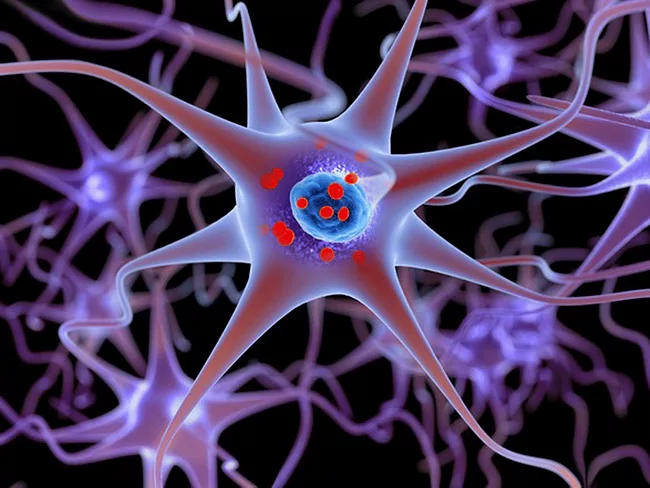
The loss of the dopaminergic neurons in the substantia nigra and their projections in the putamen cause motor disabilities, which are one of the main hallmarks in patients with Parkinson’s disease (PD).
Cannabidiol derivatives potentially useful for the treatment of Parkinson’s disease and epilepsy have been described in a Deyi Pharmaceutical Co. Ltd. patent.
Bluerock Therapeutics LP has reported the first in vitro and in vivo results on the company’s new cell therapy DA-02, consisting of human induced pluripotent stem cell (iPSC)-derived dopaminergic neurons.
Cala Health Inc. expanded availability of its next-generation bioelectronic Kiq device for relief of action tremors to include individuals with Parkinson’s disease as well as essential tremor. The broad commercial launch of the FDA-cleared wrist-worn device will enable more patients to use the transcutaneous afferent patterned stimulation (TAPS) therapy, which studies show reduces tremors and improves performance of activities of daily living.