Scientists from the University of Cambridge, Harvard Medical School and collaborators investigated the potential of ubiquitin carboxyl-terminal hydrolase 30 (USP30) inhibition as a therapeutic strategy for restoring mitophagy to achieve neuroprotection in Parkinson’s disease.
Pathogenic variants in the leucine-rich repeat kinase 2 (LRRK2) gene are linked to increased risk for Parkinson’s disease (PD), with G2019S being the principal variant. In the current study, researchers from Escape Bio Inc. presented the discovery and preclinical characterization of novel inhibitors of G2019S mutant-LRRK2 as potential therapeutic candidates for the treatment of PD.
Merck & Co. Inc. continued to broaden its reach in neurodegenerative diseases by paying, through a subsidiary, as much as $610 million to take over preclinical-stage Caraway Therapeutics Inc. The deal involves an undisclosed up-front payment along with contingent milestone rewards.
Electrical stimulation of the spinal cord has restored the ability to walk normally to a patient whose chronic Parkinson’s disease (PD) had led to severe motor deficits, researchers reported in the Nov. 6, 2023, online issue of Nature Medicine.
Brenig Therapeutics Inc. has disclosed leucine-rich repeat kinase 2 (LRRK2; dardarin) inhibitors reported to be useful for the treatment of Parkinson’s disease, among others.
Researchers from Coave Therapeutics SA presented a novel conjugated AAV (coAAV)-GBA1 candidate for the treatment of patients suffering from PD related to GBA1 mutations.
Stem Pharm Inc. and Verge Genomics (Verge Analytics Inc.) have established a collaboration to develop a disease model to validate novel targets identified by Verge for Parkinson’s disease.
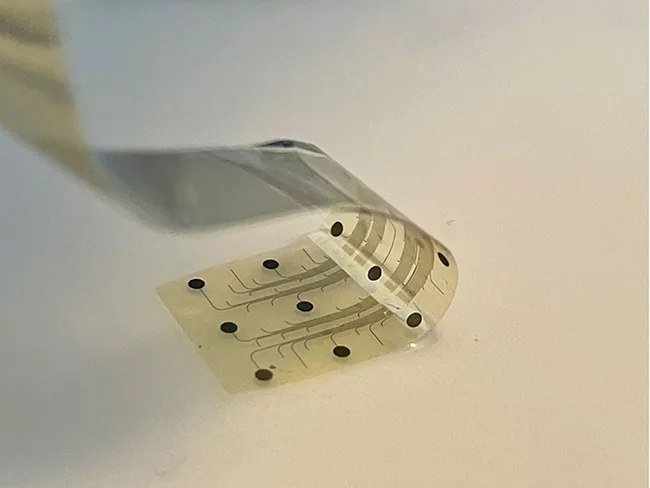
Inbrain Neuroelectronics SL was granted a breakthrough device designation from the U.S. FDA for its graphene-based neural platform as an adjunctive therapy for treating Parkinson’s disease. The platform, called intelligent network modulation system, harnesses the power of graphene and artificial intelligence to deliver highly focused, adaptive neuroelectronic therapy that re-balances pathological neural networks, easing the symptoms of Parkinson’s.
A discovery-stage company founded 10 years ago and focused on developing a PINK1 activator for Parkinson’s disease and other indications is now under the umbrella of Abbvie Inc. through an acquisition potentially worth $655 million. North Chicago-based Abbvie paid $110 million at closing for San Francisco-based Mitokinin Inc., but the deal also includes up to $545 million in potential payments upon hitting development and commercial milestones related to the PINK1 (PTEN-induced kinase 1) program. On top of that, Mitokinin shareholders are entitled to tiered royalties based on net sales.