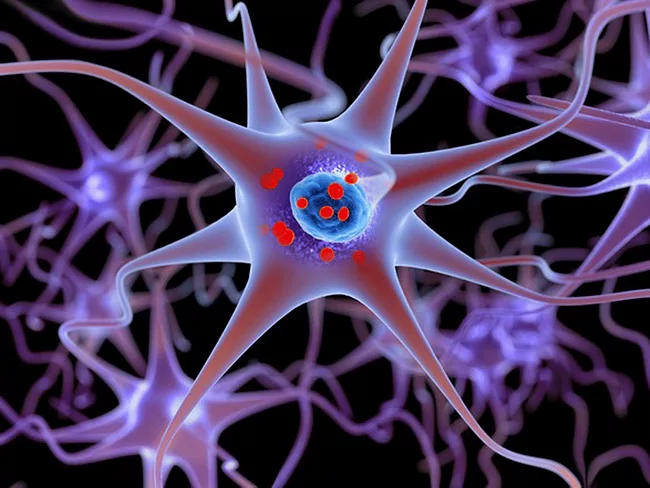
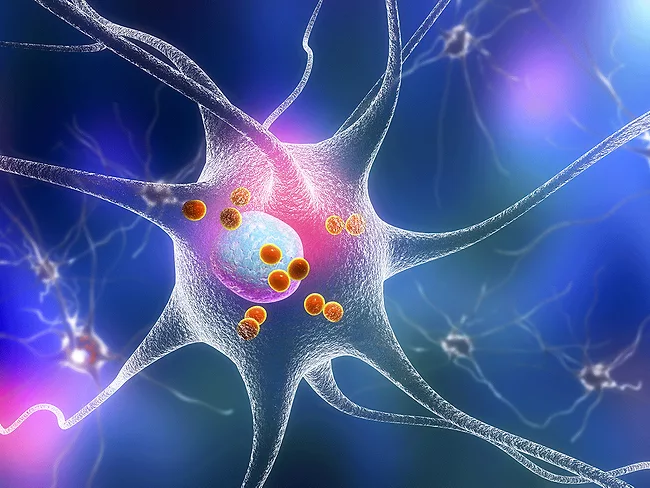
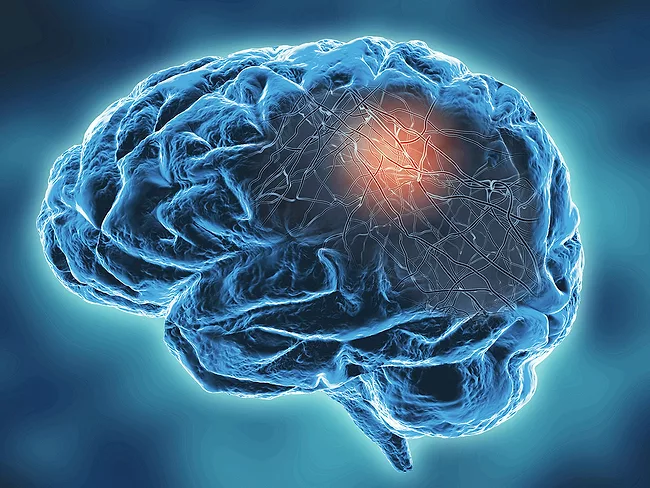
The loss of the dopaminergic neurons in the substantia nigra and their projections in the putamen cause motor disabilities, which are one of the main hallmarks in patients with Parkinson’s disease (PD).
Cannabidiol derivatives potentially useful for the treatment of Parkinson’s disease and epilepsy have been described in a Deyi Pharmaceutical Co. Ltd. patent.
Bluerock Therapeutics LP has reported the first in vitro and in vivo results on the company’s new cell therapy DA-02, consisting of human induced pluripotent stem cell (iPSC)-derived dopaminergic neurons.
Cala Health Inc. expanded availability of its next-generation bioelectronic Kiq device for relief of action tremors to include individuals with Parkinson’s disease as well as essential tremor. The broad commercial launch of the FDA-cleared wrist-worn device will enable more patients to use the transcutaneous afferent patterned stimulation (TAPS) therapy, which studies show reduces tremors and improves performance of activities of daily living.
AC Immune SA has patented 4h-imidazo[1,5-b]pyrazole derivatives and labeled compounds targeting α-synuclein (SNCA). They are reported to be useful for diagnosis of multiple system atrophy, Parkinson’s dementia, Lewy body dementia, Alzheimer’s and Parkinson’s disease, among others.
Standing as one of the more prominent among incurable conditions, Parkinson’s disease (PD) still hasn’t met a medicine or surgical intervention that can slow or stop progression, despite efforts of many drug developers testing new strategies.
The University of Oxford and Selvita SA have established an integrated drug discovery collaboration in the area of Parkinson’s disease. Based on evidence implicating α-synuclein aggregates as the cause of Parkinson’s, the approach looks at the inability of cells to efficiently clear these aggregates, which may lead to the death of neurons and the emergence of characteristic symptoms of the disease. Promoting the ability of nerve cells to rid themselves of these aggregates therefore offers a possible therapeutic strategy for Parkinson’s disease.
Celros Biotech Co. Ltd. has synthesized cytochrome b-245 heavy chain (CYBB; NOX2) and NADPH oxidase 4 (NOX4) inhibitors reported to be useful for the treatment of atherosclerosis, Alzheimer’s disease, cirrhosis, diabetes, cancer, glomerulonephritis, psoriasis and rheumatoid arthritis, among others.
Medshine Discovery Inc. has divulged azaspiro compounds acting as leucine-rich repeat kinase 2 (LRRK2; dardarin) inhibitors reported to be useful for the treatment of Parkinson’s disease.