Sunovion Pharmaceuticals Inc.’s apomorphine sublingual film (APL-130277), a dopamine agonist the company will market as Kynmobi, has won FDA approval for the acute intermittent treatment of motor fluctuations (off episodes) associated with Parkinson’s disease.
A once-daily add-on therapy for Parkinson's disease (PD) used in Europe for years has now gained clearance in the U.S. with FDA approval of Ongentys (opicapone). The drug, an improvement upon generics in its class, will be sold by Neurocrine Biosciences Inc. The medicine, a catechol-O-methyltransferase (COMT) inhibitor first approved by the EMA in 2016, extends the half-life of levodopa, increasing doses of which are required to achieve motor control as PD progresses. Portugal-based Bial-Portela & Ca SA, from which Neurocrine licensed North American rights to the drug, will receive a $20 million award from its partner. Shares of San Diego-based Neurocrine (NASDAQ:NBIX), a neuroscience company focused on treating movement disorders, rose 3.5% following the approval, closing at $101.67 on April 27.
It has been more than 200 years since British doctor James Parkinson first identified the symptoms of a condition that he termed shaking palsy; unfortunately, there is still no cure to the disease that carries his name.
Redpin Therapeutics Inc., of New York, plans to take its newly secured $15.5 million series A financing to continue developing its ion-channel based chemogenetics platform for addressing neural circuit dysfunctions such as epilepsy, neuropathic pain and Parkinson’s disease.
Launching a broad new front in its long-running battle against dementia and other neurological diseases, Biogen Inc. has moved to license multiple Sangamo Therapeutics Inc. programs for $350 million up front plus up to $2.37 billion in development, regulatory and commercial milestone payments.
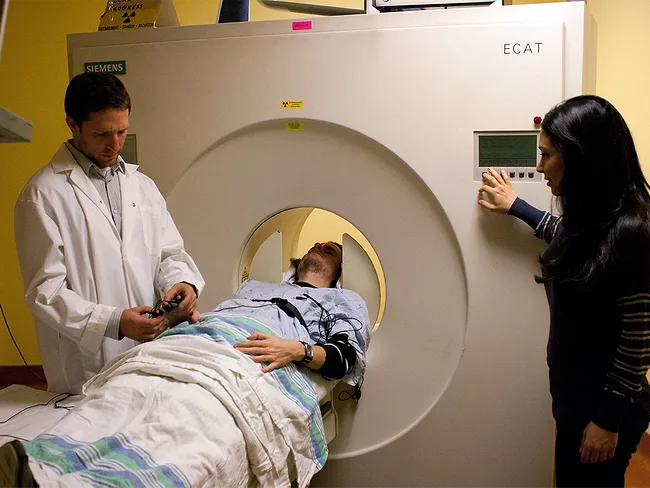
TORONTO – Montreal’s McGill University and the Montreal Neurological Institute-Hospital (The Neuro) have entered a research agreement with Pasadena, Calif.-based Fuzionaire Diagnostics Inc. to detect and treat neurodegenerative diseases through molecular imaging.
Parkinson’s disease (PD) is a neurodegenerative disorder. But not just. And it may not start that way.
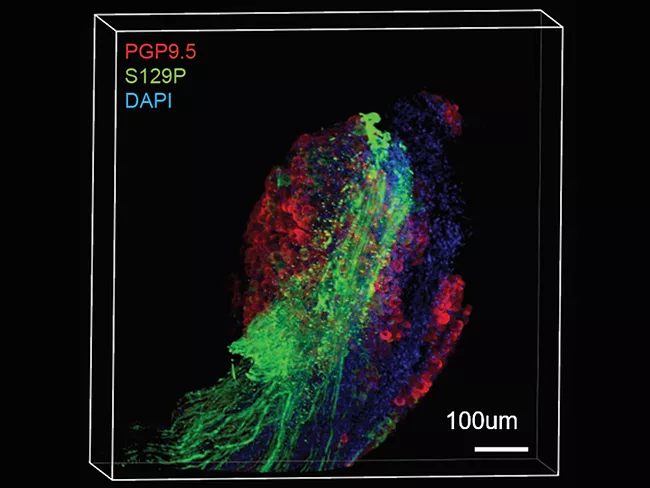
There is increasing evidence that a-synuclein, the protein whose aggregates eventually destroy midbrain dopaminergic neurons in PD (and that are the cause of other diseases collectively known as the synucleinopathies), first aggregates “in enteric neurons, the neurons that control gastrointestinal function,” Collin Challis told BioWorld.
Privately held Zhittya Genesis Medicine Inc. received approval from Mexico’s Comisión Federal para la Protección contra Riesgos Sanitarios (Cofepris) to begin a phase I trial at the Zambrano Hospital in Monterrey for patients with Parkinson’s disease.
What’s new inevitably includes an element of the old. Clene Nanomedicine Inc., which just completed enrollment and dosed the first patient in its phase II trial in amyotrophic lateral sclerosis (ALS), literally contains an element of the old in its lead nanocatalytic therapy: gold.
Investors have grown accustomed to hearing news of major announcements from big pharma and blue chip biotech companies during the J.P. Morgan Healthcare conference week. However, as it turned out, headline catalysts were in short supply. In the absence of any major M&A deals taking place, the event turned out to be unusually muted.