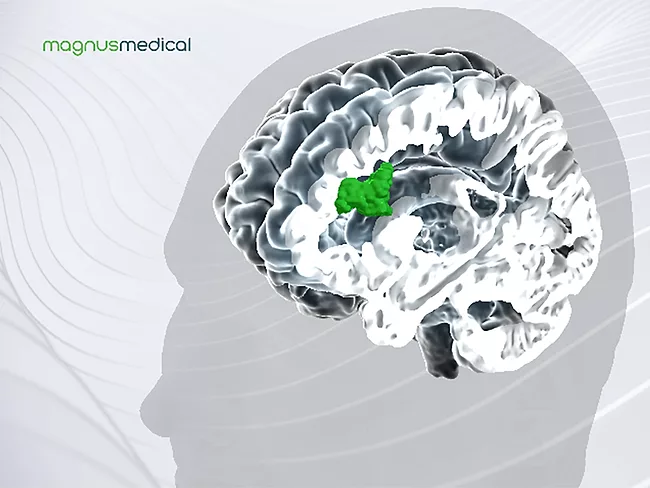
Magnus Medical Inc. received FDA clearance for a neuromodulation platform to treat major depressive disorder (MDD) in adults for whom antidepressant medication has been ineffective.
Pharmaxis Ltd. has found new funding to breathe life into a drug that looked like it might sit on the shelf for a while, but now appears to be a good candidate for tackling Parkinson’s and other neurodegenerative diseases.
An investigational drug developed in Cuba for the potential treatment of Alzheimer´s and Parkinson's diseases has moved forward to phase III trials there, where scientists are optimistic about results of previous studies. The candidate, named Neuroepo and branded Neuralcim, was developed by the Center of Molecular Immunology (also known by its Spanish acronym CIM), a state-owned lab in the Caribbean nation.
Pretzel Therapeutics Inc. has launched with a $72.5 million series A financing to pioneer novel therapies to modulate mitochondrial function to treat rare genetic diseases and common diseases of aging.
Pharmaxis Ltd. has found new funding to breathe life into a drug that looked like it might sit on the shelf for a while, but now appears to be a good candidate for tackling Parkinson’s and other neurodegenerative diseases.
Syncthink Inc. is preparing to launch its neurological impairment and disease diagnostic in Europe, after securing CE marking for the ocular biomarker device. The company is raising a new round of funding to support commercialization of the Eye-Sync system and has two projects exemplifying applications of the device running with academic collaborators in the U.K.
Central nervous system specialist Cerevance Inc. has announced a multiyear strategic research collaboration with Merck & Co. Inc. to identify novel targets for Alzheimer’s disease in a deal worth more than $1.1 billion, plus royalties. Boston-based Cerevance will receive $25 million up front with the $1.1 billion due when certain development and commercial milestones are achieved.
Spintech MRI Inc. raised $6.5 million in series A financing to expand deployment of MRI software designed to improve and accelerate diagnosis and treatment of Parkinson’s disease, Alzheimer’s and other neurological diseases. The FDA-cleared Strategically Acquired Gradient Echo (Stage) platform is currently in use at more than 50 U.S. hospitals and institutions, including the Yale School of Medicine for advanced research, analysis and treatment of Parkinson’s disease.
Japan’s Kyowa Kirin Co. Ltd. has stopped development of its adenosine A2a receptor antagonist, KW-6356, in Parkinson’s disease. Discovered internally by Kyowa Kirin, KW-6356 was studied in phase II trials in Japan for Parkinson’s disease, with results showing it was “potentially effective in relieving motor and non-motor symptoms both as a monotherapy and in combination with levodopa-containing therapy,” Kyowa said. However, development is now being discontinued after conducting an evaluation of the global regulatory landscape, development hurdles and potential timelines for market entry.