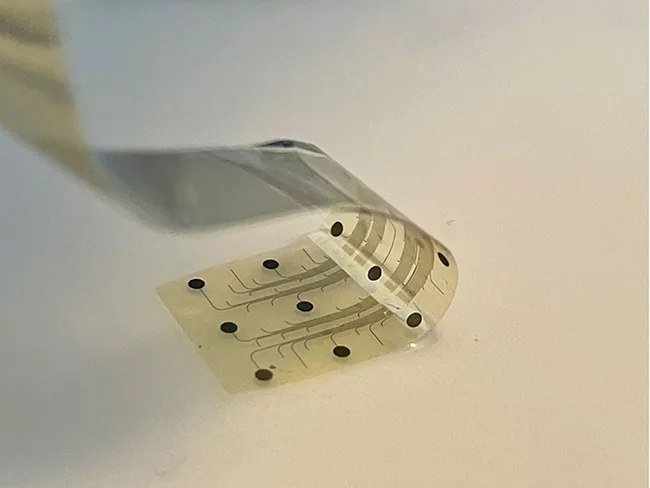
Inbrain Neuroelectronics SL was granted a breakthrough device designation from the U.S. FDA for its graphene-based neural platform as an adjunctive therapy for treating Parkinson’s disease. The platform, called intelligent network modulation system, harnesses the power of graphene and artificial intelligence to deliver highly focused, adaptive neuroelectronic therapy that re-balances pathological neural networks, easing the symptoms of Parkinson’s.
A discovery-stage company founded 10 years ago and focused on developing a PINK1 activator for Parkinson’s disease and other indications is now under the umbrella of Abbvie Inc. through an acquisition potentially worth $655 million. North Chicago-based Abbvie paid $110 million at closing for San Francisco-based Mitokinin Inc., but the deal also includes up to $545 million in potential payments upon hitting development and commercial milestones related to the PINK1 (PTEN-induced kinase 1) program. On top of that, Mitokinin shareholders are entitled to tiered royalties based on net sales.
With a waiting list of some 90,000 people, startup company Charco Neurotech Ltd. is seeing growing demand for its Cue1 device which has shown to reduce the symptoms of Parkinson’s disease in patients suffering from the condition. The Cue1 is a non-invasive device that can literally change the day-to-day lives of people living with Parkinson's, Lucy Jung, CEO and co-founder of Charco, told BioWorld.
The latest patent application from Neuroderm Ltd. described a magnetic coupling and detection mechanism for its small two-part wearable infusion drug delivery device that delivers a liquid drug to Parkinson’s disease patients subcutaneously.
Insightec Ltd. broadened its CE mark approval for the Exablate Neuro, a focused ultrasound platform which treats essential tremors, to allow patients to have their second side treated. With some 60 million people estimated to be affected by essential tremor globally, Insightec hopes that with both sides treated, patients will have full body relief from tremor and therefore be able to resume everyday activities.
An international team of researchers have developed a new blood test that could detect Parkinson’s disease earlier than current methods. The test, a real-time PCR-based assay, called Mito Dnadx, uses blood to identify damage to mitochondrial DNA (mtDNA) caused by the neurodegenerative condition. Based on the findings published in the journal Science Translational Medicine, the test could allow rapid, noninvasive and accurate identification of Parkinson’s disease (PD) before it causes much damage to the nervous system.
Gain Therapeutics Inc. has received human research ethics committee (HREC) approval in Australia to initiate a phase I study of its lead drug candidate GT-02287 in development for GBA1-Parkinson’s disease. The study is expected to begin in the near term.
“I am not a fortune teller, nor am I a gambler. I will make no bets,” Lorraine Kalia told the audience at the 2023 International Congress of Parkinson’s Disease and Movement Disorders. “But I am optimistic.” At the meeting, which is being held in Copenhagen this week, Kalia, who is a scientist at Toronto Western Hospital’s Krembil Brain Institute and at the University of Toronto’s Tanz Centre for Research in Neurodegenerative Diseases, was giving an overview of “Emerging targets in the clinic” in a plenary session on “Therapeutic strategies for the future.”
Imeka Solutions Inc. has received U.S. FDA 510(k) clearance for the Advanced Neuro Diagnostic Imaging system designed to provide neurologists and radiologists with vital reference information on cerebral white matter for better management of brain diseases such as Alzheimer’s. This comes on the heels of two new CPT 3 codes for quantitative brain MRI assessment which Imeka expects its clients will begin taking advantage of by January 2024.