The small-molecule steroid sulfatase (STS) inhibitor STX-64 (ONESTX-1, irosustat) previously showed a good safety and tolerability profile in several phase I and II clinical trials that evaluated the candidate for oncology indications.
At the 2024 Alzheimer’s & Parkinson’s Diseases Conference this week, Michel Goedert from the MRC Laboratory of Molecular Biology in Cambridge gave the Donald L. Price Memorial Plenary Lecture entitled, “Cryo-EM structures of disease filaments from human brains.” Donald Price was particularly well-known for his work on plaques and tangles in nonhuman aged primate brains and for the development of several animal models of neurodegenerative diseases.
China State Institute of Pharmaceutical Industry and Jiangsu Nhwa Pharmaceutical Co. Ltd. have jointly described aromatic heterocyclic cyclohexyl aminoalkyl piperidine derivatives acting as serotonin 5-HT1A and/or dopamine D2 and/or D3 receptor agonists reported to be useful for the treatment of Parkinson’s disease.
Biovie Inc.’s double-barrelled blast of positive data with insulin sensitizer NE-3107 in Alzheimer’s disease (AD) and Parkinson’s disease (PD) launched shares (NASDAQ:BIVI) on a wild ride to close March 1 at $2.23, up 99 cents, or almost 80%, after trading as high as $3.31.
San Diego-based Kenai Therapeutics Inc. raised $82 million in a series A round to move its disease-modifying cell therapy for Parkinson’s disease into the clinic. The company, which leverages induced pluripotent stem cell (iPSC) technology, will advance its next-generation allogeneic neuron replacement cell therapies for neurological diseases, specifically completing a clinical proof-of-concept trial for its lead candidate, RNDP-001. The series A was co-led by Alaska Permanent Fund Corp., Cure Ventures and The Column Group, with participation from Euclidean Capital and Saisei Ventures. Proceeds will enable Kenai to submit an IND for RNDP-001 and bring it through the completion of phase I trials, which are expected to begin sometime in 2024.
San Diego-based Kenai Therapeutics Inc. raised $82 million in a series A round to move its disease-modifying cell therapy for Parkinson’s disease into the clinic. The company, which leverages induced pluripotent stem cell (iPSC) technology, will advance its next-generation allogeneic neuron replacement cell therapies for neurological diseases, specifically completing a clinical proof-of-concept trial for its lead candidate, RNDP-001.
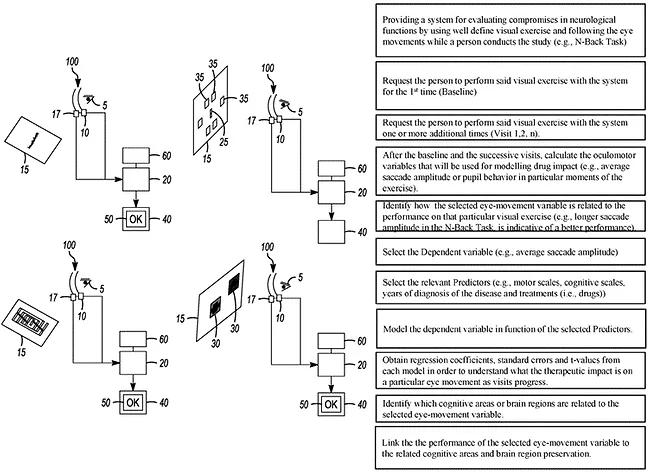
New York-based Viewmind Inc. has applied for patent protection of methods and systems for detecting neurological disorders and/or measuring, fine-motor skills, processing speed, decision making, and cognitive processes by measuring eye movements, oculomotor features and pupil behavior.
Vandria SA has been awarded two grants totaling €3.8M (US$4.1M) from Innosuisse and Eurostars to support its two lead drug candidates addressing CNS and muscle diseases, respectively.
Researchers at Mount Sinai have identified a unique neuron type that could explain vulnerability in Parkinson’s disease and thus help unravel the neuronal complexity of this disorder – hopefully leading to more precise and effective therapies. The findings, published in Science Advances on Jan. 10, 2024, provide new insights into the genetic causes and changes occurring in substantia nigra during PD pathogenesis.