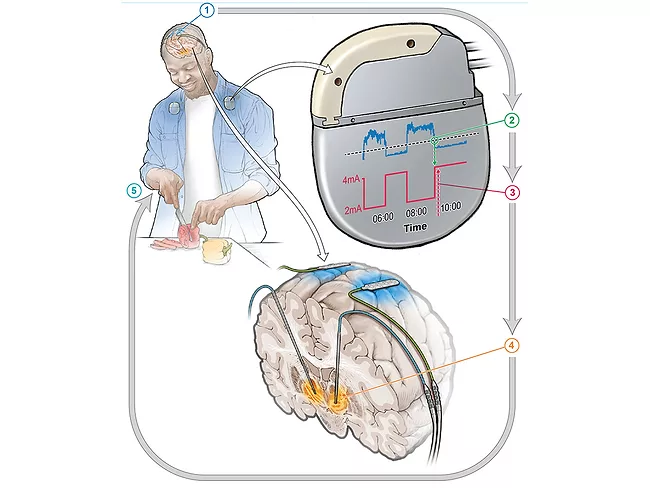
The U.S. FDA recently granted Medtronic plc approval for its deep brain stimulation (DBS) system to be used to treat Parkinson’s disease or essential tremor while a patient is asleep, under general anesthesia. The approval gives patients another option for DBS therapy which can transform their quality of life, Amaza Reitmeier, vice president and general manager for Medtronic brain modulation, told BioWorld in an interview.
After sparking further interest from investors after the close of its series A, Vandria SA has extended the round and now has the means to advance its lead mitophagy inducer program as far as phase Ib/IIa development in the treatment of mild cognitive impairment.
After sparking further interest from investors after the close of its series A, Vandria SA has extended the round and now has the means to advance its lead mitophagy inducer program as far as phase Ib/IIa development in the treatment of mild cognitive impairment.
An implanted deep brain stimulator that calibrates its electrical pulses based on changes in brain activity reduced patients’ most bothersome symptoms of Parkinson’s disease 50%, a small feasibility study published in Nature Medicine found.
Aussie biotech Alterity Therapeutics Ltd. released interim data of an open-label phase II trial for lead candidate ATH-434 for treating multiple system atrophy that showed 43% of participants improved, with 29% showing either stable or improved neurological symptoms.
After reaching a height in 2021, seed and series A rounds have fallen in recent years, and 2024 is no exception, although amounts raised are tracking slightly ahead of last year. On July 23, the numbers were given a boost when two new companies – namely Dover, Del.-based Brenig Therapeutics Inc. and Boston-based Third Arc Bio Inc. – raised $65 million and $165 million, respectively, in series A financings. A third new company, Abiologics Inc., also received $50 million in initial funding.
A schizophrenia drug in Cerevel Therapeutics Inc.’s lineup understandably stole much of the thunder during coverage of Abbvie Inc.’s takeover late last year to the tune of $8.7 billion, but much further back in the pipeline awaits another potentially lucrative prospect: a kappa opioid receptor antagonist (KORA) for major depressive disorder (MDD).
Aussie biotech Alterity Therapeutics Ltd. released interim data of an open-label phase II trial for lead candidate ATH-434 for treating multiple system atrophy that showed 43% of participants improved, with 29% showing either stable or improved neurological symptoms.
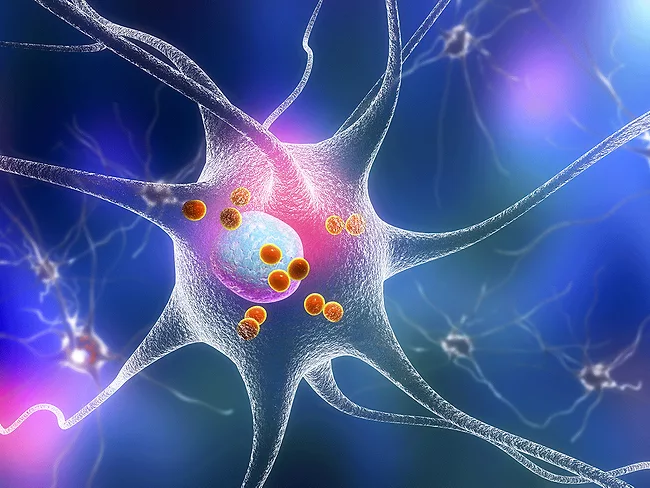
Promoting α-synuclein (α-Syn) aggregate disassembly is one of the strategies to combat Parkinson’s disease (PD), the second most prevalent neurodegenerative disease after Alzheimer’s disease.