Nonhuman primate (NHP) models may contribute to advance research in Alzheimer’s disease (AD) thanks to their genetic, anatomical and physiological similarities with humans. However, their use in AD research is limited by significant challenges, including long generation times, ethical considerations and technical challenges of genetic modification.
Vandria SA has been awarded two grants totaling €3.8M (US$4.1M) from Innosuisse and Eurostars to support its two lead drug candidates addressing CNS and muscle diseases, respectively.
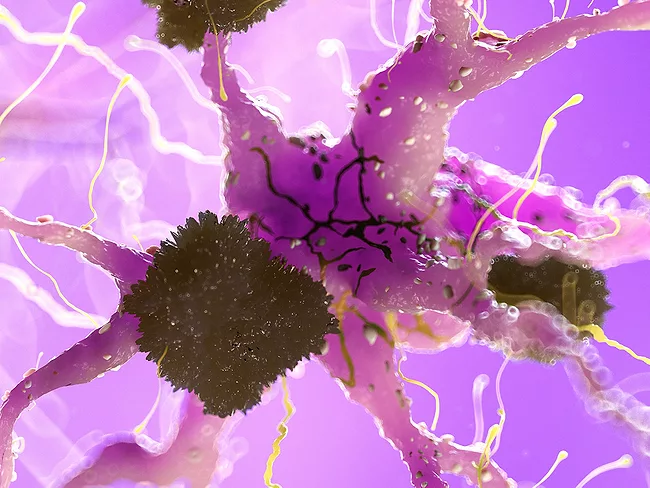
It is well known that protein tau forms aggregates in the brain in neurodegenerative diseases such as Alzheimer’s disease (AD) that are also known as tauopathies. Accumulation of protein tau in the brain leads to the cell toxicity and promotes the loss of synaptic plasticity, which in turn causes memory loss. As reported on Feb. 1, 2024, in The Journal of Clinical Investigation, assistant professor Tara Tracy and her research team from the Buck Institute for Research on Aging have discovered a protein in the brain that could restore this damage induced by protein tau.
Although several mouse models have been developed to investigate the mechanisms underlying Alzheimer’s disease (AD), most of them are transgenic and, therefore, present disadvantages in terms of costs and time constraints. To overcome these limitations and develop a more cost-effective and reliable animal model, a team of researchers from JSS Academy of Higher Education & Research and collaborators recently proposed a novel pharmacological AD model in zebrafish using aluminum chloride (AlCl3).
Igc Pharma Inc. has reported additional results of preclinical studies investigating TGR-63, a potential treatment for Alzheimer’s disease. TGR-63 is designed to disrupt the structure of the amyloid-β (Aβ) peptide, one of the key hallmarks of Alzheimer’s.
Cognito Therapeutics Inc. closed a $35 million extension to the series B fundraising round it started in 2023, bringing the total for the round to $108 million and the total funding to date to $128 million. Cognito is developing Spectris, a wearable medical device that provides visual and auditory stimulation for the treatment of Alzheimer’s disease and other neurological disorders.
Halia Therapeutics Inc. has, its CEO confidently asserts, taken an atypical road to building its infrastructure and financing. The Lehi, Utah-based company just completed a $30 million series C financing to further develop its lead asset, a selective and orally bioavailable first-in-class NLRP3/NEK7 inflammasome inhibitor.
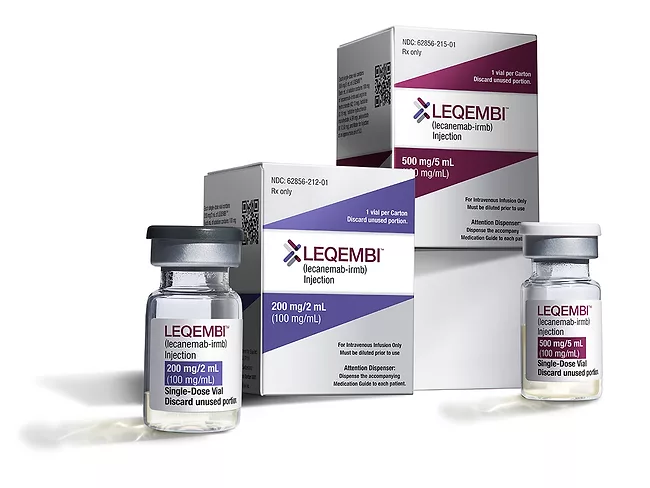
Biogen Inc.’s problematic trip with Aduhelm (aducanumab-avwa) for Alzheimer’s disease (AD) at last came to an end as the company, probably surprising few on Wall Street, said it’s quitting sales and development of the amyloid-beta directed antibody. The drug won accelerated approval by the U.S. FDA in July 2021. The phase III Envision study with Aduhelm will be stopped, and Cambridge, Mass.-based Biogen chalked a one-time charge of about $60 million related to close-out costs for the program in the fourth quarter of 2023. AD efforts have turned toward Leqembi (lecanemab-irmb), also an amyloid-beta directed antibody.