Halia Therapeutics Inc. has, its CEO confidently asserts, taken an atypical road to building its infrastructure and financing. The Lehi, Utah-based company just completed a $30 million series C financing to further develop its lead asset, a selective and orally bioavailable first-in-class NLRP3/NEK7 inflammasome inhibitor.
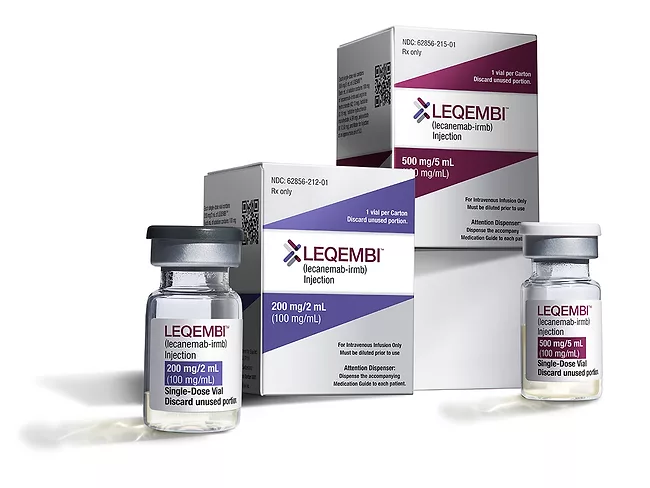
Biogen Inc.’s problematic trip with Aduhelm (aducanumab-avwa) for Alzheimer’s disease (AD) at last came to an end as the company, probably surprising few on Wall Street, said it’s quitting sales and development of the amyloid-beta directed antibody. The drug won accelerated approval by the U.S. FDA in July 2021. The phase III Envision study with Aduhelm will be stopped, and Cambridge, Mass.-based Biogen chalked a one-time charge of about $60 million related to close-out costs for the program in the fourth quarter of 2023. AD efforts have turned toward Leqembi (lecanemab-irmb), also an amyloid-beta directed antibody.
Vaxxinity Inc. has announced a research collaboration with the University of Florida’s (UF) Center for Translational Research in Neurodegenerative Disease (CTRND) to support its work on the development of vaccines for neurodegenerative diseases.
Investigators have identified five cases of so-called iatrogenic Alzheimer’s disease (AD), that is, AD that was acquired as a result of undergoing medical procedures. A team led by University College London scientists reported their findings online in Nature Medicine on Jan. 29, 2024.
Investigators have identified five cases of so-called iatrogenic Alzheimer’s disease (AD), that is, AD that was acquired as a result of undergoing medical procedures. A team led by University College London scientists reported their findings online in Nature Medicine on Jan. 29, 2024.
Inhibiting the aggregation process of Aβ42 is one of the main objectives in the development of therapies for Alzheimer’s disease, but the heterogeneous nature of the neurotoxic oligomers poses a significant challenge. Researchers from the Universita degli Studi di Firenze presented the preclinical evaluation of DesAb-O, a single-domain antibody targeting Aβ42 oligomers.
Quibim SL recently launched its artificial intelligence (AI)-based software QP-Brain, which is designed to detect early-stage neurodegenerative diseases, after it received U.S. FDA 510(k) clearance, as well as CE and UKCA marks from the EU and U.K. regulators, respectively. QP-Brain quantifies and presents data from patients’ brain images to help clinicians with early diagnosis and treatment strategies for diseases such as Alzheimer’s, multiple sclerosis and dementia.
Current risk genes for some diseases such as multiple sclerosis (MS) may have emerged in the past as protection against infection by different pathogens. A group of researchers led by scientists from the University of Copenhagen has analyzed the ancient DNA of European populations and has revealed how MS, Alzheimer’s disease (AD) and diabetes arose as populations migrated. This evolution would explain the modern genetic diversity and the incidences of these pathologies observed today in the old continent.
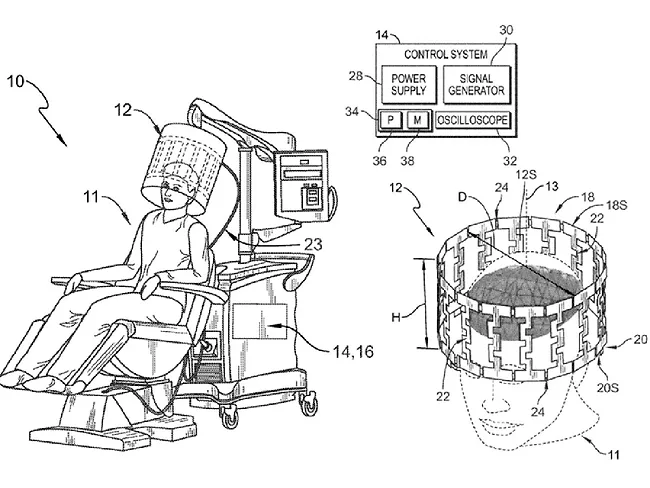
Researchers from Indiana University are seeking patent protection for an electromagnetic field (EMF) generation system for treating neurodegenerative diseases. The EMF generation system emulates a small-scale magnetic resonance imaging (MRI) machine, producing the same 64 MHz frequency at a much lower operating power.