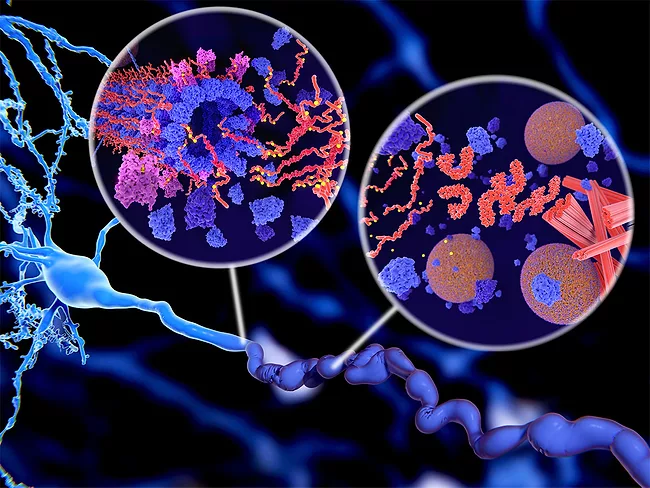
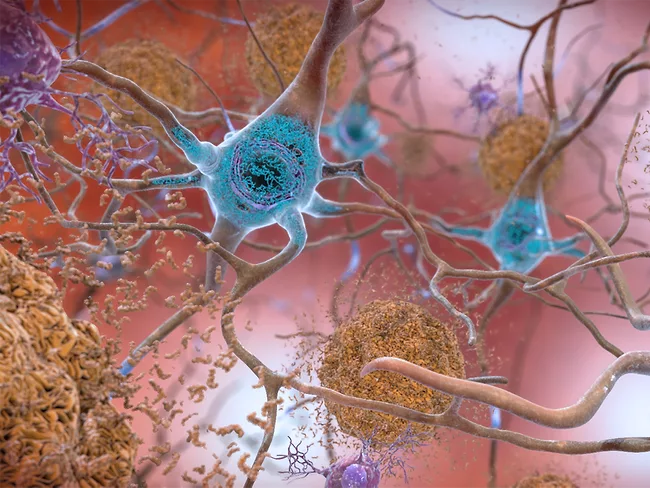
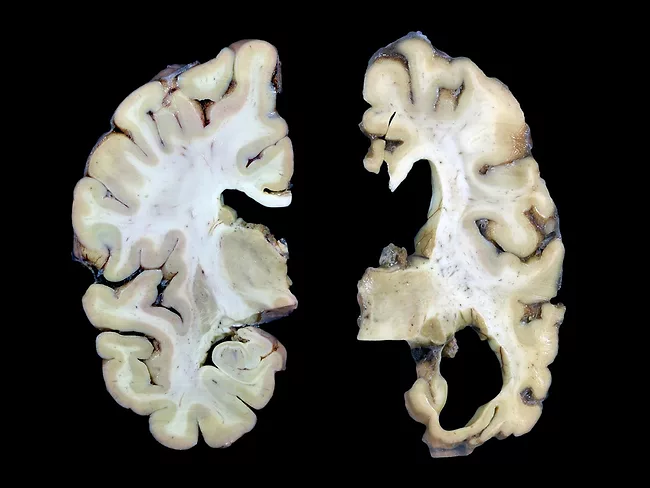
After many years of testing different monoclonal antibodies against amyloid-β protein, the results obtained are far from being outstanding, and the control of the progression and symptoms of Alzheimer’s disease (AD) remains elusive. At the recent AD/PD 2024 conference held in Lisbon, new non-anti-amyloidogenic strategies in the starting line against AD were discussed. Professor Einar Sigurdsson from New York University gave a presentation entitled, “Single domain antibodies for therapy and diagnosis of synucleinopathies and tauopathies.”
Laboratory Corporation of America Holdings expanded its blood biomarker test portfolio for Alzheimer’s disease, making its pTau217 test available by prescription in the U.S. as well as for research globally. The standalone test can also be used in monitoring patients undergoing treatment for the neurodegenerative disease.
Prosetta Biosciences Inc. has presented data on small molecules that inhibit cellular host factors needed for viral replication as a discovery tool to identify molecular interfaces upstream of Alzheimer’s disease cellular pathology.
It has been previously demonstrated that genetic loss-of-function of triggering receptor expressed on myeloid cells 2 (TREM2) impairs microglia migration, with the TREM2 R47H variant having been linked to increased risk of Alzheimer’s disease (AD) due to impaired microglia clustering and enhanced neuronal damage.
Top-line data from Seelos Therapeutics Inc.’s phase II/III study of SLS-005 in amyotrophic lateral sclerosis (ALS) failed to meet statistical significance in its primary and secondary endpoints, continuing the stock’s nearly half-year downward trajectory.
At first glance, the number of drugs that received accelerated approval from the U.S. FDA’s Center for Drug Evaluation and Research (CDER) in 2023 was nothing to write home about. Yes, CDER granted nine accelerated approvals last year, up from six in 2022. But the proportion of novel drugs with accelerated approval was 16% both years. And when compared with the 12 drugs in 2020 and the 14 that received accelerated approval in 2021, last year’s crop was a little lackluster. However, a deeper look at the 2023 class of accelerated approvals shows a historic milestone. For the first time since the path was created in 1992, the number of novel biologics getting accelerated approval at CDER outpaced the number of small-molecule drugs.
Recent studies have identified HAVCR2, which encodes immune checkpoint molecule TIM-3 (T-cell immunoglobulin mucin receptor 3), as a risk gene for late-onset Alzheimer’s disease (AD).
Alterations in mitochondrial dynamics are hallmarks of Parkinson’s disease (PD) and other neurodegenerative disorders such as Alzheimer’s disease (AD).
Advances in understanding the processes underlying brain neurodegeneration have allowed lots of new treatment and prevention strategies to begin to flourish. Several presentations at the 2024 Alzheimer’s & Parkinson’s Diseases Conference recently held in Lisbon reflect that eyes are now on some individuals who, despite showing pathological signs in their brains, stay cognitively healthy across several endogenous mechanisms of resilience.