Otsuka Pharmaceutical Co. Ltd.’s AVP-786 missed the primary endpoint for a third time in a phase III trial for agitation associated with dementia due to Alzheimer’s disease (AD). Two previous phase III trials also failed to show statistical significance for AVP-786.
The company has developed a method of transplantation of human hematopoietic stem cells that allows their engraftment and differentiation into microglial cells.
Investigators at the National Institute of Diabetes and Digestive and Kidney Disorders (NIDDK) have used a gene-constrained analysis to identify nine new Alzheimer’s disease (AD) risk genes that are possibly linked to the higher prevalence of AD in people with African ancestry. One of those genes, GNB5, regulates the stability of certain G protein-signaling proteins, which are activated by G protein-coupled receptors (GPCRs). The authors showed that mice with only one copy of Gnb5 developed more amyloid plaques and tau tangles than those with two copies.
Oligomeric amyloid-β (Aβ) peptide causes synaptic dysfunction, accumulates within synapses, and has been associated with synapse loss around plaques in Alzheimer’s disease (AD). However, there is a need to identify synaptic binding partners of Aβ that mediate synaptotoxicity in the brain. A team of investigators from the University of Edinburgh and affiliated organizations aimed to identify synaptic receptors that bind Aβ in human AD.
Otsuka Pharmaceutical Co. Ltd.’s AVP-786 missed the primary endpoint for a third time in a phase III trial for agitation associated with dementia due to Alzheimer’s disease (AD). Two previous phase III trials also failed to show statistical significance for AVP-786.
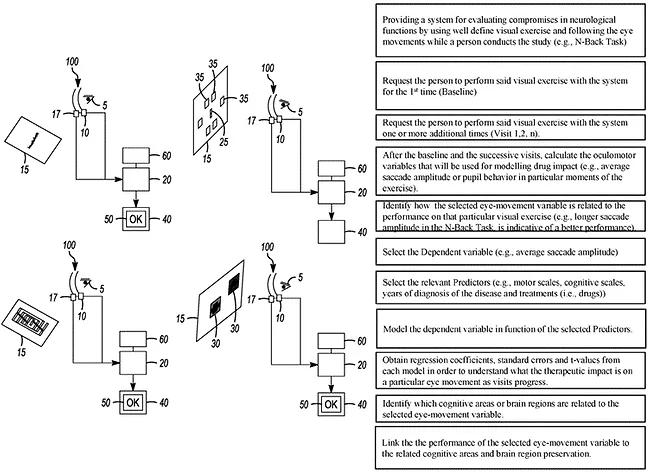
New York-based Viewmind Inc. has applied for patent protection of methods and systems for detecting neurological disorders and/or measuring, fine-motor skills, processing speed, decision making, and cognitive processes by measuring eye movements, oculomotor features and pupil behavior.
Nonhuman primate (NHP) models may contribute to advance research in Alzheimer’s disease (AD) thanks to their genetic, anatomical and physiological similarities with humans. However, their use in AD research is limited by significant challenges, including long generation times, ethical considerations and technical challenges of genetic modification.
Vandria SA has been awarded two grants totaling €3.8M (US$4.1M) from Innosuisse and Eurostars to support its two lead drug candidates addressing CNS and muscle diseases, respectively.