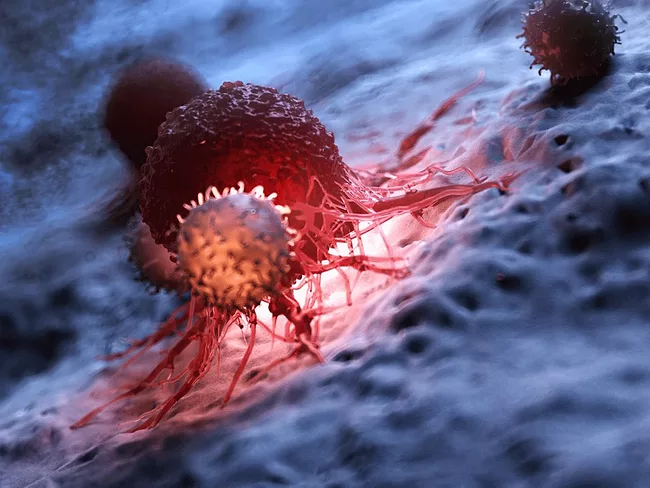
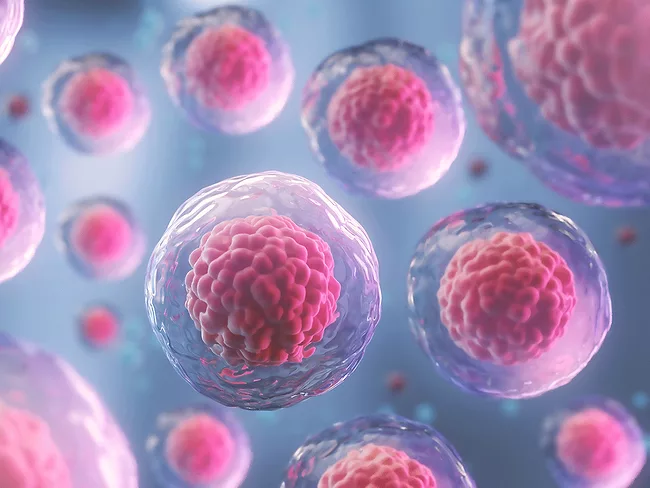
A new method has been devised to produce generic chimeric antigen receptor (CAR) T cells at scale by directing induced pluripotent stem cells to differentiate into mature T cells in vitro. The generic T cells can then be engineered to express a range of different chimeric antigen receptors.
Researchers are closer to better diagnosing and treating age-related macular degeneration (AMD) after discovering new genetic signatures of the disease by reprogramming stem cells to generate high-resolution disease models.
Researchers are closer to better diagnosing and treating age-related macular degeneration (AMD) after discovering new genetic signatures of the disease by reprogramming stem cells to generate high-resolution disease models.
Evotec AG and Sernova Corp. are joining forces in a bid to develop a functional cure for type 1 diabetes. The companies plan to file an IND early in 2024 for a combined cell therapy and medical device product comprising Evotec’s human beta cells, derived from the company’s induced pluripotent stem cell platform, and Sernova’s Cell Pouch delivery system, which provides transplanted cells with a vascularized, physiologically appropriate environment that enables them to secrete insulin and other hormones involved in regulating blood glucose levels.
SCG Cell Therapy Pte. Ltd. has acquired rights to human induced pluripotent stem cell technology from Singapore’s Agency for Science, Technology and Research (A*STAR)’s Accelerate Technologies Pte. Ltd. to support the development of natural killer (NK) cell therapies for leukemia, liver cancer, gastric cancer and other solid tumors.
SCG Cell Therapy Pte. Ltd. has acquired rights to human induced pluripotent stem cell technology from Singapore’s Agency for Science, Technology and Research (A*STAR)’s Accelerate Technologies Pte. Ltd. to support the development of natural killer (NK) cell therapies for leukemia, liver cancer, gastric cancer and other solid tumors.
A group of scientists at the Cincinnati Children's Hospital has used separate lines of human induced pluripotent stem cells to create stomach organoids with a three-layered structure and gastric function such as smooth muscle contraction and glandular secretion. The team reported its results in the December 2021, issue of Cell Stem Cell.
Clade Therapeutics Inc., which launched with an $87 million series A round, may have what sounds like an ambitious goal: to create scalable, off-the-shelf stem cell-based medicines that can be as accessible to patients as antibody therapies are today. But the startup, backed by more than two decades of advances in the area of induced pluripotent stem cells, is within sight of developing a cell therapy to take into clinical testing.
DUBLIN – Treefrog Therapeutics SA closed a $75 million series B round this week, which will help to increase its reach and its profile, as it pursues its highly ambitious objective to drive the adoption of a new way of making induced pluripotent stem cells (iPSCs) at scale. The Bordeaux, France-based firm is not a CDMO in any sense, however. It is a fully fledged biotech, with early stage iPSC-based programs in Parkinson’s disease, cardiovascular disease and bone marrow transplant, among others. It’s just that it is also attempting to revolutionize how those cells are cultivated before it administers them as therapies.
With a special interest in neurological disorders, Hopstem Biotechnology Co. Ltd. closed a series A++ round to raise nearly ¥100 million (US$15.5 million) to advance hNPC-01, an off-the-shelf induced pluripotent stem cells (iPSC)-derived human forebrain neural progenitor cell product to treat chronic conditions caused by stroke and traumatic brain injuries.