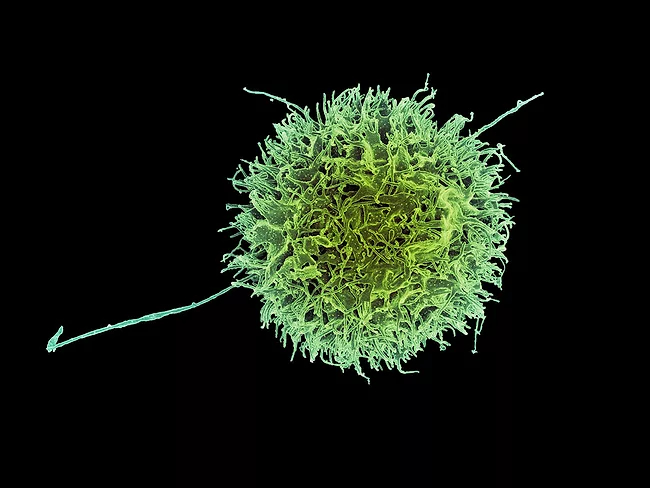
Multiple companies are pursuing CD47-blockade as a tumor immunotherapy approach. Sana Biotechnology Inc., too, is interested in the therapeutic potential of CD47 – but from a very different angle. By overexpressing CD47 on stem cells, researchers at Sana want to make transplanted cells invisible to the immune system.
Sometimes, scientific progress comes from conceptual insights that arrive in a flash. More often, however, such progress arrives in a decidedly less glamorous, though no less important, manner – through the development of new technologies in what can be a very slow iterative cycle of getting a new method to work.
Japanese scientists led by Shin Kaneko, an associate professor in the Center for iPS Cell Research and Application at Kyoto University, have developed the first practical bioengineering strategy for generating a universal pluripotent stem cell.
Shoreline Biosciences Inc., a San Diego-based company developing allogenic natural killer and macrophage cellular therapies for cancer and other diseases, has raised $43 million in a financing led by Boxer Capital.
DUBLIN – Cellectis SA is picking up $15 million worth of equity in Cytovia Therapeutics Inc. and could earn as much as $760 million in development, regulatory and sales milestones from a deal involving up to five gene-edited allogeneic natural killer (NK) cell or chimeric antigen receptor (CAR-NK) cell therapies employing its Talen (transcription activator-like effector nuclease) gene editing technology.
PERTH, Australia – Melbourne-based regenerative medicine company Cynata Therapeutics Ltd. is gearing up to take its Cymerus mesenchymal stem cell (MSC) product candidate, CYP-004, into a phase III trial in osteoarthritis.
PERTH, Australia – Melbourne-based regenerative medicine company Cynata Therapeutics Ltd. is gearing up to take its Cymerus mesenchymal stem cell (MSC) product candidate, CYP-004, into a phase III trial in osteoarthritis.
Fate Therapeutics Inc. inked a multiyear, global collaboration worth up to $3 billion with Janssen Biotech Inc., which calls for the latter to contribute antigen binding domains for up to four tumor-associated targets.
Aspen Neuroscience Inc. hopes to get into the clinic to test autologous neuron replacement in Parkinson’s disease with a $6.5 million seed round. The financing featured several established life sciences venture investors; it was led by Domain Associates and Axon Ventures and included Alexandria Venture Investments, Arch Venture Partners, Orbimed, and Section 32.
BEIJING – Tokyo-based biotech firm Heartseed Inc., which focuses on regenerative medicine, has closed a series B financing round to pocket $26 million that will go to its lead drug candidate, HS-001, for treating heart failure.