Qyuns Therapeutics Co. Ltd. has filed to list on the Hong Kong Exchange to fund its autoimmune and allergic disease therapy pipeline, including lead assets QX-002N for ankylosing spondylitis and QX-005N for multiple indications including atopic dermatitis.
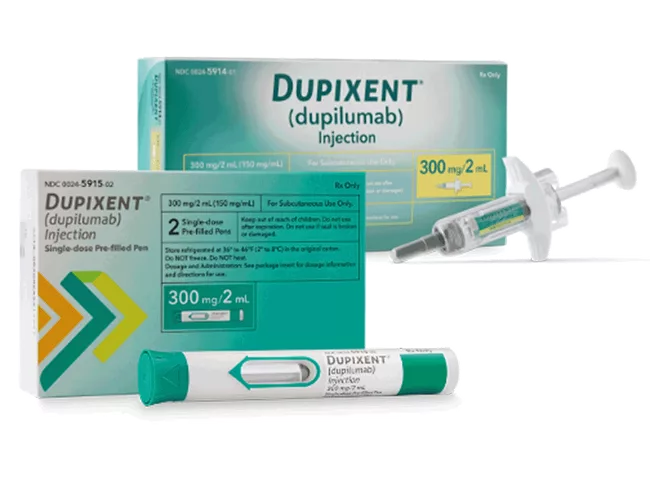
Dupixent (dupilumab) continues to expand its scope, this time potentially leading it and its developers into a new, multibillion dollar blockbuster market. Dupixent hit the primary and all key secondary endpoints in a phase III study of treating chronic obstructive pulmonary disease (COPD).
Where European regulatory decisions were concerned, there was good news and bad news for pharma today as Sanofi SA and Regeneron Pharmaceuticals Inc. got the go-ahead for expanded approval of Dupixent (dupilumab) in pediatric atopic dermatitis patients whilst Ipsen SA’s ultra-rare bone disease drug palovarotene was left off the shelf as efficacy data failed to impress.
Blueprint Medicines Corp.’s cancer drug Ayvakyt (avapritinib) looks set to gain an expanded label in Europe, amid a flurry of decisions from the European Medicines Agency’s CHMP scientific committee. Late last week the CHMP gave a positive opinion for Ayvakyt for treatment of adults with advanced systemic mastocytosis, meaning the drug is likely to gain a further European indication in the coming weeks.
As more therapies are approved to treat severe atopic dermatitis, U.S. payers should make available at least one biologic and one JAK1 inhibitor, given how different the drug classes are in their onset of action and their risk profile, a panel of experts recommended at a recent Institute for Clinical and Economic Review (ICER) roundtable.
Rapt Therapeutics Inc. CEO Brian Wong said RPT-193 monotherapy in atopic dermatitis (AD) “looks really promising, but there’s still quite a bit to learn” about the small molecule, designed to inhibit the migration of Th2 cells into inflamed tissues by blocking CCR4. Investors saw enough to push the shares of South San Francisco-based Rapt up 115.5%, or $21.45, to close at $40.02, after trading as high as $41.99 during the day.
The FDA slapped Leo Pharma A/S’ BLA for IL-13 inhibitor tralokinumab with a complete response letter (CRL), making it the latest atopic dermatitis candidate to hit a regulatory setback in the U.S., following delays for three oral JAK inhibitor drugs earlier this month.
New articles highlighting phase III data on the IL-13 inhibitor tralokinumab from Leo Pharma A/S have shown that combining it with topical corticosteroids as needed was effective and well-tolerated in patients with moderate to severe atopic dermatitis.
Eli Lilly and Co.’s acquisition of Dermira Inc. for $1.1 billion in cash enlarges Lilly’s dermatology pipeline with the addition of lebrikizumab, a monoclonal antibody designed to bind IL-13 with high affinity, now in two phase III studies for treating moderate to severe atopic dermatitis (AD) in adolescent and adult patients, ages 12 and older.
Pfizer Inc. edged closer to Dermira Inc. in the rush for an approved treatment for atopic dermatitis (AD), a field dominated by Regeneron Pharmaceutical Inc.'s FDA-approved blockbuster, Dupixent (dupilumab), as Pfizer reported positive top-line results from a phase III trial evaluating the efficacy and safety of its oral JAK1 inhibitor, abrocitinib.