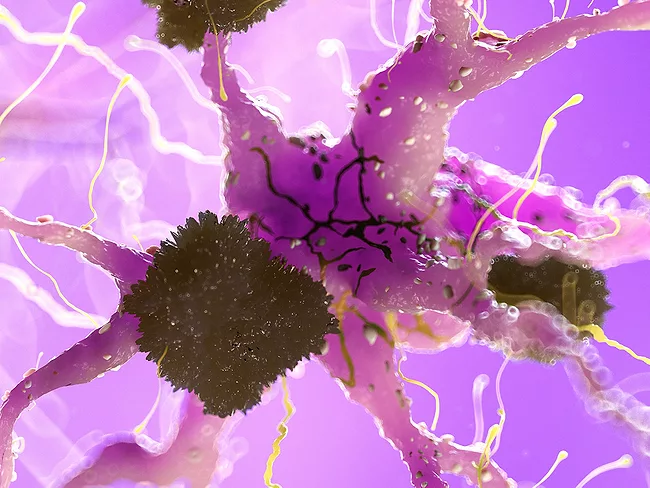
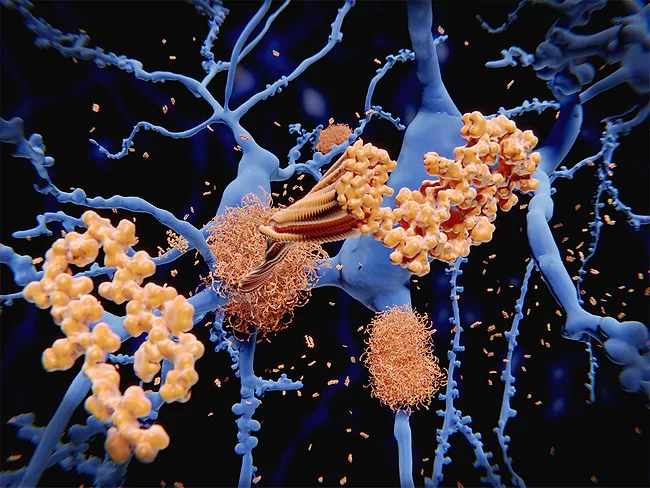
The difference between the origin of Alzheimer's disease (AD) and its symptoms is an obstacle to finding effective treatments. Scientists focused on amyloid-β (Aβ) plaques and tau aggregates to slow neurodegeneration and cognitive decline. Without identifying what causes AD, approved treatments do not provide much benefit. However, new findings suggest that restoring lithium levels in the brain could prevent and treat AD. Not just any lithium would work, just the forms that do not bind to Aβ.
Illimis Therapeutics Inc. raised ₩58 billion (US$42 million) in a series B financing round. The funds will support development of ILM-01, its lead bispecific fusion protein candidate, into preclinical development for Alzheimer’s disease by the second half of 2025, along with the company’s neuroimmunology portfolio.
Illimis Therapeutics Inc. raised ₩58 billion (US$42 million) in a series B financing round. The funds will support development of ILM-01, its lead bispecific fusion protein candidate, into preclinical development for Alzheimer’s disease by the second half of 2025, along with the company’s neuroimmunology portfolio.
Alzheimer’s disease (AD) progression involves microglial activation, and restoring or maintaining microglia homeostasis is a therapeutic approach to fight against AD.
Promis Neurosciences Inc. recently presented the rational design of an Alzheimer’s disease (AD) vaccine candidate maximizing the selective targeting of toxic amyloid-β oligomers.
Samsung Life Science Fund made its first strategic investment of the year into C2N Diagnostics LLC, underscoring the rising potential of blood-based diagnostics in detecting and monitoring the risk of Alzheimer’s disease for the masses.
Australia’s Therapeutic Goods Administration (TGA) has once again decided against approving Eisai Australia Pty Ltd.’s amyloid beta binder, Leqembi (lecanemab), for treating patients with mild cognitive impairment due to Alzheimer's disease and mild Alzheimer's dementia.
Only three years after it was co-founded by Johnson & Johnson, Aliada Therapeutics Inc. is being acquired by Abbvie Inc. in a deal valued at $1.4 billion that gives the big pharma firm another shot at the Alzheimer’s disease space. The all-cash deal, expected to close in the fourth quarter of 2024, will give Abbvie access to Aliada’s blood-brain barrier-crossing Modular Delivery, or MODEL, as well as rights to ALIA-1758, an anti-pyroglutamate amyloid beta antibody designed using MODEL, which is in phase I testing for Alzheimer’s disease.
Scientists at Harvard Medical School have shown that in mice lacking amyloid beta (Aβ), the fundamental hallmark of Alzheimer's disease (AD), neurons died from the effect of the most harmful mutation of this neurodegenerative disease. They showed that presenilin (PS) could be behind the origin of the disease without the need for Aβ. They maintain that it is time to update theories and redirect efforts.
The U.K. has become the first country in Europe to approve Leqembi (lecanemab), but as the breakthrough decision was announced, the health technology assessment body NICE said the benefits are too small to justify the cost of providing the Alzheimer’s disease therapy on the National Health Service (NHS).