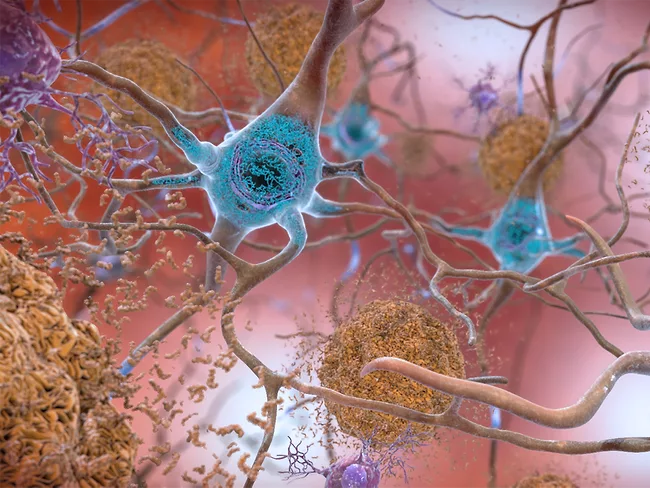
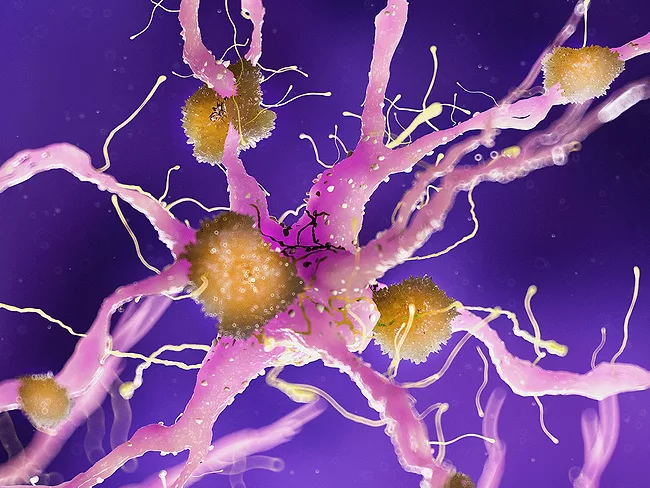
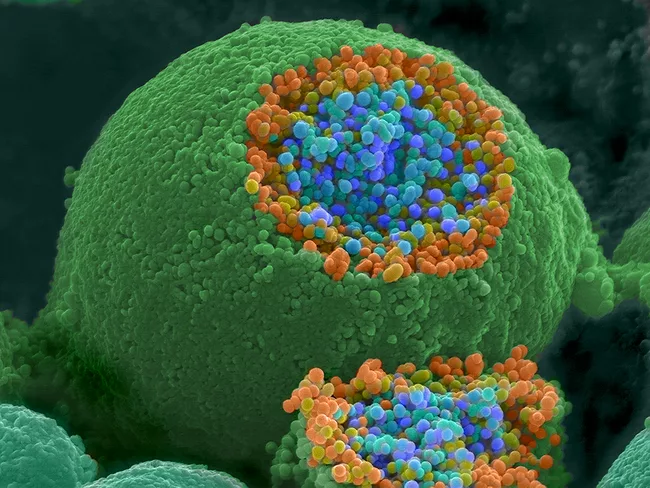
Questionable efficacy, high priced and risky side effects are some words to describe Leqembi (lecanemab), the latest amyloid beta-targeting antibody approved by the U.S. FDA, Korean experts said, but none of that diminishes the profound significance of the drug for Alzheimer’s disease.
With the approval of Aduhelm (aducanumab, Eli Lilly & Co.) and Leqembi (lecanemab, Eisai Co. Ltd.), there are finally amyloid-targeting drugs available for Alzheimer’s disease (AD). What’s not available, though, are rose-colored glasses of the prescription strength that would make these approvals look like AD’s happy ending. The biopharma industry is already well aware of the need for broader horizons. Roughly three-quarters of drugs now in clinical development for AD target neither amyloid-β (Aβ) nor tau. Still, the genetic evidence from familial AD strongly implicates Aβ processing in AD’s origins. In his opening plenary talk at the European Academy of Neurology 2023 annual conference, Thomas Südhof suggested new ways to look at the clinical data.
Six months after getting accelerated approval from the U.S. FDA without any input from an advisory committee, Eisai Co. Inc. and Biogen Inc.’s Alzheimer’s disease (AD) therapy, Leqembi (lecanemab) will make an appearance June 9 before the Peripheral and Central Nervous System Drugs Advisory Committee (PCNSDAC), set to discuss the supplemental BLA seeking to convert use of the amyloid beta-targeting antibody to traditional approval.
In January, a Wall Street analyst predicted the U.S. FDA’s rejection of Eli Lilly and Co.’s application seeking accelerated approval of amyloid beta-targeting Alzheimer’s candidate, donanemab, would be a “mere footnote” in the drug’s development, a forecast confirmed in the wake of positive top-line phase III data showing donanemab significantly slowed cognitive and functional decline in people with early symptomatic disease.
Investigators from the European Brain Research Institute (EBRI) recently presented data on an immunotherapeutic approach based on the monoclonal antibody (MAb) 12A12 for treating Alzheimer’s disease (AD).
In Alzheimer’s, the amyloid beta hypothesis has proved most persistent in terms of drug development efforts to date, but aggregation of other pathogenic factors – phosphorylated tau (p-tau), APOE4, TREM2 and alpha-synuclein, for example – have also emerged as hallmarks of the disease. It’s that aggregation that seven-year-old Truebinding Inc. aims to target with its lead program, TB-006, a monoclonal antibody against galectin-3.
Marking the latest Alzheimer’s disease (AD) disappointment, Eli Lilly and Co.’s solanezumab failed in a phase III trial to slow progression of cognitive decline in patients at the preclinical stage of the disease – those with amyloid plaque but no clinical symptoms – prompting the company to terminate development. The Indianapolis-based company is turning its attention instead to phase III AD products donanemab and remternetug.
The shadow of two reported patients’ deaths hovers over Eisai Co Ltd. and Biogen Inc.’s Alzheimer’s disease treatment, lecanemab, as the companies prepare to present phase III study data on the drug later today at the 15th Clinical Trials on Alzheimer's Disease conference.
Two phase III failures with Roche Holding AG subsidiary Genentech Inc.’s gantenerumab in staving off mild cognitive impairment tied to Alzheimer’s disease (AD) revealed the level of amyloid-beta removal was lower than the company expected. The protein amyloid beta accumulates in the brains of AD patients and its removal is suspected to be an eventual boon to AD patients. But there are still plenty of doubts. Top-line results from Genentech’s phase III Graduate I and II studies show gantenerumab, a fully human monoclonal IgG1 antibody, missed the primary endpoints of slowing clinical decline in those with mild cognitive impairment due to AD and mild AD dementia.
Extracellular vesicles (EVs) are nanosized membrane vesicles released from a variety of cells that play important roles in cell-cell communication and which circulate in almost every body fluid, including blood, urine and cerebrospinal fluid (CSF).