Scientists at Admare Bioinnovations Inc., Kingston General Hospital (KGH) and Queen’s University have described cytochrome P450 26B1 (CYP26B1) inhibitors reported to be useful for the treatment of acne, dry eye, meibomian glands dysfunction, fibrodysplasia ossificans progressive, heterotopic ossification (HO) and multiple osteochondroma.
Aldeyra Therapeutics Inc. has bounced back from a complete response letter in November to produce positive phase III data for reproxalap in treating dry eye disease. The company is one of many developing treatments using diverse mechanisms of action.
After trading as low as $2.04, shares of Palatin Technologies Inc. (NYSE:PTN) closed Feb. 28 down $1.57, or 39.7%, ending at $2.39 on word of results from the phase III pivotal Melody-1 trial with melanocortin pan-agonist PL-9643 vs. vehicle in dry eye disease.
As expected, Aldeyra Therapeutics Inc. received a complete response letter (CRL) from the U.S. FDA regarding its NDA for reproxalap in dry eye disease, with the agency requiring “at least one” additional study to prove efficacy of the reactive aldehyde species, or RASP, modulator.
Investors awaiting the announcement of a partnering deal for RASP modulator reproxalap ahead of the drug’s Nov. 23 PDUFA date were in for a rude awakening, as Aldeyra Therapeutics Inc. disclosed that the U.S. FDA had raised issues with the NDA, putting its imminent approval in dry eye disease in doubt. The update, disclosed in an SEC filing, sent shares (NASDAQ:ALDX) sinking 66%, or $3.60, to close Oct. 16 at $1.83.
Seinda Pharmaceutical Corp. has disclosed peptides reported to be useful for the treatment of corneal epithelial defect, corneal neovascularization and dry eye.
With the drug already under review by the U.S. FDA for dry eye disease (DED), Aldeyra Therapeutics Inc.’s reproxalap hit statistical significance in the second phase III study for allergic conjunctivitis (AC), and the firm is mulling what CEO Todd Brady called the “high-class problem” of how to best commercialize the product. A partner may help puzzle that out.
Hanall Biopharma Co. Ltd.’s phase III trial VELOS-3 of tanfanercept did not show effects on the central cornea of the eye or in eye dryness in the treatment of moderate to severe dry eye disease, the primary endpoints. Data from the trial did show improvements in tear production, a secondary endpoint.
Hanall Biopharma Co. Ltd.’s phase III trial VELOS-3 of tanfanercept did not show effects on the central cornea of the eye or in eye dryness in the treatment of moderate to severe dry eye disease, the primary endpoints. Data from the trial did show improvements in tear production, a secondary endpoint.
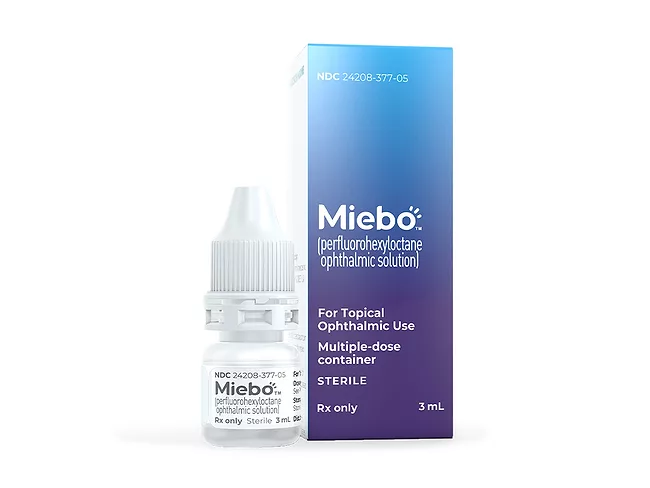
Less than a year after submitting their NDA and several weeks before the June 28 PFUFA date, Bausch + Lomb Corp. and partner Novaliq GmbH have been awarded U.S. FDA approval for Miebo, their perfluorohexyloctane eye drop formulation designed to treat the signs and symptoms of dry eye disease associated with meibomian gland dysfunction.