Philochem AG’s ligand-targeting approach drew to the table Bristol Myers Squibb Co. in a potential $1.35 billion agreement granting BMS subsidiary Rayzebio Inc. exclusive worldwide rights to OncoACP3, a diagnostic and therapeutic candidate targeting prostate cancer.
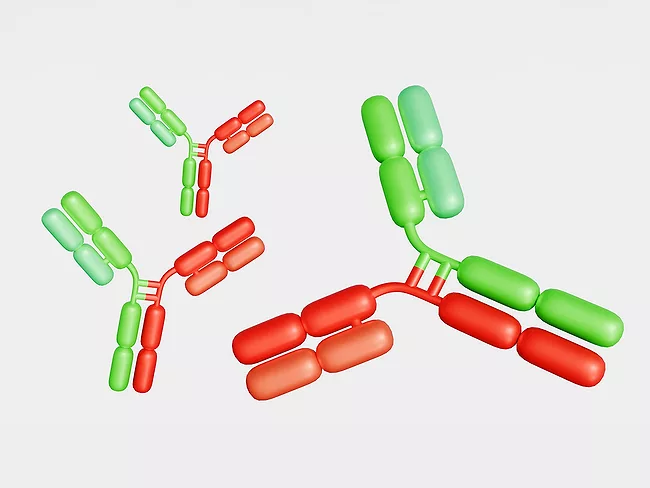
Biontech SE and Bristol Myers Squibb Co. are teaming up to develop Biontech’s BNT-327 in a deal possibly worth over $11 billion. BNT-327 is in the hot new class of bispecific antibodies targeting programmed death-1 (PD-1) or its ligand (PD-L1) and vascular endothelial growth factor (VEGF). The bispecifics take advantage of two well established mechanisms of action that help tumors grow; PD-1/PD-L1, which tells immunogenic T cells not to attack the tumor, and VEGF, which tumors excrete to produce new blood vessels to supply oxygen and other nutrients to the tumor.
Bristol Myers Squibb Co. has disclosed proteolysis targeting chimera (PROTAC) compounds comprising a cereblon (CRBN) E3 ubiquitin ligase-binding moiety covalently bonded to a B-cell lymphoma 6 protein (BCL-6)-targeting moiety through a linker. They are reported to be useful for the treatment of cancer and autoimmune diseases.
Bristol Myers Squibb Co. has identified molecular glue degraders comprising cereblon ligands and a eukaryotic peptide chain release factor GTP-binding subunit ERF3A (GSPT1)-targeting moiety acting as GSPT1 degradation inducers reported to be useful for the treatment of cancer.
Bristol Myers Squibb Co. has identified serum/glucocorticoid-regulated kinase 1 (SGK1) inhibitors reported to be useful for the treatment of fibrosis, cancer, cardiovascular, cerebrovascular, metabolic, inflammatory, neurological and immunological disorders, among others.
At last week’s American Chemical Society Spring meeting, Bristol Myers Squibb Co. discussed the development of a potent, orally bioavailable and highly selective cereblon (CRBN)-mediated ligand-directed degrader (LDD) of B-cell lymphoma 6 protein (BCL6), BMS-986458, for the treatment of B-cell non-Hodgkin lymphoma.
A Bristol Myers Squibb Co. patent detailed new substituted phenyl oxooxazolyl piperidine dione molecular glue degraders acting as DNA-binding protein Ikaros (IKZF1), zinc finger protein Helios (IKZF2), Aiolos (IKZF3) and Eos (IKZF4) degradation inducers potentially useful for the treatment of cancer.
Bristol Myers Squibb Co.’s decision this week to snag Bluebird Bio Inc. spinout 2seventy Bio Inc. for $102 million net – just weeks after investors bid $30 million for Bluebird itself – seemed to place a final blow on what was once a promising gene therapy company. The space in general has struggled to make business sense out of the one-time therapies that often involve complicated manufacturing and exorbitant prices, despite the life-changing value that gene therapies bring to patients. But despite some recent setbacks, biopharmas continue to plow forward with promising research in the field.