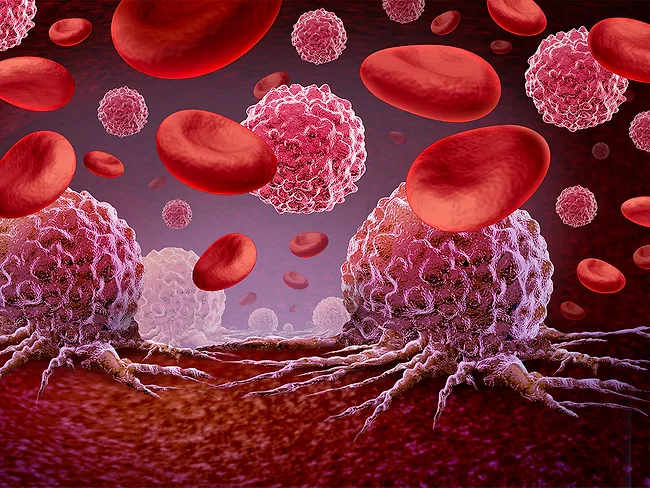
Genetic or pharmacologic inhibition of casein kinase 1α (CK1α) has proven effective in suppressing the proliferation of acute myeloid leukemia (AML) cell lines with wild-type TP53. Researchers from Bristol Myers Squibb Co. recently presented the discovery and preclinical characterization of BMS-986397, a cereblon E3 ligase modulatory drug (CELMoD) designed as a molecular glue degrader of CK1α.
Bristol Myers Squibb Co. has prepared and tested new Substituted benzimidazole compounds acting as Toll-like receptor 9 (TLR9) antagonists. They are reported to be useful for the treatment of fibrosis, metabolic dysfunction-associated steatohepatitis (MASH), chronic kidney disease, cancer, primary sclerosing cholangitis, idiopathic pulmonary fibrosis, inflammatory and autoimmune diseases.
At the recently concluded ACS Fall meeting, Bristol Myers Squibb Co. reported the discovery of potent orally bioavailable B-cell lymphoma 6 protein (BCL6) ligand-directed degraders (LDDs).
Abata Therapeutics Inc. announced it has received an equity investment from Bristol Myers Squibb to support the development of its Treg cell therapy products. Their investment supports Abata's continued advancement into the clinic, with trial initiation imminent for ABA-101 in progressive multiple sclerosis (MS). Abata obtained FDA clearance for a first-in-human study of ABA-101 in patients with MS in July.
The U.S. Department of Health and Human Services (HHS) is 6-1 so far in blocking court challenges to the Medicare price negotiation program mandated by the Inflation Reduction Act (IRA). The department’s latest victory came July 31 when a federal district judge in New Jersey tossed a complaint filed by Novo Nordisk A/S, citing a lack of jurisdiction on the court’s part and the company’s lack of standing.
Bristol Myers Squibb Co. (BMS) has terminated its $1.3 billion-plus deal for Agenus Inc.’s anti-TIGIT bispecific antibody AGEN-1777 as part of a promised belt-tightening. In May 2021, BMS paid Agenus a non-refundable $200 million up-front payment in cash for the licensing, manufacturing and commercialization agreement, then a $20 million milestone payment in December 2021 and another clinical milestone payment in January 2024 for $25 million.
Another failure with allosteric tyrosine kinase 2 (TYK2) inhibitor VTX-958 put an end to internal work with the compound, and shares of Ventyx Biosciences Inc. (NASDAQ:VTYX) fell July 29 to $2.24, down 71 cents or 24%, after the firm disclosed results from the phase II, 109-subject trial in moderately to severely active Crohn’s disease (CD).
The U.S. Department of Health and Human Services (HHS) and the FDA already are getting a glimpse of the post-Chevron world and how the Supreme Court’s June 28 unwinding of the 40-year-old Chevron deference could rein in agency policies that defy Congress’ expressed intent.
At a time when much of the biopharma space can’t seem to get enough of antibody-drug conjugates (ADC), Bristol Myers Squibb Co. is backing away from a potential $3 billion-plus collaboration with Eisai Co. Ltd., handing back full rights to the latter’s folate receptor alpha-targeting ADC, farletuzumab ecteribulin (FZEC), citing a portfolio reprioritization.
At a time when much of the biopharma space can’t seem to get enough of antibody-drug conjugates (ADC), Bristol Myers Squibb Co. is backing away from a potential $3 billion-plus collaboration with Eisai Co. Ltd., handing back full rights to the latter’s folate receptor alpha-targeting ADC, farletuzumab ecteribulin (FZEC), citing a portfolio reprioritization. Global rights to FZEC now reside with Tokyo-based Eisai, which said it intends to accelerate work on the candidate, which is in three clinical studies, including two phase II trials in gynecological cancers and non-small-cell lung cancer.