In the year’s fourth-largest deal, Prime Medicine Inc. will collaborate with Bristol Myers Squibb Co. in a research collaboration and license agreement totaling $3.61 billion. The two companies plan to develop reagents for ex vivo T-cell therapies. While the programs and targets have yet to be disclosed, BMS is expanding its CAR T development, begun more than five years ago, with this deal.
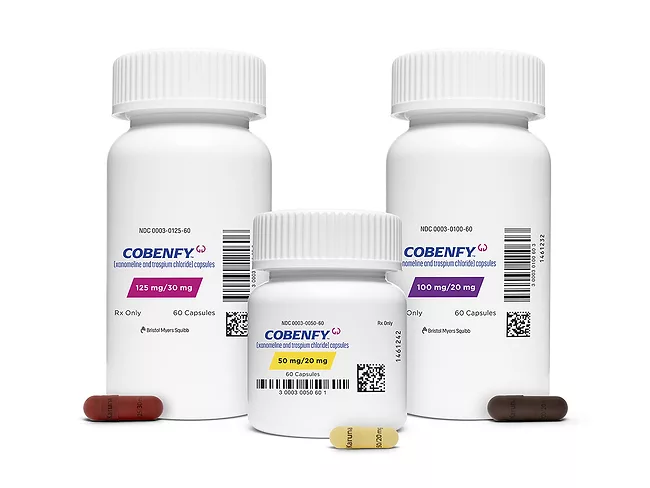
The FDA has approved Cobenfy, a dual M1/M4 muscarinic agonist that offers a fundamentally different approach to treating schizophrenia. The fixed dose combination of xanomeline-trospium is the first to act via a novel mechanism for the serious psychiatric disorder in over 50 years, finally expanding the treatment options beyond dopamine-targeted therapies. Bristol Myers Squibb Co., which acquired Cobenfy developer Karuna Therapeutics Inc. for $14 billion in a deal that closed in March 2024, said the drug will be available in the U.S. from late October.
The FDA’s Oncologic Drugs Advisory Committee (ODAC) met for what chairperson Christopher Lieu called, at the end, “an incredibly long day” to decide whether approval of immune checkpoint inhibitors should be restricted in accordance with expression levels of PD-L1.
Nine years on from securing $3.84 million for a phase I clinical trial to test the formulation, with results showing it overcame side effects that had confounded its forerunner, the schizophrenia treatment Karxt met its PDUFA date Sept. 26 with no decision by midday. If approved, the fixed combination of xanomeline-trospium will be the first in a new drug class, and as a dual M1/M4 muscarinic agonist, the first new therapy to act via a novel mechanism for the serious psychiatric disorder in over 50 years.
Positive data from two studies boosted Edgewise Therapeutics Inc.’s market share and elevated analyst enthusiasm for the company and its treatment of obstructive hypertrophic cardiomyopathy. Top-line data from the phase I and phase II studies of EDG-7500 in treating the genetic disease that results in thickened heart muscles showed the therapy was well-tolerated in healthy volunteers and produced meaningful improvements in those with the disease.
Roivant Sciences Ltd. has sold another company, this time offering up Dermavant Sciences Ltd. to Organon & Co. for $1.2 billion. The deal brings Organon into a crowded market for plaque psoriasis treatments. The massive amount comprises an up-front $175 million payment, along with a potential $75 million regulatory milestone and up to $950 million in commercial milestones. In the deal, Organon brings in Vtama (tapinarof) cream, a topical, aryl hydrocarbon receptor agonist for mild, moderate and severe plaque psoriasis in adults.
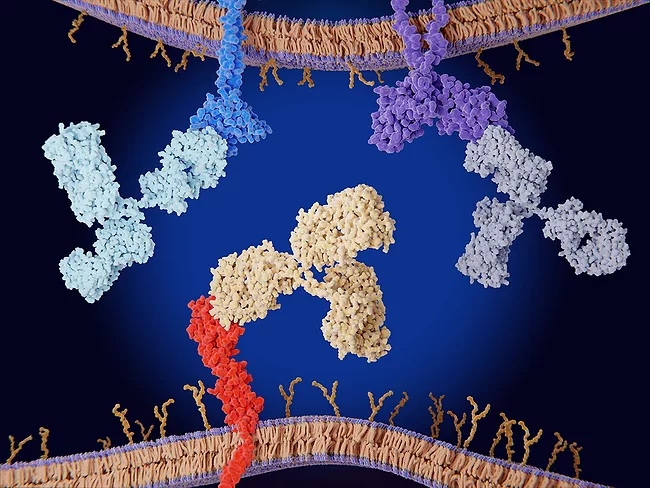
Bristol Myers Squibb Co. has described proteolysis targeting chimera (PROTAC) compounds comprising a E3 ubiquitin ligase-binding moiety coupled to a proto-oncogene tyrosine-protein kinase receptor Ret (RET; CDHF12; PTC) targeting moiety through a linker reported to be useful for the treatment of non-small-cell lung cancer.
Cytokinetics Inc. CEO Robert Blum said his firm chalked “a watershed moment” during last weekend’s congress of European Society of Cardiology (ESC) in London, where further mid- and late-stage data were disclosed with the heart drug aficamten, a myosin inhibitor. South San Francisco-based Cytokinetics rolled out six presentations, including two late breakers, with four concurrent publications in medical journals.
Scientists at Bristol Myers Squibb Co. and Celgene Corp. have synthesized proteolysis targeting chimera (PROTAC) compounds comprising a cereblon (CRBN) E3 ubiquitin ligase-binding moiety coupled to a protein-targeting moiety through a linker.
Researchers from Bristol Myers Squibb Co. disclosed the structure and presented preclinical data for the dual inhibitor of diacylglycerol kinases (DGK) α and ζ, BMS-986408. Optimization of a DGK-α-selective hit led to the synthesis of dual DGK-α and -ζ inhibitors.