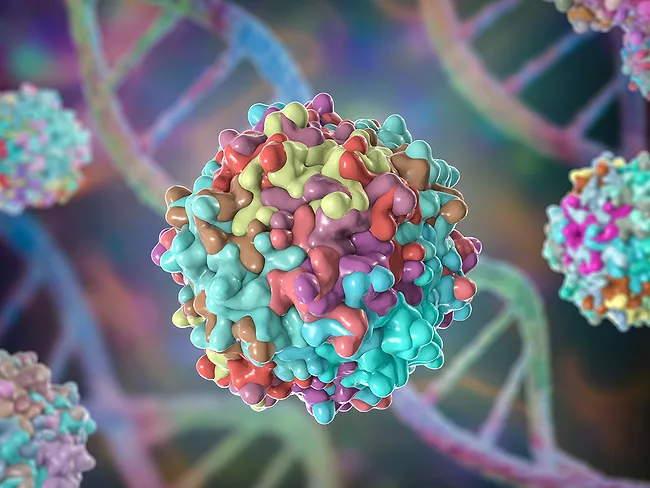
Researchers from the University of Copenhagen and collaborating institutions aimed to develop a therapy for chronic neuropathic pain based on gene therapy delivered with adeno-associated viral (AAV) vectors.
Directed evolution has become a central pillar in gene therapy. This engineering strategy enables the generation of more efficient variants of genetic editors and delivery vectors. Molecular diversification methods are increasingly sophisticated and are now accelerated by machine learning and AI tools, as showcased at the 29th Annual Meeting of the American Society of Gene and Cell Therapy (ASGCT) held in Boston this week.
Circular RNA (circRNA) is not a new concept, but it is a novel strategy in the field of gene and cell therapy. While mRNA vaccines have revolutionized medicine, this RNA fragment without free ends surpasses their performance in both efficacy and durability, bringing it to the attention of several pioneering companies. The latest advances in circRNA presented at the 29th Annual Meeting of the American Society of Gene and Cell Therapy (ASGCT) clearly surpass the performance achieved with linear mRNA.
Children and adults with a type of congenital hearing loss now have a free treatment option, with the U.S. FDA’s accelerated approval of Regeneron Pharmaceuticals Inc.’s DB-OTO, an AAV-mediated gene therapy. Branded Otarmeni (lunsotogene parvec), it is cleared specifically for hearing loss caused by variants in the otoferlin gene.
Shape Therapeutics Inc. could bring in as much as $1.2 billion in a new option and license deal with Vectory Therapeutics BV. It’s another collaboration for both companies that are known for working with large and small pharmas. Vectory is getting the exclusive option to evaluate Shape’s brain-penetrating adeno-associated virus capsid, SHP-DB1, against three targets, including mHTT, TDP-43 for Huntington’s disease and phosphorylated tau for Alzheimer’s disease.
Sangamo Therapeutics Inc.’s stock sank sharply on the last day of 2025 as Pfizer Inc. handed back the rights to their collaborative gene therapy hemophilia A program. While it was another big loss to Sangamo, which had seen two other major deals fall through in the past two years, the company still has two large collaborations in development.
Sangamo Therapeutics Inc.’s second large, worldwide licensing deal for its capsid technology in the past five months is with Astellas Pharma Inc. The California-based company is getting $20 million up front and the chance to bring in up to $1.3 billion in fees and milestone payments in an agreement spanning five potential disease targets for gene therapies to treat neurological diseases.
Sangamo Therapeutics Inc.’s second large, worldwide licensing deal for its capsid technology in the past five months is with Astellas Pharma Inc. The California-based company is getting $20 million up front and the chance to bring in up to $1.3 billion in fees and milestone payments in an agreement spanning five potential disease targets for gene therapies to treat neurological diseases.
Privately held Dyno Therapeutics Inc. has added another notch to its adeno-associated virus (AAV) vectors development portfolio in a deal with the Roche Group that includes $50 million up front and ultimately could top $1 billion. Dyno will help in developing next-generation AAV vectors, optimized by artificial intelligence, to target neurological diseases.
Privately held Dyno Therapeutics Inc. has added another notch to its adeno-associated virus (AAV) vectors development portfolio in a deal with the Roche Group that includes $50 million up front and ultimately could top $1 billion. Dyno will help in developing next-generation AAV vectors, optimized by artificial intelligence, to target neurological diseases.