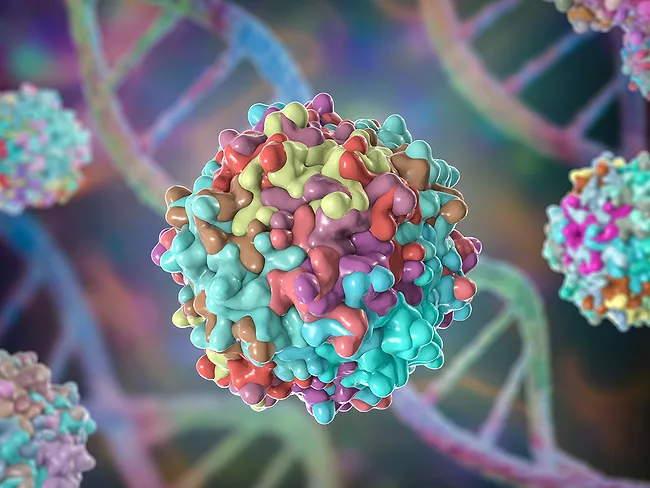
Philadelphia-based Latus Bio Inc., co-founded by serial biotech entrepreneurs P. Peter Ghoroghchian and Beverly Davidson, launched on May 2 with two lead adeno-associated virus (AAV)-based gene therapy candidates and $54 million in a series A financing.
Pfizer Inc.’s Beqvez (fidanacogene elaparvovec) won FDA approval for use in adults with hemophilia B, making it the second adeno-associated viral (AAV) vector-based gene therapy available for patients in the U.S., following the late 2022 approval of CSL Behring’s Hemgenix (etranacogene dezaparvovec).
The hearing has returned for the first person who has received gene therapy for treating genetic hearing loss in the U.S. Initial results from Akouos Inc.’s phase I/II study showed that within 30 days of receiving AK-OTOF-101, pharmacologic hearing was restored to an 11-year-old who had profound hearing loss from birth.
After the initial approvals in monogenic inherited diseases, the scope of gene therapy is widening, with new delivery routes, novel vectors, cell-specific targeting and products aiming to treat chronic disorders, all making headway in 2023.
Takara Bio Inc. has announced the development of a novel adeno-associated virus (AAV) vector, Sonuaav, which exhibits high gene transfer efficiency into inner ear tissues, with a collaborator at Juntendo University School of Medicine.
A new gene editing method uses the CRISPR technique to modify the cells of an organ in vivo, creating a mosaic used to identify the effects of each altered gene. Scientists from the Swiss Federal Institute of Technology (ETH) in Zürich developed this technology called AAV-Perturb-seq, based on adeno-associated virus (AAV) to target, edit and analyze single-cell genetic perturbations.
Genflow Biosciences plc has received correspondence from Belgium’s Federal Agency for Medicines and Health Products (FAHMP) with a recommendation to initiate a phase I/II trial of GF-1002 in patients with nonalcoholic steatohepatitis (NASH), rather than in healthy volunteers.
The combination of new U.S. FDA phase II study guidance and a $175 million underwritten public offering sent gene therapy developer Rocket Pharmaceuticals Inc.’s stock soaring on Sept 13. Shares (NASADQ:RCKT) closed 38.8% upward to $21.23 each on Sept. 13.
In its second big pharma deal to date, Shape Therapeutics Inc. drew Otsuka Pharmaceutical Co. Ltd. to the table in a potential $1.5 billion-plus collaboration initially aimed at developing gene therapies for ocular diseases. The multitarget agreement, which includes options for additional targets and tissue types, will combine Shape’s AI-driven adeno-associated virus (AAV) platform and Otsuka’s expertise in ophthalmology to develop intravitreally delivered AAV therapies.
Six years of collaboration is ending in a buyout, as Decibel Therapeutics Inc. agreed to be acquired by Regeneron Pharmaceuticals Inc. in a deal valued at up to $213 million, including $109 million in equity, with additional payments via contingent value rights linked to clinical and regulatory milestones for DB-OTO, the lead gene therapy program targeting hearing loss.