Using direct current to stimulate a chronic wound can help it to heal up to three times faster, researchers from Chalmers Institute of Technology, Sweden, and the University of Freiburg, Germany, found. Working from a well-known hypothesis that the skin is electrostatic, the researchers engineered a microfluidic biochip on which skin cells were cultured. They then made tiny wounds in two cells. One was allowed to heal naturally while the other was stimulated with electricity.
Oso-AI SAS raised $10.7 million to develop its artificial intelligence (AI)-driven augmented ear for frail people and their caregivers. This series A financing round was led by its historical shareholders Innovacom SAS, Novinvest Partners SAS and Breizh-up, which is the co-investment fund of Brittany region financed by the European Regional Development Fund and managed by UI Investment SAS. Cemag Invest Partners SAS has joined these three historical investors. This operation follows a first round of financing of $4.4 million which closed in September 2020.
An electronic pen that tracks upper limb and hand motions to diagnose Parkinson’s disease is to be repurposed to detect neurotoxic side effects of immunotherapy for cancer, following the award of a grant from Johnson & Johnson Innovation.
Ultromics Ltd. has been granted a U.S. FDA breakthrough device designation for its artificial intelligence (AI)-enhanced platform to aid early diagnosis of cardiac amyloidosis. Echogo Amyloidosis uses AI to analyze echocardiograms and detect the presence of cardiac amyloidosis, using a single commonly acquired ultrasound view of the heart. The platform was developed with the support of Janssen Biotech Inc., part of the Janssen Pharmaceutical Companies, a unit of Johnson & Johnson.
The neonatology unit at Bonn University Hospital (UKB) in Germany conducted the world’s first study of portable magnetic resonance imaging at the bedside on children undergoing extracorporeal membrane oxygenation (ECMO) therapy. This procedure involves oxygenating the blood outside the body. The 10-strong neonatology team demonstrated that it is safe and feasible to perform portable MRI at the bedside in this patient population.
Biocartis Group NV recent entered an agreement with Apis Assay Technologies Ltd. to develop Apis’ breast cancer subtyping assay on its Idylla platform, is part of the Belgium company’s mission to bring complex molecular testing to as many patients as possible, outgoing Biocartis CEO Herman Verrelst, told BioWorld. The Idylla platform is a fully automated, real-time PCR based molecular testing system. With the technology failing to penetrate the U.S. market, and the share price tanking in recent years, the Belgium-based company recently appointed Roger Moody to the top job, effective Apr. 24, 2023.
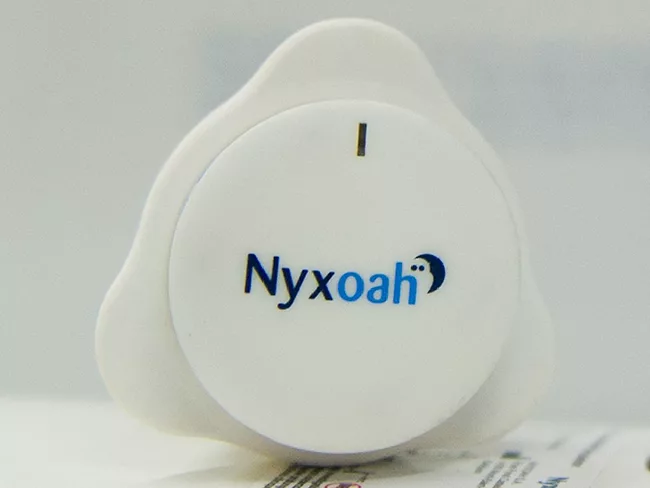
Nyxoah SA reported it successfully raised $3 million to ramp development of its Genio technology for the treatment of obstructive sleep apnea. This fundraising took the form of private placement of shares on the Nasdaq. They were acquired by Sydney-based Cochlear Ltd., an existing Nyxoah shareholder.
Gilde Healthcare Partners BV raised €600 million (US$658 million) in capital commitments for a new investment fund which will be deployed into companies across Europe and the U.S active in digital healthcare, medical technology and therapeutics. The fund, ‘Venture&Growth VI’, will focus on investing in fast growing companies developing solutions for better care at lower cost.
The Ministry of Health and Prevention has just published a decree introducing the anticipated coverage by the National Health Insurance Fund of digital medical devices and remote medical monitoring activities.
The €13.8 million (US$15.25 million) Kiro SAS recently raised in its series A financing led by Sofinnova Partners will enable the company to further develop its artificial intelligence (AI) platform, which standardizes and analyzes laboratory test results, making them more relevant to doctors and easier for patients to understand. The funding will also allow the company to prepare the groundwork to enter the U.S. market where, Alexandre Guenoun, CEO at Kiro, told BioWorld, there is a huge “opportunity” for the AI platform following changes to regulations which require laboratories to communicate test results directly to patients.