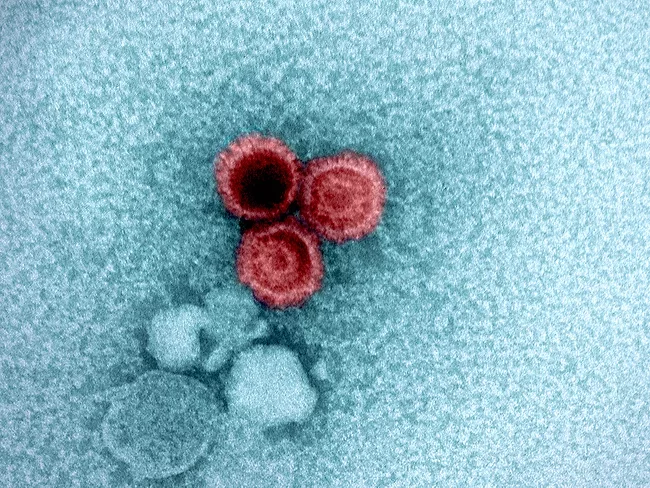
Innovative Molecules GmbH's new Epstein-Barr virus (EBV) antiviral program consists of several directly acting, highly potent, targeted polymerase inhibitors.
Less than two weeks after the outbreak was officially declared, animal studies of a newly designed vaccine against the Bundibugyo Ebola virus are now underway in the U.S. and U.K., and the Serum Institute of India is standing ready to manufacture the vaccine for clinical trials. If the animal tests are positive, the vaccine will be ready for clinical trials in two to three months.
Less than two weeks after the outbreak was officially declared, animal studies of a newly designed vaccine against the Bundibugyo Ebola virus are now underway in the U.S. and U.K., and the Serum Institute of India is standing ready to manufacture the vaccine for clinical trials. If the animal tests are positive, the vaccine will be ready for clinical trials in two to three months.
Cocrystal Pharma Inc. has reported the discovery of direct-acting antivirals that demonstrate pan-viral activity against multiple viruses, including hantavirus, bunyavirus and influenza. These compounds target a highly conserved region of the viral replication enzyme – the L-protein of Andes virus, which is essential for viral replication and transcription.
Aptar Pharma, part of Aptargroup Inc., has established a technical collaboration with Covirix Medical Pty Ltd. under a letter of intent to develop inhaled antiviral treatments.
Looking to fill a treatment gap, the U.S. Biomedical Advanced Research and Development Authority (BARDA) is launching the first stage of a $100 million prize competition to support development of broad-spectrum, small-molecule antiviral therapies targeting viruses in the Togaviridae and Flaviviridae families.
Looking to fill a treatment gap, the U.S. Biomedical Advanced Research and Development Authority (BARDA) is launching the first stage of a $100 million prize competition to support development of broad-spectrum, small-molecule antiviral therapies targeting viruses in the Togaviridae and Flaviviridae families.
NIH researchers report that in severe influenza, survival improves at late stages only when antivirals are combined with therapies that repair lung damage or limit harmful T-cell responses, explaining why anti-inflammatory treatments alone are often ineffective.