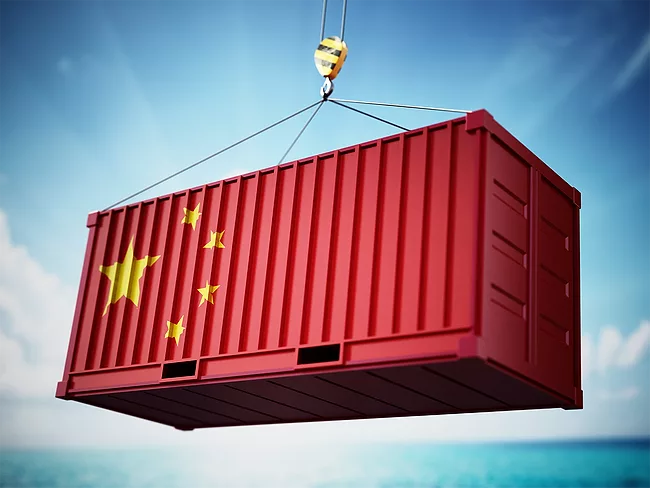
China’s med-tech products exports declined in 2021 as manufacturing in other countries picked up, while med-tech imports to the country increased. In the first half of 2021, China’s med-tech exports amounted to $47.931 billion, a decrease of 23.1% year-on-year. But imports for the same period amounted to $24.392 billion, an increase of 25.2% year-on-year, according to med-tech data company Guangzhou Joinchain Big Data Technology Co. Ltd.
The med-tech industry across Latin America continues to grow, but the growth is uneven, concentrated in a handful of countries and faces significant challenges. A report released in December by the United Nations Economic Commission for Latin America and the Caribbean (ECLAC) reveals the complexity of the region's med-tech trade balance and underscores the main challenges for the industry in the region, whose performance was also impacted by the COVID-19 pandemic.
Even as it strives for self-reliance, India is struggling to wean itself off a reported 75% increase in med-tech imports from China. China led the contribution to India’s med-tech imports with ₹91.12 billion (US$1.2 billion) worth of goods in the 2021 fiscal year (April 2020 to March 2021), according to an analysis of data from India’s Department of Commerce by the Association of Indian Medical Device Industry (AIMED).
The impact of the COVID-19 pandemic has reached into quarters that are not historically problematic for makers of diagnostics, including China’s import and export practices for test kits. According to one caller on an FDA diagnostic town hall, export officials in China have a blacklist and a whitelist for test kits, but there is some dispute as to whether kits that are eligible for distribution in the U.S. can get off the blacklist unless that kit is specifically called out via the emergency use authorization (EUA) program.
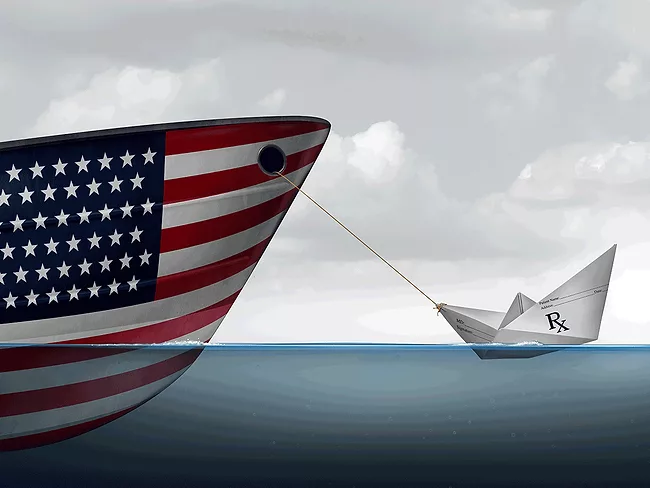
The FDA took concrete steps Wednesday in mapping out import routes for prescription drugs by issuing a notice of proposed rulemaking and a draft guidance. If finalized, the proposed rule, for the first time, would implement a 20-year-old provision of the Federal Food, Drug and Cosmetics Act that gives the Health and Human Services (HHS) secretary the authority to authorize the import of certain small molecule drugs from Canada. However, the proposal is getting pushback from Canada.
LONDON – The U.K. government has placed an immediate ban on the export of certain drugs in a bid to prevent wholesalers taking advantage of the fall in the value of the pound against the euro by selling off U.K. stockpiles that have been built up to protect against an interruption in supplies in event of a no-deal Brexit.