Abbott Laboratories Inc. landed U.S. FDA clearance for its Freestyle Libre 3 integrated continuous glucose monitoring system (CGM)’s reader device a bit earlier than expected. With the regulatory greenlight for the durable medical equipment component received, the company is now pursuing coverage by the CMS for the entire Freestyle Libre 3 system. The system’s sensor received FDA clearance in May 2022.
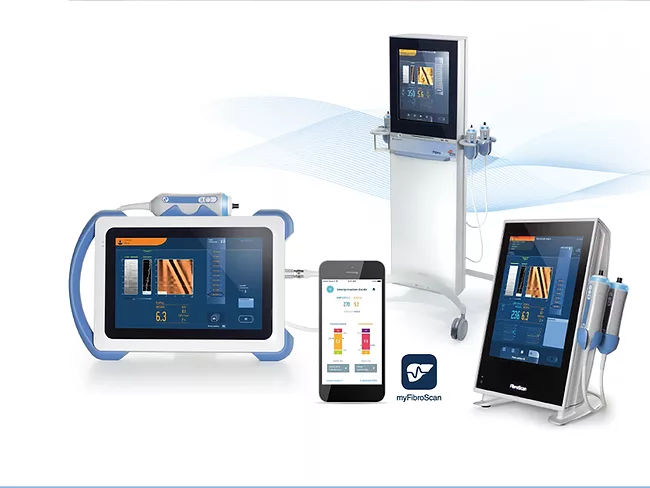
Echosens SA obtained clearance from the U.S. FDA to expand the indications for screening with its Fibroscan system. The approval removes contraindications for pregnancy and active implant and includes patients with confirmed or suspected liver disease. It designates Fibroscan as a noninvasive aid for clinical management, diagnosis and monitoring of adult and pediatric patients with liver diseases. The age has been removed as the first selection probe and exam-type step.
The U.S. FDA has issued a guidance on when to file a new 510(k) for a class II device that has undergone significant modification, but that doesn’t mean everyone in the device business is paying attention. The FDA hit Synovo Production Inc., of Fullerton, Calif., for a number of violations of the Quality System Regulation (QSR), but also alleged that the manufacturer/specification developer made a number of modifications to its femoral resurfacing cup for hip implants without a new regulatory filing, leading the agency to direct the company to immediately cease production of the device.
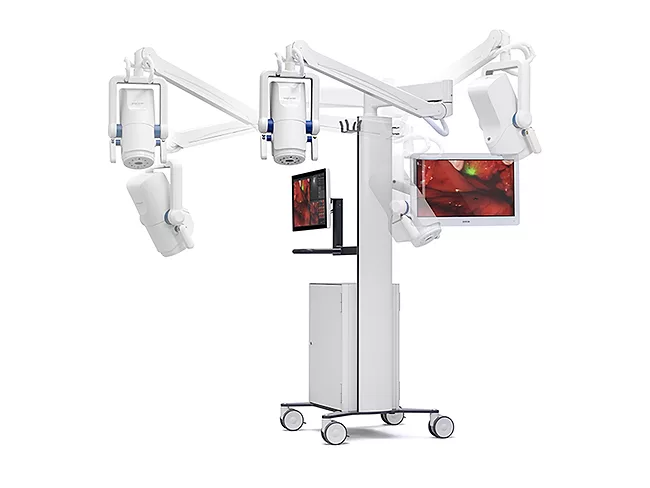
Surgvision GmbH received U.S. FDA 510(k) clearance for the Explorer Air II which will be deployed with pafolacianine, during intraoperative fluorescence imaging. The Explorer Air II will support surgeons in their battle to fight cancer, especially in cases of incomplete resection, as paired with pafolacianine, an imaging agent, it will help them improve tumor visualization and outcomes.
One way to strike fear into patients and cardiologists alike is to merely mention the abdominal aortic aneurysm (AAA), an event that claims more than 10,000 lives per year in the U.S. alone. That death count might fall substantially going forward thanks to the U.S. FDA’s award of a 510(k) for the AAA algorithm by Viz.ai Inc., a new algorithm which may help clinicians address imminent rupture quickly enough to save the lives of thousands of American patients each year.
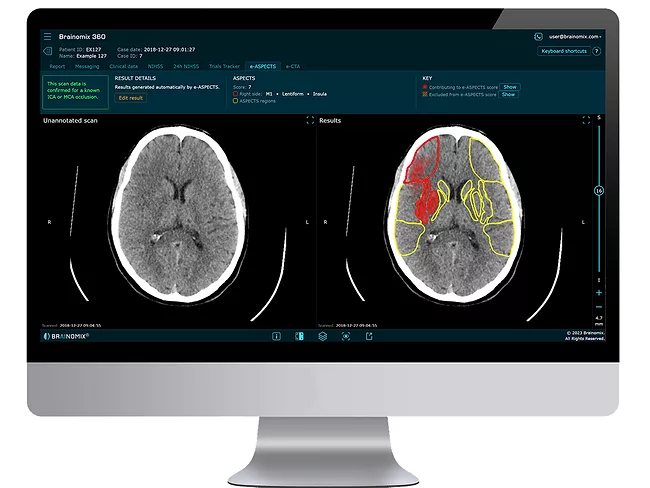
Brainomix Ltd. received U.S. FDA clearance for its Brainomix 360 E-aspects tool, a fully automated AI-imaging solution for stroke assessment. Powered by explainable AI, the Brainomix 360 E-aspects tool, which is already CE-marked, assesses non-contrast CT scans to automatically generate a score and measures the volume of ischemic signs. It also features an overlaid heatmap to visually assist clinicians when treating stroke patients.
Spectrawave Inc. said U.S. FDA clearance of its flagship intravascular Hypervue imaging system will help physicians optimize coronary stenting in the cardiac catheterization lab.
Woven Orthopedic Technologies LLC, received U.S. FDA 510(k) clearance for its Ogmend implant enhancement system for use in spine surgery. Ogmend is expected to give surgeons more confidence in using surgical screws when operating in compromised fixation scenarios.
Rapidai Inc. Received U.S. FDA 510(k) clearance for Rapid RV/LV, the latest addition to its pulmonary embolism (PE) solution. Rapid RV/LV uses artificial intelligence to quickly calculate the right ventricle to left ventricle ratio based on an analysis of computerized tomography pulmonary angiograms. The ratio provides critical information for prioritization of PEs and integrates with Rapidai’s triage and notification and workflow products to manage patient care from suspected embolism to treatment.
The U.S. FDA granted 510(k) clearance to Hyperfine Inc. for improved artificial intelligence (AI)-powered software for its Swoop portable magnetic resonance imaging (MRI) device. The company launched the new software this week.