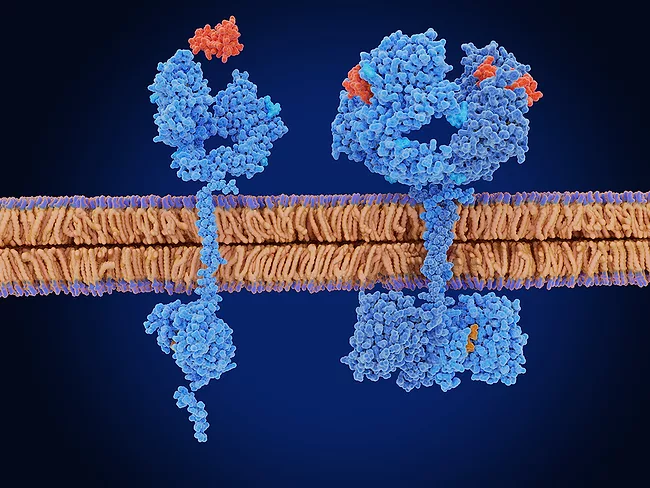
Researchers at 3D Medicines (Beijing) Co. Ltd. and 3D Medicines Inc. have divulged GTPase KRAS (mutant) inhibitors reported to be useful for the treatment of cancer.
Ibio Inc. has announced promising in vivo data for three immuno-oncology candidates, anti-EGFRvIII, CCR8 and a bispecific TROP-2 x CD3, advancing these programs to clinical candidate selection stage.
Chia Tai Tianqing Pharmaceutical Group Co. Ltd. has identified proteolysis targeting chimeras (PROTACs) comprising an E3 ubiquitin ligase coupled to Wee1-like protein kinase (Wee1) targeting moiety via linker acting as Wee1 degradation inducers reported to be useful for the treatment of cancer.
Shanghai Annova Biotechnology Co. Ltd. has disclosed substituted fused heterocyclic compounds acting as ATR kinase inhibitors reported to be useful for the treatment of cancer.
Sortina Pharma AB has divulged sortilin (NT3; Gp95) antagonists reported to be useful for the treatment of cancer, Alzheimer's disease and Parkinson's disease.
Boehringer Ingelheim Pharma GmbH & Co. KG and Vanderbilt University have synthesized annulated 2-amino-3-cyano thiophenes and derivatives acting as KRAS GTPase and its mutant inhibitors reported to be useful for the treatment of cancer.
Researchers at Boehringer Ingelheim (BI) Pharma GmbH & Co. KG and Vanderbilt University have described proteolysis targeting chimera (PROTAC) compounds comprising E3 ubiquitin ligase binding moieties covalently linked to GTPase KRAS (mutant) binding moieties through a linker.
Abbisko Therapeutics Co. Ltd. has divulged pyrazole derivatives acting as protein arginine N-methyltransferase 5 (PRMT5) inhibitors reported to be useful for the treatment of cancer.
Back-to-back papers in the June 22, 2023, issue of Nature have identified separate molecular mechanisms underlying sex-specific cancer outcomes. Researchers from The University of Texas MD Anderson Cancer Center showed that increased expression of the epigenetic enzyme KDM5D, which is located on the Y chromosome, contributed to cancer progression in KRAS-mutated tumors. In the same issue of Nature, a team from Cedars-Sinai reported new insights into the consequences of losing the entire Y chromosome.