The U.S. FDA and CMS are teaming up to give Medicare beneficiaries quicker access to breakthrough medical devices and provide manufacturers with certainty of reimbursement.
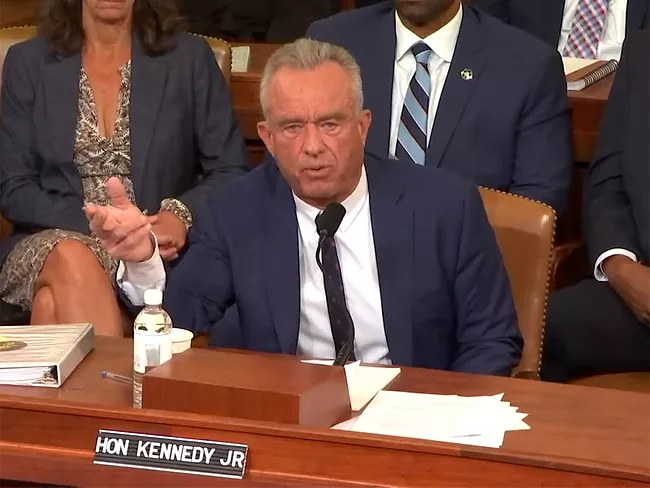
U.S. Health and Human Services (HHS) Secretary Robert Kennedy made his first stop April 16 on a congressional tour in support of President Donald Trump’s proposed fiscal 2027 budget, which would reduce discretional spending for HHS and its agencies by about 12%.
The EU’s Medical Device Coordination Group (MDCG) posted two guidances in the waning weeks of 2025, one of which deals with postmarket surveillance for both devices and diagnostics. Another guidance deals with breakthrough devices (BtX) and diagnostics, a question that is not well described in either of the current EU regulatory frameworks.
A group of stakeholders including medical device makers have penned a letter to Centers for Medicare & Medicaid Services administrator Mehmet Oz to urge the agency to cover breakthrough medical devices, an attempt to resurrect administrative action on a question that legislators failed to address in 2024.
Cardiovia Ltd.' Viaone epicardial access system received U.S. FDA clearance for treating cardiac arrhythmias. The device provides clinicians with a safe and minimally invasive technology to reach the heart’s outer surface, known as the pericardial space, without the need for a sharp needle, which can cause perforation.
Medicare coverage of FDA-designated breakthrough devices is still a policy hot topic. Although the House of Representatives generated some momentum on related legislation, the Senate is now examining the Ensuring Patient Access to Critical Breakthrough Products Act for potential passage in the lame duck session – a development that would draw enthusiastic cheers from industry.
The U.S. CMS announced the release of the Transitional Coverage for Emerging Technologies policy, which is less than clear on the definition of a key term.
The device industry has been clamoring for legislation that would require Medicare coverage for FDA-designated breakthrough devices, a wish that is one step closer to fulfillment as of June 27.
A committee of the U.S. House of Representatives met to review the Medicare coverage procedure for innovative drugs and devices, an event that seemed to gin up support for legislation that would help to streamline those processes. The problem for drug and device makers, however, may be that the Centers for Medicare & Medicaid Services
continues to labor under a flat appropriations picture that is eroding daily thanks to inflation.
U.S. Medicare coverage for breakthrough devices has been a hot topic for several years now, but industry is one step closer to making this policy dream a reality thanks to another new proposal from the Centers for Medicare & Medicaid Services (CMS). The agency released a new version of the Transitional Coverage for Emerging Technologies (TCET) program that seems to satisfy most of what med-tech trade associations sought, but the catch is that manufacturers must notify CMS of their intent to take part in TCET a year before the FDA will decide whether to grant market authorization to the device.