Researchers at the Massachusetts Institute of Technology and Recursion Pharmaceuticals Inc. have released an open-source AI model that can predict the binding strength of small molecules as well as structures of proteins and biomolecular complexes. The model, which is called Boltz-2 and was released by the research team on the developer platform Github on June 6, addresses a major bottleneck in drug discovery with its improved ability to predict binding strengths.
Fragile X syndrome (FXS) is the most common inherited form of intellectual disability and a leading monogenic cause of autism, yet effective treatments remain elusive. Previous work showed that N-methyl-D-aspartate receptors (NMDARs) play a prominent pathophysiological role in FXS and other neurodevelopmental disorders.
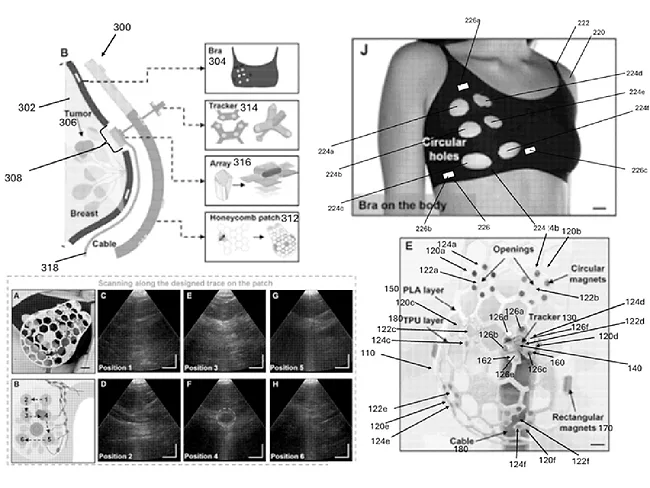
The latest patenting from Canan Dagdeviren seeks protection for their wearable, conformable ultrasound breast patch that enables standardized and reproducible image acquisition over the entire breast with less reliance on operator training and applied transducer compression.
Massachusetts Institute of Technology has described proteolysis targeting chimeras (PROTACs) comprising an E3 ubiquitin ligase-binding agent coupled to cyclin-dependent kinase 9 (CDK9)-targeting moiety via linkers acting as CDK9 degradation inducers reported to be useful for the treatment of cancer.
In response to the continuing opioid epidemic, researchers at the Massachusetts Institute of Technology and Brigham and Women’s Hospital developed a small implantable device that monitors heart rate, respiration and other vital signs indicative of an overdose, then automatically releases a dose of naloxone.
In response to the continuing opioid epidemic, researchers at the Massachusetts Institute of Technology and Brigham and Women’s Hospital developed a small implantable device that monitors heart rate, respiration and other vital signs indicative of an overdose, then automatically releases a dose of naloxone.
Alzheimer’s disease (AD) is a neurodegenerative condition in which amyloid plaques and neurofibrillary tangles accumulate in the brain. In addition to genetic factors, DNA damage and epigenetic alterations also play a key role in the pathogenesis and progression of this disease, altering gene expression, the functioning and maintenance of brain cells. DNA double-strand breaks (DSBs) and chromatin accessibility are two hallmarks of AD whose study could reveal new ways of approaching this disease.
Separate teams of investigators have reported new insights into how the brain disposes of metabolic waste via the glia-based lymphatic system, or glymph system. In two papers published in Nature on Feb. 28, 2024, scientists from Washington University in St. Louis described how in sleeping animals, the synchronized activity of neurons drove ionic gradients that facilitated the movement of fluid through brain tissue. And researchers from the Massachusetts Institute of Technology showed that, in a mouse model of Alzheimer’s disease (AD), the glymphatic system mediated clearance of amyloid-β after sensory stimulation at a 40-Hertz rhythm.
If we unraveled the DNA of the 46 chromosomes of a single human cell, it would barely measure 2 meters. If we did the same with the rest of the body, if we aligned the 3 billion base pairs of its 5 trillion cells, we could travel the distance from the Earth to the Sun more than 100 times. It seems unreachable. However, that is the unit of knowledge of the large sequencing projects achieved in 2023.