The Advanced Research Projects Agency for Health (ARPA-H), an agency within the U.S. Department of Health and Human Services, has announced the teams for the THRIVE (Treating Hereditary Rare diseases with In Vivo prEcision genetic medicines) program. With a commitment of up to $160 million over 5 years, THRIVE aims to accelerate solutions for rare genetic pediatric diseases across multiple technological approaches, clinical trial designs and deployment models.
Similarities among three pediatric brain tumors that arise in different structures of the CNS – pineoblastoma, retinoblastoma and Group 3 medulloblastoma – have been linked to their shared origin during pineal gland development. Scientists at St. Jude Children’s Research Hospital have identified the molecular signatures that drive these tumors from pinealocyte progenitor cells that conserve a common differentiation program, providing a shared therapeutic target for these three cancer types.
Similarities among three pediatric brain tumors that arise in different structures of the CNS – pineoblastoma, retinoblastoma and Group 3 medulloblastoma – have been linked to their shared origin during pineal gland development. Scientists at St. Jude Children’s Research Hospital have identified the molecular signatures that drive these tumors from pinealocyte progenitor cells that conserve a common differentiation program, providing a shared therapeutic target for these three cancer types.
rietis Corp. and St. Jude Children’s Research Hospital Inc. have jointly patented compounds acting as caseinolytic protease P (ClpP) (bacterial) activators and RNA polymerase (bacterial) inhibitors and their conjugates with rifamycin analogues reported to be useful for the treatment of gram-positive bacterial infection.
Essential Pharma Ltd. is paying up to £70 million (US$88.7 million) to acquire Renaissance Pharma Ltd., taking ownership of Hu14.18, a treatment for high-risk neuroblastoma. The antibody has completed a 64-patient phase II trial conducted by St Jude’s Children’s Research Hospital, in which it showed an improvement in overall survival of around 50% compared to currently available therapies.
Zapata Computing Inc. (Zapata AI) scientists have demonstrated the first instance of a generative model running on quantum hardware outperforming state-of-the-art classical models in generating viable cancer drug candidates.
Researchers from St. Jude Children’s Research Hospital have reported the discovery of SJ-3149, a novel selective CK1α degrader being developed for the treatment of cancer.
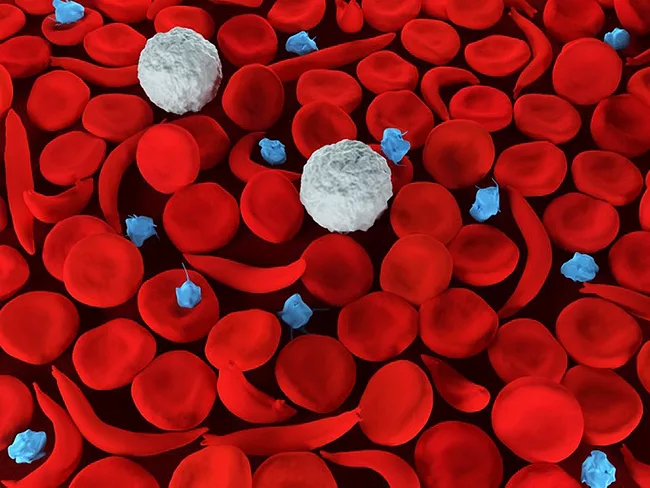
Research led by St. Jude Children’s Research Hospital and Harvard University shows base-editing approaches could be more effective than CRISPR-Cas9 gene-editing approaches for treating conditions such as sickle cell disease and β-thalassemia. Writing in the July 3, 2023, issue of Nature Genetics, the researchers compared three base-editing approaches with two CRISPR-Cas9 approaches to increasing levels of fetal hemoglobin in CD34+ hematopoietic stem and progenitor cells, and found one of the base-editing approaches was the most potent.
St. Jude Children’s Research Hospital has divulged proteolysis targeting chimeras (PROTACs) comprising cereblon (CRBN) ligands coupled to a tyrosine-protein kinase Lck targeting moiety via a linker acting as Lck degradation inducers reported to be useful for the treatment of cancer and immunological disorders.