Sino Biopharmaceutical Ltd. agreed to fully acquire Lanova Medicines Ltd. by buying an additional 95.09% stake in Lanova at a valuation of up to $950.92 million. Considering Lanova’s estimated cash and deposit of $450 million, Hong Kong-headquartered Sino agreed to pay $500.9 million to Lanova on the date of the transaction, set to close within 30 days of all conditions being satisfied, or July 31, 2025.
Sino Biopharmaceutical Ltd. agreed to fully acquire Lanova Medicines Ltd. by buying an additional 95.09% stake in Lanova at a valuation of up to $950.92 million. Considering Lanova’s estimated cash and deposit of $450 million, Hong Kong-headquartered Sino agreed to pay $500.9 million to Lanova on the date of the transaction, set to close within 30 days of all conditions being satisfied, or July 31, 2025.
“The lack of therapeutic precision in treatment of myeloid malignancies is in sharp contrast with the fact that myeloid cancers represent the perhaps best characterized cancers of all at the cellular, molecular, and genetic levels,” Johanna Olweus told her audience at the Friday plenary session of the European Hematology Association 2025 Annual Congress.
“The lack of therapeutic precision in treatment of myeloid malignancies is in sharp contrast with the fact that myeloid cancers represent the perhaps best characterized cancers of all at the cellular, molecular, and genetic levels,” Johanna Olweus told her audience at the Friday plenary session of the European Hematology Association 2025 Annual Congress.
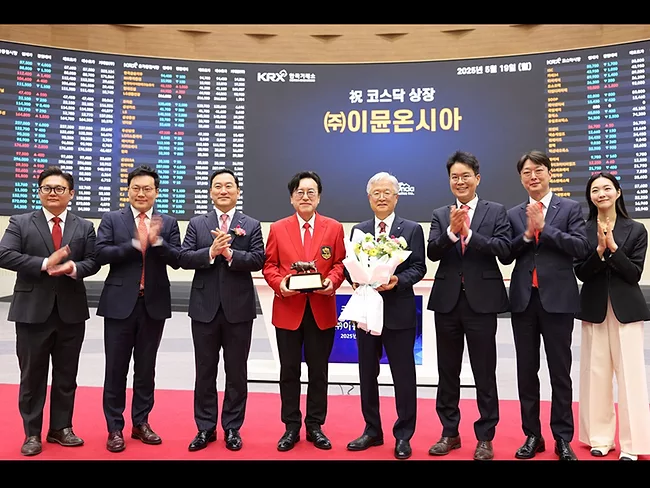
Immuneoncia Therapeutics Inc. raised ₩33.9 billion (US$24 million) from its Kosdaq listing May 19. Shares closed at ₩7,500 – 108% higher than its offering price of ₩3,600 per share. Immuneoncia, a joint venture founded in 2016 between Seoul, South Korea-based Yuhan Corp. and San Diego-based Sorrento Therapeutics Inc., noted that the funds will support R&D operations until 2026.
Imunon Inc. soared by 179% on the heels of phase II Ovation 2 data showing that its IMNN-001 immunotherapy led to a 13-month increase in overall survival among women with ovarian cancer. Patients in the intent-to-treat population, receiving the drug plus standard-of-care neoadjuvant and adjuvant chemotherapy (N/ACT), achieved median overall survival (OS) at 46 months vs. 33 months with N/ACT alone. Increased activity was seen among patients treated with poly ADP-ribose polymerase inhibitors, with the median OS not yet reached after more than five years vs. 37 months in the control arm.
Immuneoncia Therapeutics Inc. raised ₩33.9 billion (US$24 million) from its Kosdaq listing May 19. Shares closed at ₩7,500 – 108% higher than its offering price of ₩3,600 per share. Immuneoncia, a joint venture founded in 2016 between Seoul, South Korea-based Yuhan Corp. and San Diego-based Sorrento Therapeutics Inc., noted that the funds will support R&D operations until 2026.
Research of the neuroimmune mechanisms involved in stress-related fear revealed how astrocytes interact with neurons in the amygdala. The study, led by Harvard scientists, also unveiled that this interaction recruited monocytes to the meninges during chronic stress and showed how psychedelic compounds reversed monocyte accumulation in the meninges and reduced fear behavior.
Greenwich Lifesciences Inc. followed a February update with another on the phase III Flamingo-01 trial, providing open-label immune response data for GLSI-100, a HER2/neu peptide vaccine immunotherapy to prevent breast cancer recurrences in patients who have completed standard therapy. Specifically, GLSI-100 combines GP2, the HER2/neu-derived peptide, with granulocyte-macrophage colony-stimulating factor.
Xilio Therapeutics Inc. is banking $52 million up front from Abbvie Inc., including a $10 million equity investment, plus about $2.1 billion in contingent payments for option-related fees and milestones, plus tiered royalties, as the pair embarks on developing tumor-activated, antibody-based immunotherapies, including masked T-cell engagers.