Roche AG received CE mark for its cobas Bacterial Vaginosis/Candida Vaginitis assay, which will help to improve accuracy in detecting vaginitis in women. The molecular test identifies specific bacteria and yeast responsible for BV and CV from vaginal samples collected using the cobas PCR Media proprietary tube.
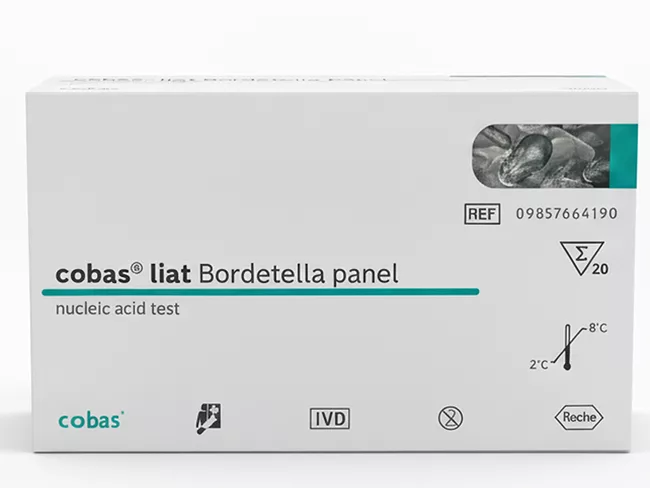
Roche AG received regulatory clearance from the U.S. and European authorities for a new diagnostic test that detects Bordetella infections, including whooping cough, as cases surge globally. The point-of-care test, which delivers PCR-accurate results in just 15 minutes, will help health care providers to quickly identify infections and act to prevent severe complications, onward transmission and deaths.
Roche AG’s Genentech unit landed another clinical victory with giredestrant that provided a major stock boost for competitor Olema Pharmaceuticals Inc. Made public were positive phase III data from the Lidera study testing selective estrogen receptor degrader and complete estrogen receptor antagonist (CERAN) as an adjuvant endocrine treatment for people with ER-positive, HER2-negative, early stage breast cancer (BC).
Chugai Pharmaceutical Co. Ltd. and Rani Therapeutics LLC have entered into a collaboration and global license agreement to develop and commercialize an oral product that encompasses Rani’s oral delivery technology, the Ranipill, and Chugai’s rare disease antibody in development.
Chugai Pharmaceutical Co. Ltd. and Rani Therapeutics LLC have entered into a collaboration and global license agreement to develop and commercialize an oral product that encompasses Rani’s oral delivery technology, the Ranipill, and Chugai’s rare disease antibody in development.
Tvardi Therapeutics Inc. stock lost 83.9% of its value as investors took in poor preliminary results of the phase II study of its lead candidate for idiopathic pulmonary fibrosis (IPF). The company’s shares (NASDAQ:TVRD) closed at $6.69 each on Oct. 13.
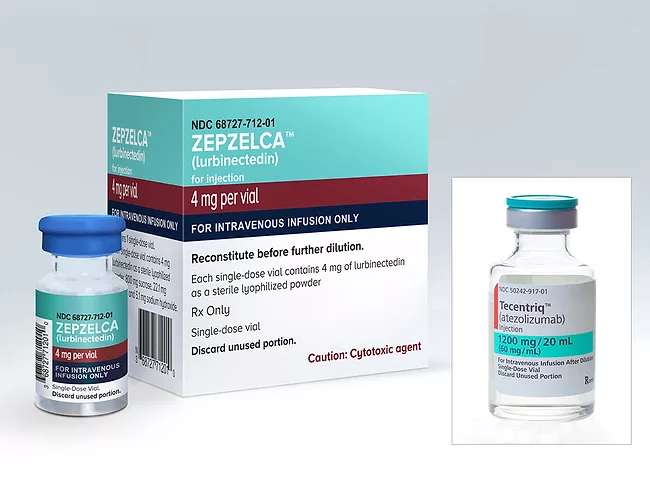
The U.S. FDA has approved the priority sNDA for a new first-line maintenance therapy in extensive-stage small-cell lung cancer from Jazz Pharmaceuticals plc. Zepzelca (lurbinectedin) can now be combined with Tecentriq (atezolizumab, Roche AG) or atezolizumab and hyaluronidase-tqjs (Tecentriq Hybreza, Roche) as a maintenance therapy for adults who haven’t progressed after first-line induction therapy with atezolizumab, carboplatin and etoposide.
The dash for MASH is gaining momentum, with Roche AG acquiring 89bio Inc. and its phase III FGF21 analogue, pegozafermin, for treating metabolic dysfunction-associated steatohepatitis, in a deal worth up to $3.5 billion. The Swiss pharma is to pay $14.50 per share, valuing San Francisco-based 89Bio at $2.4 billion, a premium of approximately 52% to 89bio’s 60-day average price on Sept. 17, 2025. Shares of 89bio (NASDAQ:ETNB) gained $6.88, or 85%, to close Sept. 18 at $14.96.
The fate of IL-33-targeting astegolimab will be determined by talks with regulators, after Roche AG’s Genentech unit rolled out mixed results from a pair of studies testing the compound vs. placebo on top of standard-of-care (SOC) maintenance therapy in subjects with moderate to very severe chronic obstructive pulmonary disease (COPD).
How the U.S. FDA might respond became a serious question for Wall Street as Sarepta Therapeutics Inc. made known a second death due to acute liver failure with gene therapy Elevidys (delandistrogene moxeparvovec), cleared for Duchenne muscular dystrophy (DMD). Shares of Cambridge, Mass.-based Sarepta (NASDAQ:SRPT) closed June 16 at $20.94, down $15.24, or 42%, as Wall Street digested the news.