Last week, Incyte Corp. said it was pulling its NDA seeking accelerated approval for the PI3K-delta inhibitor parsaclisib in three non-Hodgkin lymphoma subtypes, a move that followed recent decisions by Gilead Sciences Inc. and Secura Bio Inc. to withdraw from U.S. commercialization their respective PI3K-delta inhibitors in indications for which they’d received accelerated approval. But the recent spate of headlines is hardly “a condemnation” on the entire class of drugs, said Dan Gold, CEO of MEI Pharma Inc., which is aiming for a potential accelerated approval filing of its own PI3K-delta drug, zandelisib, this year.
Nearly two years after Gilead Sciences Inc. spent $4.9 billion to buy Forty Seven Inc. and its lead candidate, magrolimab, the FDA clamped a partial clinical hold on five of Gilead’s clinical trials combining the therapy with azacitidine. The cause, according to Gilead’s management, is “an apparent imbalance in investigator-reported suspected unexpected serious adverse reactions between study arms.” The company said it has not identified a clear trend in the adverse reactions or new safety signals.
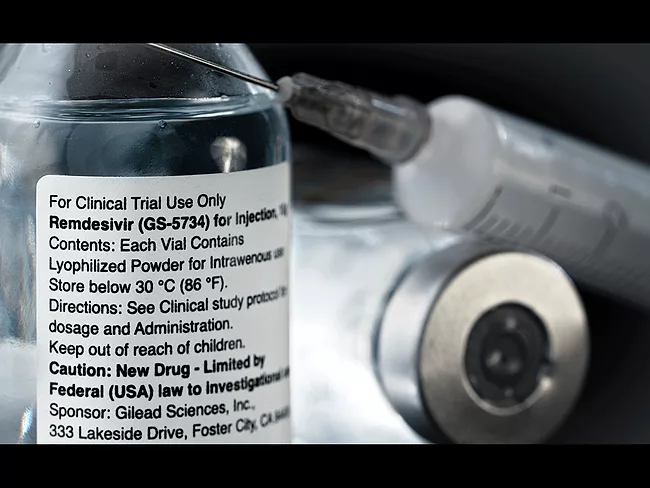
Once again, the U.S. FDA giveth and it taketh away. Just a few days after expanding its approval for Gilead Sciences Inc.’s Veklury (remdesivir) to provide access to more people infected with COVID-19, the FDA essentially shut down the use of two monoclonal antibody (mAb) treatments Jan. 24 that had been authorized to treat mild-to-moderate COVID-19 infections – Regeneron Inc.’s Regen-Cov (Ronapreve in Europe), an antibody cocktail of casirivimab and imdevimab, and Eli Lilly and Co.’s bamlanivimab and etesevimab that are administered together.
Should the U.S. government be in the business of manufacturing COVID-19 vaccines? Several prominent Democratic senators and representatives would say yes.
Usama Malik, Immunomedics Inc.’s former chief financial officer, and his former partner, Lauren Wood, face SEC charges related to insider trading in Immunomedics’ stock.
What one analyst called “the single most important” nucleoside reverse transcriptase inhibitor in development – Merck & Co. Inc.’s islatravir – has met rocky terrain, with the firm and its partner, Gilead Sciences Inc., pausing combo trials.
LONDON – The EMA recommended approval of Apellis Pharmaceuticals Inc.’s C3 complement inhibitor, Aspaveli (pegcetacoplan), to treat paroxysmal nocturnal hemoglobinuria, but has diverged from the FDA, excluding treatment-naïve patients adding its use should be restricted to those who have failed to respond to C5 inhibitor drugs.
Enacting provisions to control U.S. prescription drug prices remains a top priority with many members of Congress as they push through the Biden administration’s budget agenda – despite warnings that government price controls on drugs would come at the cost of innovation.
U.S. Rep. Carolyn Maloney (D-N.Y.) came out swinging against the biopharma industry’s innovation talking point July 8 when she released a House Oversight Committee staff report on U.S. drug prices and the games drug manufacturers play to delay competition.
As a first step in developing a portfolio of COVID-19 therapies, the European Commission identified five promising candidates June 29, including four monoclonal antibodies under rolling review at the EMA and an immunosuppressant that could have its marketing authorization extended to include the treatment of COVID-19 infections.