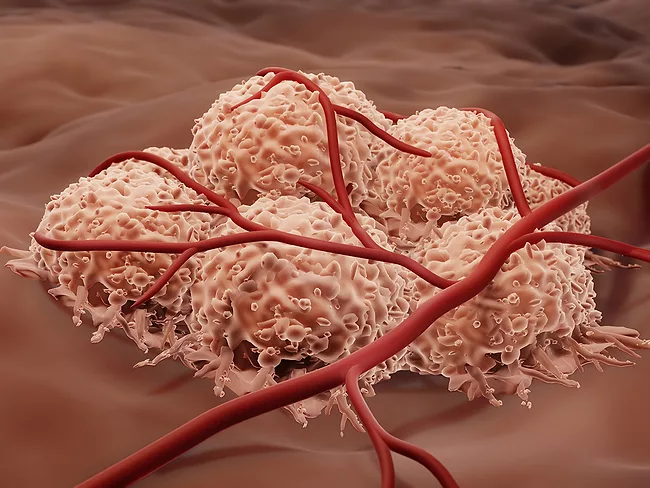
Insilico Medicine Inc. recently discussed the generative artificial intelligence (AI)-powered design of ISM-6331, a novel, potent, selective and non-covalent pan-TEAD inhibitor that blocks TEAD palmitoylation to suppress YAP/TAZ-TEAD transcriptional activity and shows strong antitumor activity in a preclinical model of Hippo pathway-dysregulated cancers and other solid cancers were discussed.
Deep learning algorithms have enabled the discovery of molecular structures of interest in biomedicine to design treatments against aggressive diseases such as idiopathic pulmonary fibrosis (IPF). Scientists at Insilico Medicine Inc. selected a target for IPF using artificial intelligence (AI), then designed an inhibitor to block it, and tested it in vitro, in vivo, and in clinical trials.
Insilico Medicine Inc. has patented new cyclin-dependent kinase 12 (CDK12)/cyclin K and/or CDK13 inhibitors reported to be useful for the treatment of cancer, particularly triple-negative breast cancer.
In a panel discussion with executives at the 2024 BIO CEO conference this week in New York, the consensus emerged that artificial intelligence is here to stay, despite its occasional moments of hype, as its applications continually grow.
Zapata Computing Inc. (Zapata AI) scientists have demonstrated the first instance of a generative model running on quantum hardware outperforming state-of-the-art classical models in generating viable cancer drug candidates.
Researchers from Insilico Medicine Inc. reported on ISM-5043, a novel KAT6A inhibitor aimed to be used for the treatment of refractory ER+ breast cancer.
“Aging is not only slow, but it is irreversible, and that is what most people have been suspecting,” Gero Pte Ltd.’s CEO Peter Fedichev recently told BioWorld. “[But] aging is not an inevitable part of human existence.” By setting limits to what science can do – and not do – for aging, the Palo Alto, Calif.- and Singapore-based generative artificial intelligence (AI) biotech Gero is trying to figure out and, at the same time help the industry, “see what is actionable, reversible and what may not be” to help people avoid “hitting their heads against the wall” when tackling aging and aging-related diseases.
“Aging is not only slow, but it is irreversible, and that is what most people have been suspecting,” Gero Pte Ltd.’s CEO Peter Fedichev recently told BioWorld. “[But] aging is not an inevitable part of human existence.” By setting limits to what science can do – and not do – for aging, the Palo Alto, Calif.- and Singapore-based generative artificial intelligence (AI) biotech Gero is trying to figure out and, at the same time help the industry, “see what is actionable, reversible and what may not be” to help people avoid “hitting their heads against the wall” when tackling aging and aging-related diseases.
Glutaminyl-peptide cyclotransferase-like protein (QPCTL) is a modulator of CD47-SIRPα binding and can be targeted to achieve antitumor responses through myeloid checkpoint blockade. At the recent ESMO meeting in Madrid, researchers from Insilico Medicine Inc. reported the preclinical characterization of ISM-8207, a QPCTL inhibitor with activity against triple-negative breast cancer (TNBC) and diffuse large B-cell lymphoma (DLBCL).