Strong and complete phase III results for Eli Lilly and Co.’s donanemab for treating early Alzheimer's disease (AD) will no doubt inspire more comparisons with recently approved Leqembi (lecanemab). The newly released data for donanemab show it significantly slowed cognitive and functional decline for those with amyloid-positive early symptomatic AD, which lowered the disease-progression risk.
As broader markets struggled throughout 2022, the biopharma industry’s largest and most lucrative companies ended the year in a strong position, according to BioWorld’s Biopharmaceutical Index (BBI), which showed the 22 component stocks climbed by 17.3% throughout the year. Neither the Nasdaq Biotechnology Index (NBI) nor the Dow Jones Industrial Average (DJIA) demonstrated such gains. They were down by 10.9% and 8.8%, respectively. All three indices, however, are following the same path in 2023, shooting up throughout the month of January and back down in recent weeks.
Topping biopharma regulatory news in 2022 was the signing of the Inflation Reduction Act (IRA), as its provisions requiring Medicare to directly negotiate certain prescription drug prices will open the door for the first time to a degree of government price controls in the U.S., affecting the bottom line of drug companies around the world.
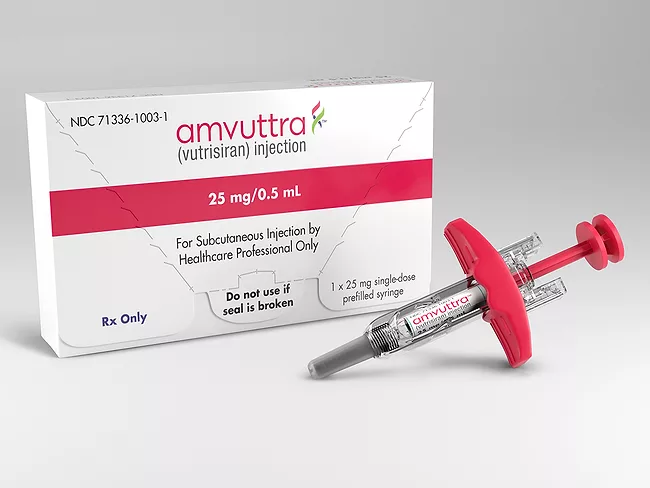
Alnylam Pharmaceuticals Inc.’s Amvuttra (vutrisiran), a treatment for the rare disease hereditary transthyretin-mediated amyloidosis, was among medicines recommended for approval by regulators from Europe’s Committee for Medicinal Products for Human Use (CHMP) in a busy sitting.
With Alnylam Pharmaceuticals Inc.’s FDA clearance for Amvuttra (vutrisiran) in the rearview mirror, investors are looking ahead to potentially label-widening phase III data related to another, already approved drug: Onpattro (patisiran).
The commercial success of COVID-19 mRNA vaccines has other companies in the space “looking in the attic, so to speak,” to see if they have any patents they can assert against components of the vaccines so they can get a percentage of the sales, Aziz Burgy, a patent attorney, told BioWorld. Given the global spread of the pandemic and how quickly it came on, the vaccines have generated billions of dollars in sales in a short period of time, and other companies want a share, he said. He compared today’s patent infringement cases against the vaccine producers to the litigation seen in the early days of the smartphone revolution when other high-tech companies scrambled for a piece of Apple’s and Samsung’s profits.
Alnylam Pharmaceuticals Inc. has filed suits against both Pfizer Inc. and Moderna Inc. over alleged infringements of its patent on biodegradable cationic lipids that it said "are foundational to the success of the mRNA COVID-19 vaccines."
LONDON – The global pandemic has put the term mRNA on lips worldwide, but vaccines apart, the field of RNA therapeutics has failed to overcome the problem of delivery and is stuck at first base, targeting the liver. Newco Sixfold Bioscience Ltd. is the latest company working to end this constraint, applying a mixture of computation and advanced chemistry to design tissue-specific RNA delivery systems.
Top-line results from Bridgebio Pharma Inc.’s ongoing phase III study of acoramidis are no holiday gift for the company. The clinical trial for treating symptomatic transthyretin amyloid cardiomyopathy missed its primary endpoint. The Palo Alto, Calif.-based company’s stock (NASDAQ:BBIO) plunged on the news as shares closed 72% lower Dec. 27 at $11.38 each.
As the company unveiled 18-month results from the phase III study called Helios-A, Alnylam Pharmaceuticals Inc.’s president of R&D, Akshay Vaishnaw, said “new exploratory data with the cardiac endpoints are extremely encouraging.” The study is testing RNAi therapy vutrisiran in polyneuropathy associated with hereditary transthyretin-mediated (hATTR) amyloidosis, where Helios-A met all secondary endpoints measured at 18 months.