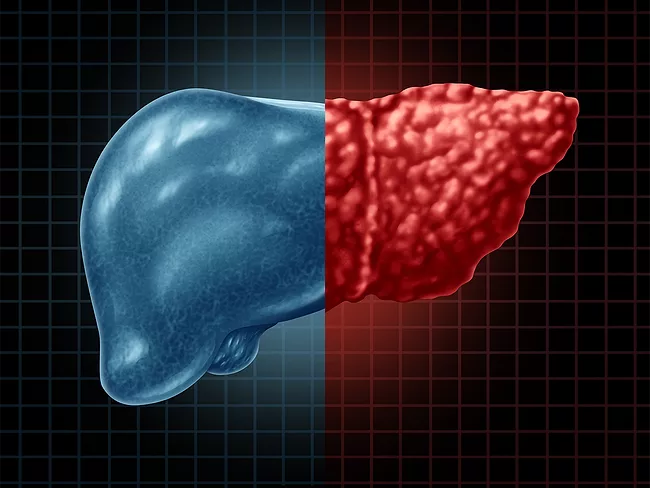
NLRP3 inflammasome activation, pro-inflammatory cytokine production and pyroptosis are key features of inflammation that contribute to liver fibrosis progression, cirrhosis and end-stage liver failure. Pyroptosis, a lytic form of inflammatory-regulated cell death, is regulated by multiprotein complexes expressed in both parenchymal and nonparenchymal hepatic cells. Researchers from Genfit SA presented preclinical efficacy data on CLM-022, a synthetic pentacyclic triterpenoid derivative designed to target the NLRP3 complex.
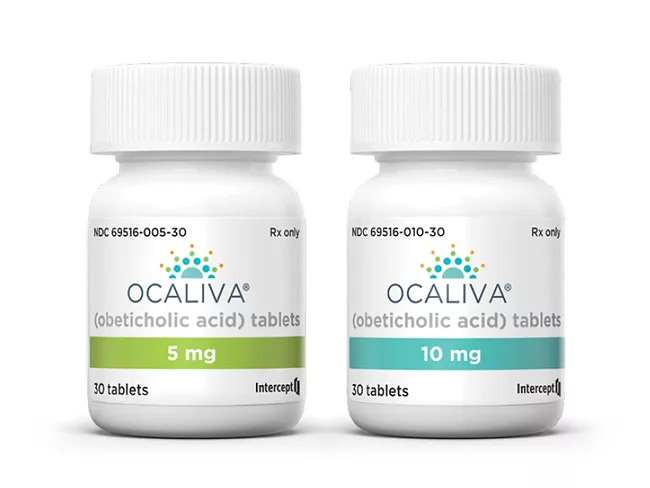
The conditional marketing approval for Ocaliva (obeticholic acid) has been revoked with immediate effect, following a standoff between the EMA and Advanz Pharma Ltd., the company that markets the primary biliary cholangitis (PBC) therapy in Europe. On Sept. 5, London-based Advanz won a short reprieve after challenging the EMA’s June 28 ruling that the marketing authorization for Ocaliva should be revoked, when the General Court of the EU granted a temporary suspension of EMA’s decision. However, on Nov. 27, Advanz announced the court had said it would not be extending the suspension.
A collaborating team of researchers from the U.K.’s University College London and the Incliva Biomedical Research Institute in Valencia, Spain, filed for protection of a machine learning model called AMMON-OHE to predict occurrence of overt hepatic encephalopathy in patients with cirrhosis of the liver.
Intercept Pharmaceuticals Inc. lost its uphill battle to convince the U.S. FDA’s Gastrointestinal Drugs Advisory Committee that the risks of its second-line primary biliary cholangitis drug outweigh the benefits. The committee overwhelmingly said the data in the follow-up studies of treating the rare disease with Ocaliva (obeticholic acid), which has accelerated approval from the FDA, was insufficient.
Friday the 13th could be a make-or-break day in the U.S. for Intercept Pharmaceuticals Inc.’s Ocaliva (obeticholic acid). That’s the day the company will make its case before the FDA’s Gastrointestinal Drugs Advisory Committee for turning an 8-year-old accelerated approval into traditional approval.
Resolution Therapeutics Ltd. has received approval from the U.K. Medicines and Healthcare products Regulatory Agency (MHRA) to initiate a phase I/II study of its lead candidate RTX-001 in patients with decompensated liver cirrhosis.
Two sNDAs, one from Bristol Myers Squibb Co. (BMS) and the other from Mirum Pharmaceuticals Inc., have received U.S. FDA approval to further expand their treatment indications.
Astrazeneca AB has disclosed 17-β-hydroxysteroid dehydrogenase 13 (HSD17B13; 17-β-HSD 13) inhibitors reported to be useful for the treatment of alcoholic liver disease, liver fibrosis, cirrhosis, hepatic steatosis, liver inflammation, hepatitis C virus infection and liver cancer.
Researchers from Lerna Biopharma Pte. Ltd. (formerly Cargene Therapeutics Pte. Ltd.) recently presented the discovery and preclinical evaluation of a first-in-class GalNAc-siRNA therapeutic, CG-LR1, being developed for the treatment of liver diseases.
Omega Therapeutics Inc. has presented preclinical data on hepatocyte nuclear factor 4-alpha (HNF4A) modulation in fibrotic liver disease models to enhance its key role and suggest it as a potent therapeutic target.