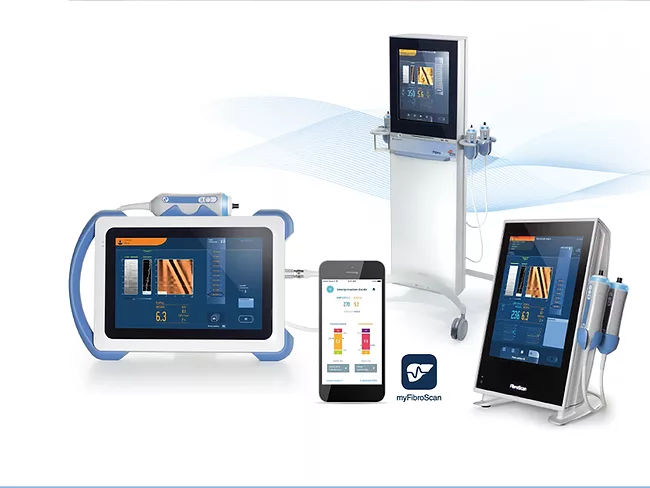
Echosens SA obtained clearance from the U.S. FDA to expand the indications for screening with its Fibroscan system. The approval removes contraindications for pregnancy and active implant and includes patients with confirmed or suspected liver disease. It designates Fibroscan as a noninvasive aid for clinical management, diagnosis and monitoring of adult and pediatric patients with liver diseases. The age has been removed as the first selection probe and exam-type step.
Mirum Pharmaceuticals Inc. plans to “move rapidly toward regulatory filings” to expand use of IBAT inhibitor Livmarli (maralixibat) into progressive familial intrahepatic cholestasis (PFIC), President and CEO Chris Peetz told investors during a conference call Oct. 24 to discuss the positive top-line results from the phase III March study, which not only hit its primary endpoint in patients with PFIC2 but showed statistical improvements in pruritis across a range of PFIC subtypes.
Versantis AG has agreed terms with Genfit SA in an acquisition deal that involves CHF40 million (US$41.4 million) up front, plus up to CHF65 million in milestones, and one third of the proceeds from a potential sale of a rare pediatric disease priority review voucher, should the U.S. FDA grant one.
Verve Therapeutics Inc. has packed a lot into the past few weeks. The latest is a four-year research deal with Vertex Pharmaceuticals Inc. to find and develop an in vivo gene editing program for an undisclosed liver disease. Vertex will pick up the tab for program costs as Verve does the preclinical R&D. Verve is getting an up-front $60 million from Vertex, along with a $35 million equity investment.
Syncona Ltd. has added £10 million (US$13.1 million) to the £26.6 million it put into the series A round of Resolution Therapeutics Ltd., enabling the company to advance an allogeneic version of the macrophage cell therapy it is developing for the treatment of compensated liver disease. Since the first close of the round in December 2020, the company has been working on process development for the autologous product, and patients have continued to be recruited to a 50-patient phase II study being run by the academic founders of Resolution.
With the rates of nonalcoholic steatohepatitis (NASH) rapidly rising, Glympse Bio Inc. and Laboratory Corp. of America Holdings Inc. (Labcorp) have announced new tests that can assess the risk of the liver condition without the traditional biopsy.
Sonic Incytes Medical Corp. collected $7.3 million in a series A fundraising round to bring its liver-focused point-of-care ultrasound solution to commercialization. Nimbus Synergies led the round with participation from Nicola Wealth, Mint Venture Partners, Consortium Medteq, Wavemaker Three-Sixty Health, Gaingels, INP Capital and several angel investors. The round was oversubscribed by 150%. The hand-held Velacur system noninvasively quantifies liver volume, stiffness and attenuation, critical factors in diagnosing and monitoring liver disease in a process that takes about five minutes and can be performed in a physician’s office. The system received FDA clearance late last year.
Building on a March deal leveraging lipid nanoparticle (LNP) technology from Genevant Sciences Corp. to fight liver fibrosis, Takeda Pharmaceutical Co. Ltd. has signed a second agreement with the company for the development and commercialization of therapies for up to two rare liver diseases. The deal includes up to $303 million in up-front and potential milestone payments for Genevant, plus royalties on possible product sales, adding to the first deal's similarly structured $600 million package.
Building on a March deal leveraging lipid nanoparticle (LNP) technology from Genevant Sciences Corp. to fight liver fibrosis, Takeda Pharmaceutical Co. Ltd. has signed a second agreement with the company for the development and commercialization of therapies for up to two rare liver diseases. The deal includes up to $303 million in up-front and potential milestone payments for Genevant, plus royalties on possible product sales, adding to the first deal's similarly structured $600 million package.