Biopharma dealmaking activity remained strong in October, with total deal value reaching $31.86 billion, a 17% increase from $27.15 billion in September and ranking as the second-highest month in 2025 after June’s $35.43 billion.
Merck & Co. Inc. is buying Cidara Therapeutics Inc. for $9.2 billion to acquire a late-stage flu candidate and also to outrace blockbuster Keytruda’s looming patent expiration. CD-388, Cidara’s lead candidate, is in a phase III study of adolescents and adults for preventing influenza A and B in those who are at a high risk of developing complications.
The industry has been complaining about the drug pricing and reimbursement policies of European governments for years, but only now with the Trump administration’s moves to enforce most favored nation (MFN) pricing and reduce the U.S./EU price gap are governments facing up to the reality that they will have to pay more for new drugs.
In 2025, the biopharma industry has undergone a wave of workforce reductions that surpasses previous years’ trends. Multiple major pharma companies have announced sizeable job cuts, driven by a convergence of shifting regulatory terrain, vaccine slowdowns and cost-structure rationalization.
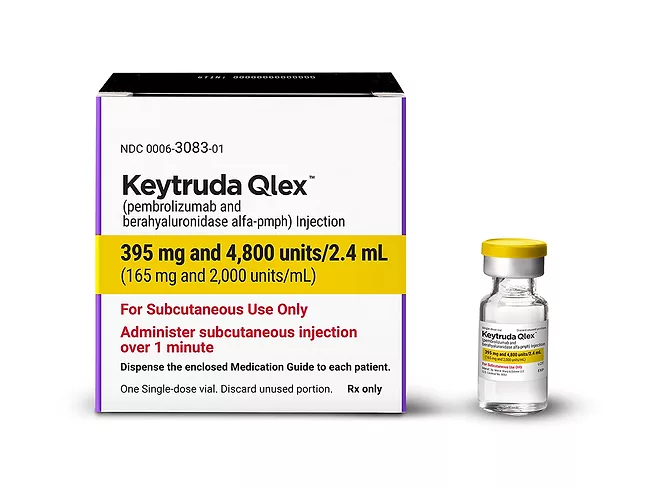
The U.S. FDA approved Merck & Co. Inc.’s Keytruda Qlex (pembrolizumab and berahyaluronidase alfa-pmph) injection on Sept. 19, making it the first and only subcutaneously (SC)-administered immune checkpoint inhibitor that can be administered in about a minute.
The U.S. FDA approved Merck & Co. Inc.’s Keytruda Qlex (pembrolizumab and berahyaluronidase alfa-pmph) injection on Sept. 19, making it the first and only subcutaneously (SC)-administered immune checkpoint inhibitor that can be administered in about a minute.
The U.K.’s failure to join the dots from discovery research to patient access to innovative drugs was cited repeatedly by pharma leaders, who were called to an emergency hearing in parliament on Tuesday to explain decisions to pull out of promised capital investments.
Two months after it was launched, the wheels are coming off the U.K. government’s 10-year life sciences strategy, with pharma companies withholding promised capital investments in protest at the row over drug pricing. Merck & Co. Inc., Astrazeneca plc and Eli Lilly and Co. Inc. have said they are not going ahead with previously announced investments.
Nucleoside reverse transcriptase translocation inhibitors (NRTTIs) are a novel class of antiretroviral agents that inhibit HIV replication by targeting the viral reverse transcriptase enzyme and specifically blocking its translocation step during DNA synthesis, a critical process in the viral replication cycle.
Daiichi Sankyo Co. Ltd. and Merck & Co. Inc.’s antibody-drug conjugate (ADC) ifinatamab deruxtecan produced a confirmed 48.2% objective response rate in a phase II study of previously treated patients with extensive-stage small-cell lung cancer.