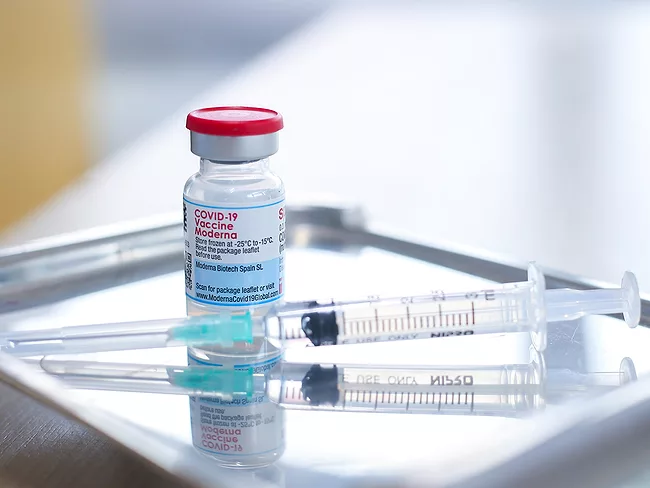
Sen. Bernie Sanders (I-Vt.), the incoming chair of the U.S. Senate Health, Education, Labor and Pensions (HELP) Committee, penned a blistering letter that takes Moderna Inc. CEO Stéphane Bancel to task over the company’s plans to more than quadruple the U.S. list price of its COVID-19 vaccine once the government’s supply is depleted.
Once a rarity, billion-dollar deals are now coming fast and furious. Now three have appeared in only a few days. Gene therapy developer Voyager Therapeutics Inc. and Neurocrine Biosciences Inc. continued a longstanding partnership by agreeing to develop treatments for neurological diseases and for three new programs with rare CNS targets. Cytomx Therapeutics Inc. and Moderna Inc. entered a deal worth a potential $1.24 billion to Cytomx for generating and developing treatments in oncology and non-oncology. In the third deal, Royalty Pharma plc acquired an interest in Ionis Pharmaceuticals Inc.'s royalty in Biogen Inc.'s Spinraza (nusinersen) and Novartis AG's pelacarsen for up to $1.125 billion.
Vertex Pharmaceuticals Inc. has received clearance from the FDA for its IND application for VX-522, a messenger ribonucleic acid (mRNA) therapy targeted at treating the underlying cause of cystic fibrosis (CF).
Nona Biosciences Co. Ltd., a subsidiary of Harbour Biomed Therapeutics Ltd. launched in November to provide “idea to IND” services, has struck a deal with Moderna Inc. to develop nucleic acid-based immunotherapies. The candidates will be based on Harbour’s heavy chain only antibody discovery platform.
Nona Biosciences Co. Ltd., a subsidiary of Harbour Biomed Therapeutics Ltd. launched in November to provide “idea to IND” services, has struck a deal with Moderna Inc. to develop nucleic acid-based immunotherapies. The candidates will be based on Harbour’s heavy chain only antibody discovery platform.
It was a busy day at Moderna Inc. as Merck & Co. Inc. exercised its option to jointly develop and commercialize a personalized cancer vaccine with Moderna in a deal the two companies inked in 2016. Moderna also notched another emergency use authorization (EUA) for its COVID-19 vaccine, this one targeting the omicron variant, for use by those under age 18.
Proof of concept has been achieved for a therapy for argininosuccinic aciduria consisting of human argininosuccinic lyase (ASL) mRNA encapsulated in lipid nanoparticles (ASL-LNPs).
In the hope of preventing thousands of hospitalizations and deaths over the next few months, the U.S. CDC’s Advisory Committee on Immunization Practice (ACIP) voted 13-1 Sept. 1 to recommend the use of Moderna Inc.’s and Pfizer Inc.-Biontech SE’s updated vaccines that contain components of both the original SARS-CoV-2 virus and the omicron BA.4/5 subvariants as boosters.
Right on cue, the U.S. FDA authorized bivalent COVID-19 vaccines from Moderna Inc. and Pfizer Inc.-Biontech SE to be given as boosters at least two months following a primary vaccine series or a previous booster. “These updated boosters present us with an opportunity to get ahead of the next wave of COVID-19,” FDA Commissioner Robert Califf said, following the Aug. 31 announcement.
Three of the biggest COVID-19 vaccine developers are heading into a legal battle. Moderna Inc. said it has filed lawsuits alleging the Pfizer Inc.-Biontech SE Comirnaty vaccine infringes patents Moderna filed between 2010 and 2016 that cover its mRNA technology. Pfizer and Biontech “unlawfully” copied the technology without permission, according to Moderna.